








ADDITIONS IN 2025 / L’AN VI

JanFebMarAprMay – Jun – JulAugSeptOctNovDec

A SUMMARY LIST OF ADDITIONS IN 2025

Here is a list of material that was added to the website in 2025. It includes my talks (3), blogs (1), papers (3), anthologies (6), and translations (17); as well as the new books which were added to the Guillaumin Collection (30). I also experimented with new ways to display complex texts online with large numbers of footnotes, glossaries, and indices in what I call "Multi-Pane Readers".

Talks:

  1. “Donald Trump: Friend, Foe, or Schmo?” A talk to a meeting of the University of the Third Age, Newport, Sydney (5 Feb. 2025). Lecture overheads PDF and Lecture notes and images/graphs HTML
  2. “The Power of Art: The Depiction 0f Power and Legitimacy in Official Portraits of Kings, Presidents, and Prime Ministers”. A talk given to a meeting organised by the University of the Third Age (U3A) on 7 May, 2025, in Newport, Sydney. In HTML Presentation slides in PDF
  3. “War and the Art of Propaganda” (3 June, 2025). A talk given to the West Pennant Hills Probis Club, 3 June, 2025. Lecture slides in PDF

Blogs:

  1. “A Declaration of Independence from the State”, Reflections on Liberty and Power (8 December, 2025) [online]; with a new “Declaration of Independence” (in the style of Lysander Spooner), and a new “Bill of Rights” in a “pocket edition” and a full version.

Papers:

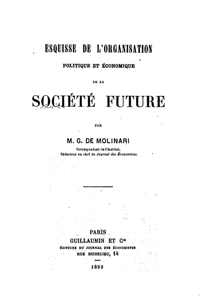
  1. An Introduction to Gustave de Molinari’s Esquisse de l’organisation politique et économique de la Société future (A Sketch of the Political and Economic Organisation of the Society of the Future) (1899). HTML
  2. “A Monument to French Political Economy’: the Dictionnaire de l’Économie Politique (1852-53). The Contributions of Gilbert-Urbain Guillaumin (1801-1864), Charles Coquelin (1802-1852), and Gustave de Molinari (1819-1912)”. A Paper given at the annual conference of the History of Economic Thought Society of Australia, the University of Western Australia, Perth, 17-18 July, 2025. Paper in HTML and PDF.
  3. Cato Papers: A series of short essays on the history (7) and some of the key ideas (5) of the classical liberal / libertarian tradition (not online):
    1. Key ideas:
      1. “Visions of a Liberal Society: ‘The Free and Prosperous Commonwealth'”
      2. “The Functions of the State”
      3. “The Four Freedoms: Liberty as the Sum of All Freedoms”
      4. “Classical Liberal “Ends” and the “Means” to achieve them”
      5. “The Foundational Principles of Classical Liberalism” – “The Right to Life and Liberty”, “Self-ownership and Property in external things”, “Justice and the Non-Aggression Principle”
    2. History:
      1. Introduction: A Definition of Terms: “Liberal” and Liberalism
      2. Classical Liberalism and the Struggle for Emancipation and Enrichment
      3. Proto-Liberals: Liberty before “Liberalism”
      4. Liberty in the Ancient World and the Medieval Period
      5. The Renaissance and the Reformation
      6. The Seventeenth Century. The English Civil Wars and Revolutions of the 17th century (1640–1688)
      7. The Eighteenth Century. The Enlightenment and Revolutions in Europe and North America (1750–1790)
    3. Timelines:
      1. The development of classical liberal thinking about free trade
      2. The diffferent ways CLs have thought about the proper functions of the state

Anthologies:

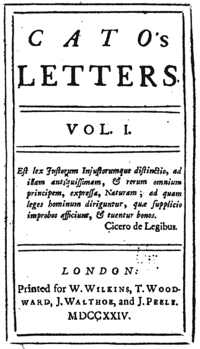
  1. John Trenchard and Thomas Gordon, Letters on Liberty and Power: An Anthology of Essays from The Independent Whig (1720-21) and Cato’s Letters (1720-23). HTML
  2. An Anthology of Protests of “The Little People” (1641-1652), with 17 items and 182 pages. HTML
  3. Demanding Liberty: An Anthology of Leveller Agreements of the People, Petitions, Remonstrances, and Declarations (1646-1659) with 30 items and 330 pages. HTML
  4. “The Sparks of Freedom in the Minds of Men”: Three Tracts by John Warr (1648-1649) with 3 items and 73 pages. HTML
  5. An Anthology of Works by William Walwyn (1600-1681) with 29 items in 547 pages. HTML
  6. An Anthology of Works by John Lilburne (1638-1656) with 51 items in 1488 pages. HTML

Translations:

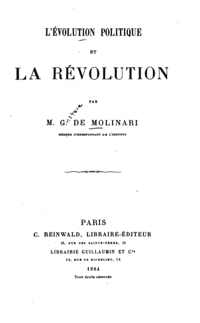
  1. Gustave de Molinari, L’Évolution politique et la Révolution (Political Evolution and the Revolution). English HTML and French HTML.
  2. Gustave de Molinari, Esquisse de l’organisation politique et économique de la Société future (A Sketch of the Political and Economic Organisation of the Society of the Future). English HTML and French HTML.
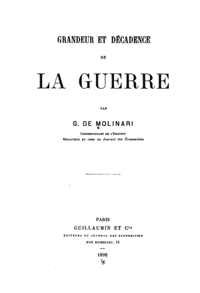
  3. Gustave de Molinari, Grandeur et décadence de la guerre (The Greatness and Decline of War) (1898) English HTML and French HTML.
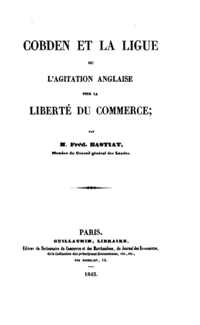
  4. Frédéric Bastiat’s 100 page “Introduction” to his book Cobden et la ligue, ou l’Agitation anglaise pour la liberté du commerce (Cobden and the League, or the English Movement for the Liberty of Commerce) (1845). English HTML and French HTML.
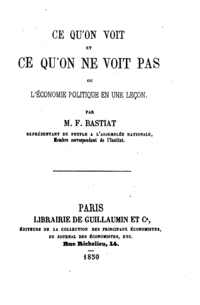
  5. Frédéric Bastiat, Ce qu’on voit et ce qu’on ne voit pas, ou l’Économie politique en une leçon (What is Seen and What is Not Seen, or Political Economy in One Lesson. The Students Edition). English HTML and French HTML.
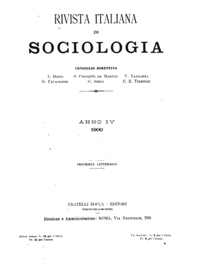
  6. Vilfredo Pareto, “Un’applicazione di teorie sociologiche” (An Application of Sociological Theories) from Rivista Italiana di sociologia, (Luglio 1900). English HTML and Italian HTML.
  7. Ambroise Clément, “De la spoliation légale” (On Legal Plunder), Journal des économistes (July, 1848). English HTML and French HTML.
  8. Gustave de Molinari, A translation of the 12th Lesson on “Public Consumption” in Cours d’économie politique. Deuxième édition (1863). English HTML and French HTML.
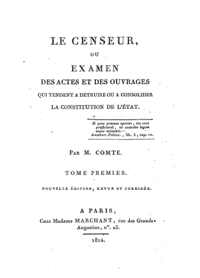
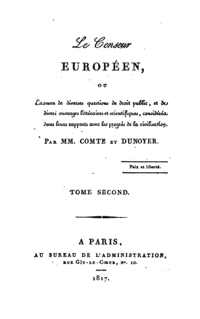
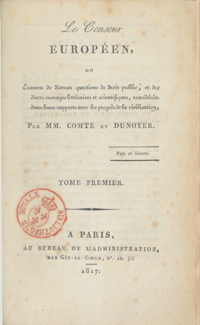
  9. Charles Comte and Charles Dunoyer, An Anthology of Articles from Le Censeur (1814-1815) and Le Censeur européen (1817-1819): an Anthology of 35 essays in French which are in the proicvess of being translated. HTML. Those done so far:
    1. Charels Comte:
      1. “Review of Montlosier on the French Monarchy”, Le Censeur T.6 (June 1, 1815), pp. 192-244.
      2. “On Social Organisation and its Relationship with the Means of Subsistance of Nations”, Le Censeur européen, T.2 (March 1817), pp. 1-66.
      3. “On the Multiplication of the Poor, of Office-Holders, and of Pensioners”, Le Censeur européen, T.7 (28 mar. 1818), pp. 1-79.
    2. Charles Dunoyer:
      1. “On the Public Spirit in France, and particularly on the spirit of Public Officials”, Le Censeur (July/August 1814). English – Part 1 and Part 2; French – Part 1 and Part 2.
      2. “A review of J.B. Say’s “A Small Volume containing some insights into men and society”, Le Censeur européen, T.7 (Mar. 1818), pp. 80-126.
      3. “Considerations on the Present State of Europe, on the Dangers of this State, and on the Means of escaping them”, Le Censeur européen, T.2, (March 1817), pp. 67-106.
      4. “On the Influence exerted on Government by the Salaries paid for carrying out Pubic Functions”, Le Censeur européen T.11 (15 Feb. 1819), pp. 75-118.
      5. “Historical sketch of the doctrines that have been given the name Industrialism”, Revue encyclopédique, vol. XXXIII (Jan. 1827).
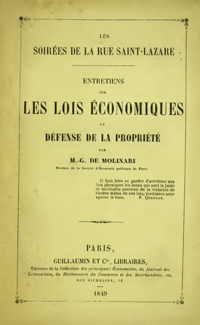
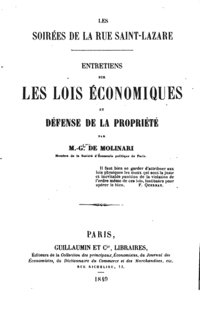
  10. Gustave de Molinari, Les Soirées de la rue Saint-Lazare; entretiens sur les lois économiques et défense de la propriété (Soirées on rue Saint-Lazare: Discussions about Economic Laws and a Defence of Property). English HTML and French HTML.
  11. A Comparative Edition of Frédéric Bastiat’s essay on “The State” (1848-49). It contains an introduction and editions of the three versions of his essay in both French and English. HTML.
  12. Frédéric Bastiat, The Law: The Students Edition. English HTML and French HTML.
  13. Gustave de Molinari, Les Révolutions et le despotisme envisagés au point de vue des intérêts (“Revolutions and Despotism considered from the Perspective of Material Interests”) (1852) – a lecture given at the Museum of Industry in Brussels, on October 4, 1852. English HTML and French HTML.
  14. Gustave de Molinari, Thoughts on the Future of Liberty (1901-1911). English HTML and French HTML. It contains three items:
    1. The Achievements of the 19th Century – “Le XIXe siècle”, JDE (Jan. 1901).
    2. The Prospects of the 20th Century – “Le XXe siècle”, JDE (Jan. 1902).
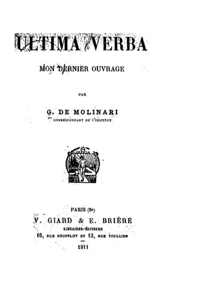
    3. Molinari’s “Last Words” (1911) – extracts
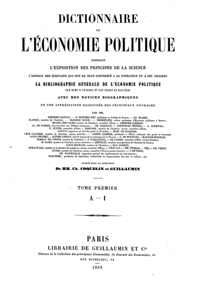
  15. Gustave de Molinari, The Collected Articles from the Dictionnaire de l’Économie politique (1852-53). With 33 items. English HTML and French HTML.
  16. Gustave de Molinari, L’évolution politique et la Révolution (Political Evolution and the Revolution) (1884). English HTML and French HTML.

New titles added to Guillaumin Collection (total 233 titles by 115 authors) See the main list:

  1. 1552, 1699: Bartolomé de las Casas, An Account of the Spaniards in America (1552, 1699) HTML
  2. 1578: Théodore de Bèze, Du droit des magistrats sur leurs subjets (The Right of Magistrates over their Subjects) (1578) HTML
  3. 1599: Juan de Mariana, De Rege et Regis Institutione (On the King and the Education of the King) (1599) HTML
  4. 1649: John Warr, “The Sparks of Freedom in the Minds of Men”: Three Tracts by John Warr (1648-1649) HTML
  5. 1652: Gerrard Winstanley, The Law of Freedom in a Platform (1652) HTML
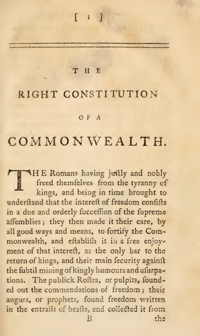
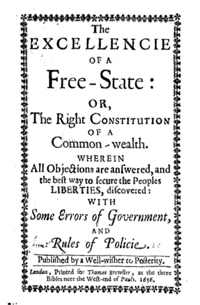
  6. 1656: Marchmont Nedham, The Excellencie of a Free-State: or, The right constitution of a Common-wealth (1656) HTML
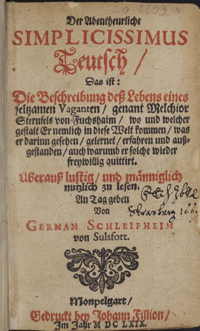
  7. 1668: Jakob von Grimmelshausen , Der Abentheurliche Simplicissimus Teutsch (1668/69) HTML
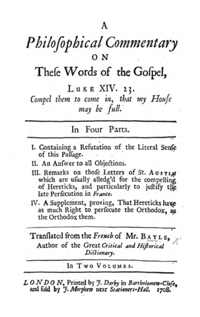
  8. 1708: Pierre Bayle, A Philosophical Commentary on these Words of the Gospel, Compel them to come in, that my House may be full HTML
  9. 1721: Thomas Gordon: Three Political Letters to a Noble Lord, Concerning Liberty and the Constitution (1721) HTML and A Supplement to Three Political Letters to a Noble Lord (1721) HTML
  10. 1723: Trenchard/Gordon], Cato’s Vision (1723) HTML
  11. 1729: Jean Meslier, Le Testament de Jean Meslier (1729) HTML
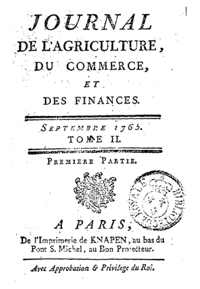
  12. 1765: François Quesnay, “Observations sur le droit naturel des hommes réunis en société” (Observations on the natural rights of human beings when they are part of society), Journal de l’agriculture, du commerce et des finances (1765) HTML
  13. 1771: Joseph Priestley, An Essay on the First Principles of Government, and on the Nature of Political, Civil, and Religious Liberty (1771) HTML
  14. 1778: Richard Price, Two Tracts on Civil Liberty, The War with America, and The Debts and Finances of the Kingdom (1778) HTML
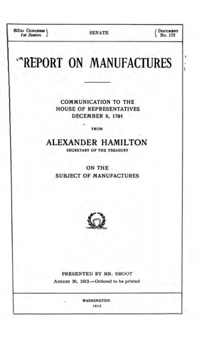
  15. 1791 (1913): Alexander Hamilton, “Report on Manufactures” (1791) HTML
  16. 1817; Augustin Thierry, L’Industrie littéraire et scientifique (Literary and Scientific Industry) (1817) HTML
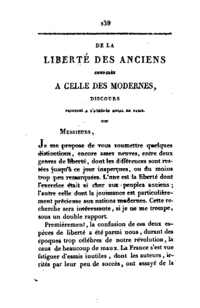
  17. 1819: Benjamin Constant, “De la liberté des anciens comparée à celle des modernes” (1819) HTML
  18. 1832: Friedrich Murhard, Ueber Widerstand, Empörung und Zwangsübung der Staatsbürger gegen die bestehende Staatsgewalt (On Resistance, Rebellion, and the Use of Force by the Citizens against the existing State Power) (1832) HTML
  19. 1848: Charles Coquelin (1802-1852), Du Crédit et des Banques (1848) HTML
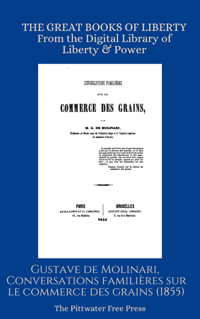
  20. 1855: Gustave de Molinari, Conversations familières sur le commerce des grains (1855) HTML
  21. 1856, 1862: American Anti-Slavery Society, Anti-Slavery Tracts (1856, 1862) HTML
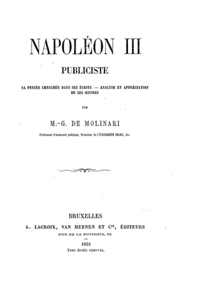
  22. 1861: Gustave de Molinari, Napoleon III publiciste (Napoleon III, the journalist) (1861) HTML
  23. 1884: Auberon Herbert, A Politician in Trouble about his Soul (1884) HTML
  24. 1888: Gustave de Molinari, La Morale économique (An Economic Moral Theory) (1888) HTML
  25. 1892: Gustave de Molinari, Religion (1892) HTML
  26. 1896: Gustave de Molinari, Comment se résoudra la question sociale (How to solve the Social Problem) (1896) HTML
  27. 1898-99: John Hobson and Auberon Herbert, A Debate on the philosophy of voluntaryism in The Humanitarian: A Monthly Review of Sociological Science (1898-1899) HTML
  28. 1901: Gustave de Molinari, Les Problèmes du XXe siècle (The Problems of the 20th Century) (1901) HTML
  29. 1902: Vilfredo Pareto, Les systèmes socialistes (1902-3) HTML
  30. 1912: Auberon Herbert and J.H. Levy, Taxation and Anarchism: A Discussion (1912) HTML
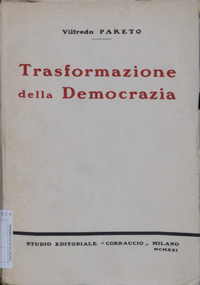
  31. 1921: Vilfredo Pareto, Trasformazione della democrazia (The Transformation of Democracy) (1921) HTML

Multi-Pane Readers:

  1. the 3 Pane Reader for texts with many long footnotes, e.g. Molinari
  2. the 4 Pane Reader for texts with many footnotes, glossaries, and indices, e.g. Pareto and Smith
  3. the 5 Pane Reader for unusually complex texts with margin notes and major sub-notes which also have margin notes, e.g. Bayle

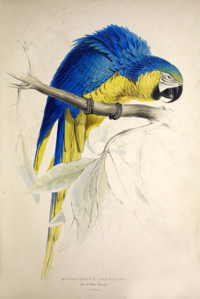
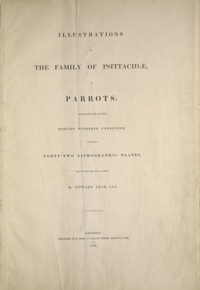
Illustrations (left): They come from Edward Lear, Illustrations of the family of Psittacidæ, or parrots (1832) in facs. PDF. Lear thought of parrots as "live emeralds" who were the emissaries of "the sense of freshness and freedom." I think of them, especially the sulfur crested cockatoos, as hooligans and anarchists (of the bad kind). His affinity to brightly coloured parrots might stem from his rejection of the grey and faceless authority, the "they", who use violence to stifle non-conformists like himself, as he expressed it in the nonsense poem "There was an Old Man with a gong":

There was an Old Man with a gong,
Who bumped at it all day long;
But they called out, ‘O law!
You’re a horrid old bore!’
So they smashed that Old Man with a gong. 

And in another:

There was an Old Man of Whitehaven,
Who danced a quadrille with a raven;
But they said, "It’s absurd
To encourage this bird!"
So they smashed that Old Man of Whitehaven.


DECEMBER 2025

Papers I am working on:

  1. "Vilfredo Pareto and the Political Economy of Class and Plunder."

Additions to the Blog:

  1. "A Declaration of Independence from the State", Reflections on Liberty and Power (8 December, 2025) [Online]; with a new "Declaration of Independence" (in the style of Lysander Spooner), and a new "Bill of Rights" in a "pocket edition and a full version.

Additions to the Library:

  • new: a multi-pane "Reader" to display complex texts with large numbers of footnotes/endnotes, appendices, long notes, indices, and glossaries, which are easier to read and navigate from one part of the text to another. This is particularly the case for footnotes/endnotes and glossaries in longer documents. I have adapted the idea of using "panes" (defined and filled by Java script) to separate yet still allow cross-linking between the major parts of a complex text. The human reader can still see the "big picture" of the whole text while at the same time moving at will between ToC to text to notes and back again. In the simplest version, a "3 Pane Reader", there is the ToC on the left, the main body of the text in the middle, and the footnotes/endnotes on the right. In the "4 Pane Reader" there is an additional pane on the right for the glossaries, indices or longer notes. In its most extreme form, the "5 Pane Reader", there is a ToC, and a "square" of 4 panes for text with endnotes, and notes with their footnotes. All these versions of the "Pane Readers" include the citation tool which enables the reader to grab the URL of any specific paragraph for citation purposes, and the Edward Tufte inspired colour scheme to make thikngs easier on the eyes. Here are some working examples of each of these different kinds of "Readers":
    • 3 Pane Reader:
      1. Gustave de Molinari, L’évolution politique et la Révolution (1884) – selected because of its large number of very long footnotes. See the [enhanced HTML version] and the [3 Pane Reader version] (Still under construction).
    • 4 Pane Reader:
      1. Vilfredo Pareto, Les systèmes socialistes (1902-03) – selected because of its large number of footnotes, additions to the text, and extensive analytical tables and indices. See the [enhanced HTML version] and the [4 Pane Reader version].
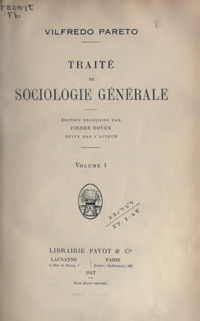
      2. Vilfredo Pareto, Traité de sociologie générale (1917-19) – selected because of its large number of footnotes, additions to the text, and extensive analytical tables and indices. See the [enhanced HTML version] and the [4 Pane Reader version].
      3. The Edwin Cannan edition (1904) of the 5th edition (1789) of Adam Smith, The Wealth of Nations – selected because of Cannan’s extensive notes, marginal summaries, and expanded index. See the [enhanced HTML version] and the [4 Pane Reader version].
    • 5 Pane Reader:
      1. This is the most complex version of the reader and is still a prototype. It is an anthology of 47 entries from Pierre Bayle’s monumental 4,000 page, 2,000 entry Dictionnaire historique et critique (1697, 1702, 1820). It consists of the text of the Dictionary entry and its marginal notes and substantial sub-notes, which in turn have their own marginal notes. See the [5 Pane Reader version]. Caveat lector!
  • new: Pierre Bayle’s magnum opus Dictionnaire historique et critique (The Historical and Critical Dictionary) but unfortunately only in facs. PDF at this time. The last French edition to appear in his lifetime was that of 1702 in three very large volumes [Vol1 A-D (121MB) and vol2 E-M (119MB) and vol3 N-Z (120MB)]. The English translation of 1734 is commonly used and is in 5 very large volumes [vol1 A-Bi (78MB) and vol2 Bi-E (80MB) and vol3 F-L (94MB) and vol4 M-R (86MB) and vol5 S-Z (84MB)].
  • new: A classic work on religious toleration and the rejection of the violence inspired by fanaticism on all sides by Pierre Bayle (1647-1706), the 1708 English translation A Philosophical Commentary on these Words of the Gospel, Luke XIV. 23. Compel them to come in, that my House may be full in enhanced HTML [vol1 and vol2 and 2-vols-in1] and facs. PDF [vol1] and [vol2]. See also the French originals of 1686-88 in 3 volumes in facs. PDF [Part 1 and 2] and [Part 3] and a [Supplement].
  • new: another late work by Vilfredo Pareto (1848-1923), a collection of his essays Fatti e teorie (Facts and Theories) (1920) in enhanced HTML and facs. PDF: eBook HTML, PDF, and ePub [to come]

Authors this Month

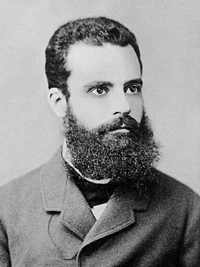
Vilfredo Pareto (1848-1923)

Pierre Bayle (1647-1706)


Other Books this Month


NOVEMBER 2025

Papers I am working on:

  1. "Vilfredo Pareto on Class Analysis: An Afterword" to an anthology of his writings newly translated into English.
  2. An anthology of writings on "The Industrialist Theory of Class and Society" in the first decades of the 19th century around J.B. Say, Charles Comte, Charles Dunoyer, Benjamin Constant, and Augustin Thierry.

Additions to the Library:

  • updated: My CV in HTML and PDF.
  • new: a late work by Vilfredo Pareto (1848-1923), Trasformazione della democrazia (The Transformatiopn of Democracy) (1921) in which his pessimism about the steady growth of the state and the continuation of class rule even under democracy is apparent. In enhanced HTML and facs. PDF; eBook HTML, PDF, and ePub [to come]
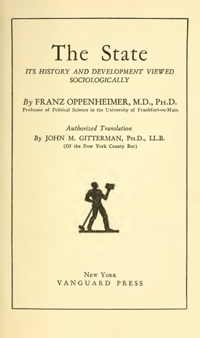
  • updated: Franz Oppenheimer, The State: Its History and Development viewed Sociologically (1922) in enhanced HTML and facs. PDF; eBook HTML, PDF, and ePub [to come]
  • new: Another work by a "monarchomach" (literally "a fighter against the king", i.e. an opponent of a despotic king or ruler), by Juan de Mariana (1536-1624), De Rege et Regis Institutione (On the King and the Education of the King) (1599). Only in Latin at the moment, in facs. PDF and enhanced HTML. eBook HTML, PDF and ePub [to come].
  • This brings to 8 our collection of works by "monarchomachs: (links are to the enhanced HTML versions)
    1. Étienne de la Boétie, Discours de la servitude volontaire (A Speech on Voluntary Servitude) (1553). In French and in English.
    2. John Ponet, A Shorte Treatise of politike power, and of the true Obedience which subjectes owe to kynges and other civile Governours (1556). In English.
    3. Christopher Goodman, How superior powers oght to be obeyd of their subiects and wherin they may lawfully by Gods Worde be disobeyed and resisted (1558). In English.
    4. Théodore de Bèze, Du droit des magistrats sur leurs subjets (The Right of Magistrates over their Subjects) (1574, 1578). In French.
    5. Francis Hotoman, Franco-Gallia: Or, an Account of the Ancient Free State of France (1574). In Latin and in English.
    6. George Buchanan, De jure regni apud Scotos (On the Rights of the Government over the Scots) (1574). In Latin and in English.
    7. Junius Brutus (Hubert Languet), Vindiciæ contra tyrannos: a defence of liberty against tyrants (1579). In Latin and in English.
    8. Juan de Mariana, De Rege et Regis Institutione (On the King and the Education of the King) (1599). In Latin.
  • new: Le Testament de Jean Meslier (1729). The 18th century French priest Jean Meslier (1664-1729) was an atheist and a fierce critic of the privileges and oppressions of the Catholic church. He left behind a long unpublished treatise written for the benefit of his parishioners entitled Le Testament de Jean Meslier or "A Memoir of the Thoughts and Feelings of Jean Meslier concerning some of the abuses and errors of the behaviour and government of human beings … ". The manuscript circulated privately after his death because of the severe consequences the state meted out for expressing such views (arrest, torture, death). In addition to his rationalist critique of the beliefs of the church (probably the most extensive written to date) he exposed the predatory behaviour of the privileged elite who ran the French state for their own benefit and used religion as the ideological underpinnings which legitimised this rule and indoctrinated the people to obey. The complete manuscript was not published until 1864 (in Amsterdam in French) and was not translated into English until 2009 (by Michael Shreve for Prometheus Books) and then again in 2018 (by Kirk Watson – self-published). We have the 3 volume French 1864 edition and a copy of the handwritten manuscript (from the BNF) online:
  • George Smith wrote a series of articles on Meslier for the Cato Institute’s <libertarianism.org> in 2015 bringing him to the attention of libertarians. [See 5 of the essays in the series "Freethought and Freedom" which deal with Meslier (numbers 20-24 of 29) [Online elsewhere].
  • Two thinkers Meslier explicitly refers to in his Testament are Étienne de la Boétie and Montagne, whose works we have online: the former’s speech on "Voluntary Servitude" (1576) [in French and English] and the latter’s "Essays" (1588) [in French and English] . It is interesting that Meslier wrote his Testament during the 1720s, the same time as "Cato" (Trenchard and Gordon) were writing and publishing their similar critique of the church’s deceptions and oppressive practices in The Independent Whig (1720-21) – see the complete collection in enhanced HTML; and an anthology of their key essays on liberty and power (both secular and ecclesiastical).

Authors this Month

Jean Meslier (1664-1729)

Juan de Mariana (1536-1624)

Franz Oppenheimer (1864-1943)

Vilfredo Pareto (1848-1923)


Other Books this Month


OCTOBER 2025

Papers I am working on:

  1. "Vilfredo Pareto on Class Analysis: An Afterword" to an anthology of his writings newly translated into English.
  2. An anthology of writings on "The Industrialist Theory of Class and Society" in the first decades of the 19th century around J.B. Say, Charles Comte, Charles Dunoyer, Benjamin Constant, and Augustin Thierry.

Additions to the Library:

  • new: John Trenchard and Thomas Gordon, Letters on Liberty and Power: An Anthology of Essays from The Independent Whig (1720-21) and Cato’s Letters (1720-23) in enhanced HTML. This is a new anthology of some 64 essays and "letters" by two leading figures in the "Commonwealthman" tradition which had a profound impact on the thinking of the North American colonists in the decades leading up to the Revolution. Sixty years ago David Jacobson edited a similar collection of their writings called The English Libertarian Heritage. From the Writings of John Trenchard and Thomas Gordon in The Independent Whig and Cato’s Letters (Bobbs-Merrill, 1965). This influenced the new generation of libertarian thinkers and activists who appeared in the late 1960s and 1970s and no doubt was the inspiration behind the name given to the Cato Institute when it was founded in 1977. My edition is larger (64 items), more complete (no cuts), has some added related essays, and has the citation tool to assist scholars. See the other titles of theirs I have online here: John Trenchard (1662-1723) and Thomas Gordon (1691-1750).
  • new: another "political letter" by Thomas Gordon: Three Political Letters to a Noble Lord, Concerning Liberty and the Constitution (1721) in enhanced HTML; and its sequel A Supplement to Three Political Letters to a Noble Lord (1721) in enhanced HTML
  • new: A satirical broadsheet in which "Cato" recounts a "vision" he had of what happens when the Catholic pretender to the throne returns to power – [Trenchard/Gordon], Cato’s Vision (1723) in enhanced HTML
  • a major upgrade of the Leveller Tracts Project: the collection, now includes 331 titles of which 185 are online in various formats. See the sortable table of the complete collection. The collection includes 5 anthologies of works of the three key authors (Lilburne, Overton, and Walwyn) and a couple on selected themes:
    • new: An Anthology of Works by John Lilburne (1638-1656) (2025) with 51 items for a total length of 1488 pages; available as a table of contents with links to the individual tracts (in enhanced HTML); or as one large file in enhanced HTML; and eBook HTML, PDF, and ePub [to come]
    • updated: the Anthology of Works by William Walwyn (1641-1652) – with 29 titles and 547 pp. in enhanced HTML.
    • new and updated: older files updated and some new ones added to Demanding Liberty: An Anthology of Leveller Agreements of the People, Petitions, Remonstrances, and Declarations (1646-1659) with 30 items and 330 pp. in enhanced HTML; and eBook HTML, PDF, and ePub [to come]
    • new: An Anthology of Leveller Tracts: Protests of "The Little People" (1641-1652) with 17 items and 182 pp., in enhanced HTML
    • updated: an "illustrated essay on The Art of the Levellers (2020, 2025) which is a collection and discussion of the title pages and other illustrations found in over 40 of the Leveller Tracts in our online collection. Updated and with links to the new texts in [HTML]
    • I also have planned a collection of works by some of the more interesting lesser known authors such as John Warr, James Frieze (or Freeze), John Streater (or Streeter), Edward Sexby, and others; beginning with
      • John Warr, "The Sparks of Freedom in the Minds of Men": Three Tracts by John Warr (1648-1649) in enhanced HTML
      • Edward Sexby, Killing, No Murder (1659) in enhanced HTML
      • John Streater, A Glympse of that Jewel Libertie (31 March, 1653) in basic HTML
  • new: a classic depiction of the ravages of war is Jakob von Grimmelshausen (1622-1676), Der Abentheurliche Simplicissimus Teutsch (1668/69) in enhanced HTML. It comes with a very interesting frontispiece which reminds me of that for Hobbes’ Leviathan (1652); but in this case the "masks" have been torn away away to reveal the reality beneath. See my (updated) essay on “Thomas Hobbes and the Iconography of the Leviathan State” (Dec. 2020).


Other Books this Month

Authors this Month

Grimmelshausen (1622-1676)


SEPTEMBER 2025

Papers I am working on:

  1. "Vilfredo Pareto on Class Analysis: An Afterword" to an anthology of his writings newly translated into English.
  2. An anthology of writings on "The Industrialist Theory of Class and Society" in the first decades of the 19th century around J.B. Say, Charles Comte, Charles Dunoyer, Benjamin Constant, and Augustin Thierry.
  3. A paper on "A Monument to French Political Economy: the Dictionnaire de l’Économie Politique (1852-53)". There is the long conference paper (about 42K words) and a shorter version (12k words).

Additions to the Library:

  • updated: in the tradition of the monarchomachs (see the list of their works below) is the notorious pamphlet by the radical Leveller Edward Sexby, Killing, no Murder (1657, 1659) in which he argued that killing a tyrant (like Cromwell) was not an act of murder but a defence of the peoples’ liberties. In enhanced HTML. Of course, killing someone who was not a tyrant but only one’s political opponent was an act of murder and should be punished accordingly.
  • new: Auberon Herbert and J.H. Levy, Taxation and Anarchism: A Discussion (1912). Published by the Personal Rights Association, the programme of which is included at the back of the book. In enhanced HTML and facs. PDF; eBook HTML, PDF, and ePub [to come]
  • new: the "new liberal" (i.e. a "liberal" who believed in extensive state intervention) John Hobson wrote a critique of an essay by Herbert, who replied with some eloquent essays of his own in the journal The Humanitarian: A Monthly Review of Sociological Science (1898-99). In enhanced HTML; eBook HTML, PDF, and ePub [to come]:
    1. Auberon Herbert, "A Voluntaryist Appeal"
    2. John A. Hobson, "Rich Man’s Anarchism"
    3. Auberon Herbert, "Salvation by Force"
    4. Auberon Herbert, "Lost in the Region of Phrases"
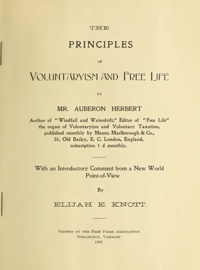
  • updated: Auberon Herbert, The Principles of Voluntaryism and Free Life (1897) in enhanced HTML and facs. PDF; eBook HTML, PDF, and ePub [to come]
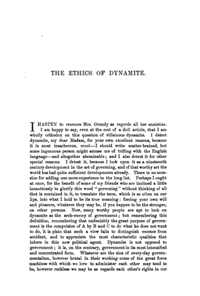
  • updated: Auberon Herbert, “The Ethics of Dynamite,” Contemporary Review (May 1894) in enhanced HTML and facs. PDF; eBook HTML, PDF, and ePub [to come]
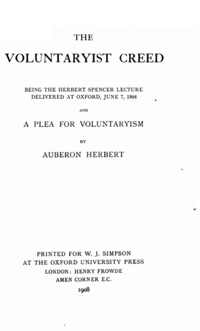
  • updated: Auberon Herbert, The Voluntaryist Creed and A Plea For Voluntaryism (1908) in enhanced HTML and facs. PDF; eBook HTML, PDF, and ePub [to come]
  • new: the English radical individualist and follower of Herbert Spencer, Auberon Herbert (1838-1906), wrote some very eloquent defences of liberty and critiques of state coercion. New to the collection is the series of articles he wrote in 1883-84 for the Fortnightly Review, A Politician in Trouble about his Soul (1884) in enhanced HTML and facs. PDF; eBook HTML, PDF, and ePub [to come]
  • new: another dissenting minister writing on the nature of civil liberty and the right of the North American colonists to secede from Britain: Richard Price, Two Tracts on Civil Liberty, The War with America, and The Debts and Finances of the Kingdom (1778). In enhanced HTML and facs. PDF [eBook HTML, PDF, and ePub to come]
  • new: the Dissenting minister and scientist Joseph Priestley (1733-1804) wrote a defence of liberty, especially religious liberty, An Essay on the First Principles of Government, and on the Nature of Political, Civil, and Religious Liberty (1st ed. 1768, 2nd ed. 1771) in enhanced HTML and facs. PDF; eBook HTML, PDF, and ePub.
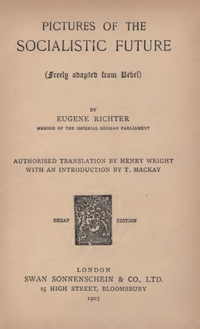
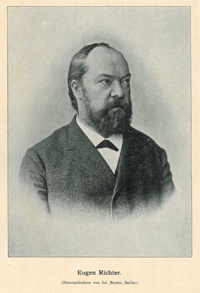
  • updated: Eugen Richter, Pictures of the Socialistic Future (Freely adapted from Bebel), trans. Henry Wright, Introduction by Thomas Mackay (1891, 1907). Enhanced HTML.
  • new: the path-breaking work on free banking by Charles Coquelin (1802-1852), Du Crédit et des Banques (1848) in enhanced HTML and facs. PDF; eBook HTML, PDF, and ePub. A couple of years later he would begin work as editor of the monumental Dictionnaire de l’économie politique (1852), but he would die unexpectedly from a heart attack shortly after he finished editing volume 1.

Other Books this Month

Authors this Month

Eugen Richter (1838–1906)

Joseph Priestley (1733-1804)

Richard Price (1723-1791)

Auberon Herbert (1838-1906)

John A. Hobson (1858-1940)

New eBooks in the Guillaumin Collection – [ToC]


AUGUST 2025

Papers I am working on:

  1. "Vilfredo Pareto on Class Analysis: An Afterword" to an anthology of his writings newly translated into English.
  2. An anthology of writings on "The Industrialist Theory of Class and Society" in the first decades of the 19th century around J.B. Say, Charles Comte, Charles Dunoyer, Benjamin Constant, and Augustin Thierry.
  3. A paper on "A Monument to French Political Economy: the Dictionnaire de l’Économie Politique (1852-53)".

Additions to the Library:

  • new: another work by one of the "Monarchomachs" ("king fighters" – or "opponents of tyrannical monarchs") who argued that tyrannical kings had to be kept in check by "lesser magistrates" who could act in defence of the people – Théodore de Bèze, Du droit des magistrats sur leurs subjets (The Right of Magistrates over their Subjects) (1574, 1578) in enhanced HTML and facs. PDF. E-Book HTML, PDF, and ePub. Other monarchomach wrtiers in the collection are:
    1. Étienne de la Boétie, Discours de la servitude volontaire (A Speech on Voluntary Servitude) (1553). French HTML and English HTML.
    2. John Ponet, A Shorte Treatise of politike power, and of the true Obedience which subjectes owe to kynges and other civile Governours (1556). English HTML with modernised spelling.
    3. Christopher Goodman, How superior powers oght to be obeyd of their subiects and wherin they may lawfully by Gods Worde be disobeyed and resisted (1558). English HTML.
    4. Francis Hotoman, Franco-Gallia: Or, an Account of the Ancient Free State of France (1574). English HTML.
    5. George Buchanan, De jure regni apud Scotos (On the Rights of the Government over the Scots) (1574). English HTML.
    6. Théodore de Bèze, Du droit des magistrats sur leurs subjets (The Right of Magistrates over theiur Subjects) (1574) – French HTML
    7. Junius Brutus (Hubert Languet), Vindiciæ contra tyrannos: a defence of liberty against tyrants (1579). English HTML.
  • new: the French historian and theorist of liberal class analysis Augustin Thierry (1795-1856): L’Industrie littéraire et scientifique (Literary and Scientific Industry) (1817) in facs. PDF and enhanced HTML; eBook HTML, PDF, and ePub
  • new: a work by the German radical liberal Friedrich Murhard (1778-1853) who was repeatedly persued and tried by the police for his views on limiting the power of the state, as suggested by the provocative title of Ueber Widerstand, Empörung und Zwangsübung der Staatsbürger gegen die bestehende Staatsgewalt (On Resistance, Rebellion, and the Use of Force by the Citizens against the existing State Power) (1832). This text was very hard to convert to HTML as it was printed in the "Fraktur" script. Let the Reader beware! In enhanced HTML and facs. PDF. Ebook HTML, PDF, and ePub. His other books, in a very similar vein, from the same period include:
    • Die unbeschränkte Fürstenschaft. Politische Ansichten des neunzehnten Jahrhunderts (Unlimited Rule by Princes. Political Views of the 19th Century) (1831) in facs. PDF.
    • Die Volkssouverainität im Gegensatz der sogenannten Legitimität (The Sovereignty of the Poeple in Opposition to so-called Legitimacy) (1832) in facs. PDF.
    • Das Königliche Veto: Eine wichtige Aufgabe in der Staatslehre der konstitutionellen Monarchie (The Monarchical Veto: An important Task for the Political Theory of Constitutional Monarchy) (1832) in facs. PDF.
    • Der Zweck des Staats: Eine propolitische Untersuchung im Lichte unsers Jahrhunderts (The Purposae of the State: A Pro-Political Investigation in the Light of our Century) (1832) in facs. PDF.
  • new: a collection of 45 anti-slavery pamphlets and tracts published by the American Anti-Slavery Society between 1856 and 1862. It includes works by luminaries of the abolitionist cause such as Thomas Wentworth Higginson, Harriet Beecher Stowe, Victor Hugo, Alexis de Tocqueville, William Lloyd Garrison, Daniel O’Connell, and Wendell Phillips; as well many other lesser lights. In enhanced HTML and facs PDF [vol1] and [vol2].
  • new: catching up with some new ebooks of various titles:
    • Benjamin Constant, “De la liberté des anciens comparée à celle des modernes” (1819): ebook HTML, PDF, ePub
    • Bartolomé de las Casas, An Account of the Spaniards in America (1552, 1699): eBook HTML, PDF, and ePub
    • Marchmont Nedham, The Excellencie of a Free-State (1656): ebook HTML, PDF, ePub
    • François Quesnay, "Observations sur le droit naturel des hommes réunis en société" (1765): eBook HTML, PDF, and ePub
    • Gerrard Winstanley, The Law of Freedom in a Platform (1652): ebook HTML, PDF, ePub
    • Gustave de Molinari, Napoleon III publiciste (1861): eBook HTML, PDF, and ePub
    • Gustave de Molinari, Les Problèmes du XXe siècle (1901): ebook HTML, PDF, ePub
    • Gustave de Molinari, Religion 1892): ebook HTML, PDF, ePub
    • Gustave de Molinari, La Morale économique (1888): ebook HTML, PDF, ePub
    • Gustave de Molinari, Comment se résoudra la question sociale (1896): ebook HTML, PDF, ePub
  • new: I have added more editions of the Dictionnaire de l’économie politique to the library to complement my recent HETSA paper on the DEP as " A Monument to French Political Economy" [HTML]:
    1. the 1st edition of 1852-53: vol1 [facs. PDF] and vol2 [facs. PDF]
    2. the 3rd edition of 1864: vol1 [facs. PDF] and vol2 [facs. PDF]
    3. the 4th edition of 1873: vol1 [facs. PDF] and vol2 [facs. PDF]
  • also the reworked "nouveau" edtion which was published in 1891 edited by Léon Say, JBS’s grandson:
    1. Nouveau Dictionaire d’économie politique (1891-92): vol1 [facs. PDF] and vol2 [facs. PDF]
    2. the 2nd edition of 1900 with an additional Supplemental volume: : vol1 [facs. PDF] and vol2 [facs. PDF] and Supplement [facs. PDF].
  • new: Vilfredo Pareto, Les systèmes socialistes (1902-3): Vol1 in [enhanced HTML] and [facs PDF]; vol2 in [enhanced HTML] and [facs PDF]. Ant the "two volumes in one" in enhanced HTML. Based upon his lectures at the University of Lausanne. It is a comprehensive and devastating critique of socialism which should be read alongside his earlier 1897 critique of Marx [HTML]. See also eBook HTML [vol1] and [vol2], PDF [vol1] and [vol2], and ePub [vol1] and [vol2]
  • new translation: an addition to my Anthology of Articles from Le Censeur (1814-1815) and Le Censeur européen (1817-1819)ToC of collection:
    • Dunoyer’s review of J.B. Say’s Petit volume, CE (March 1818) in [enhanced HTML]
    • Comte’s review of Montlosier’s On the French Monarchy, C (June 1815) in [enhanced HTML]
  • new: a translation of Gustave de Molinari, Political Evolution and the Revolution (1884) in enhancced HTML; see the French language original in HTML
  • an updated version of a translation of Gustave de Molinari, "De la production de la sécurité" (On the Production of Security) (1849) in enhanced HTML
  • new: a translation of Gustave de Molinari, Esquisse de l’organisation politique et économique de la Société future (A Sketch of the Political and Economic Organisation of the Society of the Future) (1899) in enhanced HTML. It is accompanied by a long introduction I wrote for a Spanish translation of this work [HTML]

Other Books this Month


New eBooks in the Guillaumin Collection – [ToC]


JULY 2025

Papers I am working on:

  1. A Prologue to a Spanish translation of Gustave de Molinari’s Esquisse de l’organisation politique et économique de la Société future (A Sketch of the Political and Economic Organisation of the Society of the Future) (1899) in HTML
  2. "Vilfredo Pareto on Class Analysis: An Afterword" to an anthology of his writings newly translated into English.
  3. A paper on "A Monument to French Political Economy’: the Dictionnaire de l’Économie Politique (1852-53). The Contributions of Gilbert-Urbain Guillaumin (1801-1864), Charles Coquelin (1802-1852), and Gustave de Molinari (1819-1912". A Paper given at the annual conference of the History of Economic Thought Society of Australia, the University of Western Australia, Perth, 17-18 July, 2025. Paper in [HTML] and [PDF]. See also:
    1. a list of the original Guillaumin collection of printed books (2,359 titles)
    2. my own "Guillaumin Collection" of texts online (217 titles) of which 54 are economics titles (list with TP images and text only)

Additions to the Library:

  • new: Gustave de Molinari, Les Problèmes du XXe siècle ( 1901). A book length version of his essays about the future of liberty in the 20th century in enhanced HTML and facs. PDF. See also my anthology of his essays, Thoughts on the Future of Liberty (1901-1911) in English and French
  • new: Gustave de Molinari, Religion (1892). In enhanced HTML and facs. PDF. Molinari extends his economic analysis of institutions by examining religious organisations as profit and power maximising bodies which, like the state, are run by classes who attempt to monopolise the services they provide. He also draws up a "balance sheet" of the costs and benefits which churches provide to societies, and like all monopolies he recommends that they have their privileges removed and are forced to face competition.
  • new: Gustave de Molinari, La Morale économique ((An Economic Moral Theory) 1888). In enhanced HTML and facs. PDF.
  • new: Gustave de Molinari, Comment se résoudra la question sociale (How to solve the Social Problem) (1896). In enhanced HTML and facs. PDF. This was written in order to counter the arguments of the rising socialist movement in France that only government planning and running of industry could solve "the social problem".

Other Books this Month


Authors this Month


MAY 2025

Papers I am working on:

  1. A paper on "A Monument to French Political Economy’: the Dictionnaire de l’Économie Politique (1852-53). The Contributions of Gilbert-Urbain Guillaumin (1801-1864), Charles Coquelin (1802-1852), and Gustave de Molinari (1819-1912". A Paper given at the annual conference of the History of Economic Thought Society of Australia, the University of Western Australia, Perth, 17-18 July, 2025. Paper in [HTML] and [PDF]. See also:
    1. a list of the original Guillaumin collection of printed books (2,359 titles)
    2. my own "Guillaumin Collection" of texts online (217 titles) of which 54 are economics titles (list with TP images and text only)
  2. "War and the Art of Propaganda". A talk given to the West Pennant Hills Probus Club, 3 June, 2025. [PDF]
  3. "The Power of Art: The Depiction 0f Power and Legitimacy in Official Portraits of Kings, Presidents, and Prime Ministers". A talk given to a meeting organised by the University of the Third Age (U3A) on 7 May, 2025, in Newport, Sydney. In HTML. Presentation slides in PDF.
  4. "Vilfredo Pareto on Class Analysis: An Afterword" to an anthology of his writings newly translated into English.
  5. A Prologue to a Spanish translation of Gustave de Molinari’s Esquisse de l’organisation politique et économique de la Société future (A Sketch of the Political and Economic Organisation of the Society of the Future) (1899)

Additions to the Library:

  • new: eBook versions of François Quesnay, "Observations sur le Droit naturel des hommes réunis en société" (1765) in HTML, PDF, ePub
  • new: eBook versions of Gustave de Molinari, Conversations familières sur le commerce des grains (1855) in HTML, PDF, and ePub
  • new: eBook versions of three tracts by John Warr (fl.1642–1686): "The Sparks of Freedom in the Minds of Men": Three Tracts by John Warr (1648-1649) in eBook HTML, PDF, and ePub.
  • new: a translation of Gustave de Molinari, Grandeur et décadence de la guerre (The Greatness and Decline of War) (1898) which is a detailed economic account of how and why the state arose, the role war played in this process, how the modern state operates and under whose control, and how "the regime of peace" will gradually replace that of war in the future (the time frame is not specified). He treats the state as an economic entity, like a firm or business enterprise, which attempts to maximise "profits" and minimise "losses" for the "owners of the state", all at the expence of course of the "the subjugated class" who pay the taxes. In enhanced HTML.
  • new: a translation of two more essays by Dunoyer from Le Censeur (1814) – "On the Public Spirit in France, and particularly on the spirit of Public Officials", Le Censeur (July/August 1814) – Part 1 and Part 2. Here he examines how long it took for ordinary French people to acquire a sense ("spirit") of patriotism and personal independence in the face of "the spirit of monarchism" and bureaucratism which dominated France for centuries.
  • updated: Benjamin Constant, “De la liberté des anciens comparée à celle des modernes. Discours prononcé à l’Athénée royal de Paris” (1819). In enhanced HTML. Ebook HTML, PDF, and ePub
  • updated: Vilfredo Pareto, Traité de sociologie générale (1917-19): vol1 in facs. PDF and enhanced HTML; vol2 in facs. PDF and enhanced HTML; 2vols-in-1 in enhanced HTML.

Other Books this Month


New eBooks in the Guillaumin Collection – [ToC]


APRIL 2025


Papers I am working on:

  1. [to come]

Additions to the Library:

  • new: a translation of Frédéric Bastiat’s "Introduction" to his book Cobden and the League, or the English Movement for the Liberty of Commerce (1845). This is an extended discussion of the class structure of the Britisah state and the "oligarchy" which benefited from the protection of agriculture (the "Corn Laws"), as well as the tactics the Anti-Corn Law League used to get these laws repealed in 1846 (a year after Bastiat wrote this book). His impassioned speech about liberty at the end of the book pp. lxvii ff. is especailly noteworthy. In enhanced HTML. See also the original French version in enhanced HTML and facs. PDF.
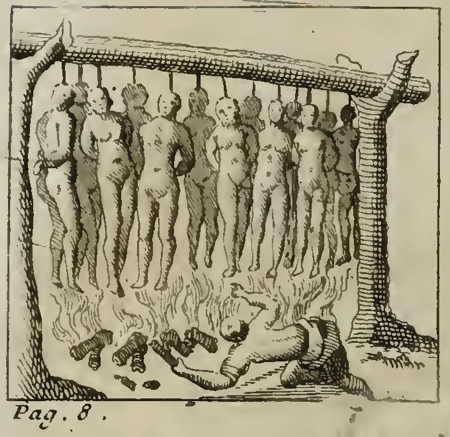
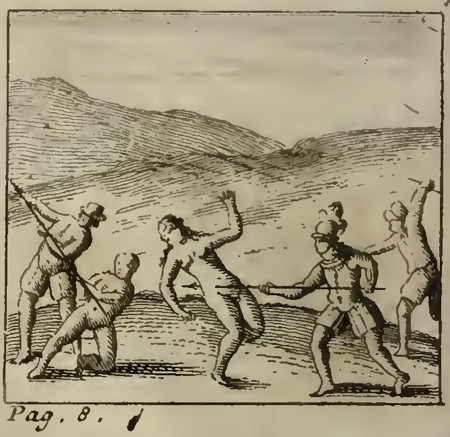
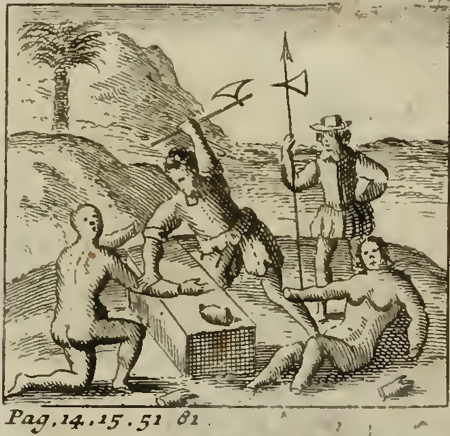
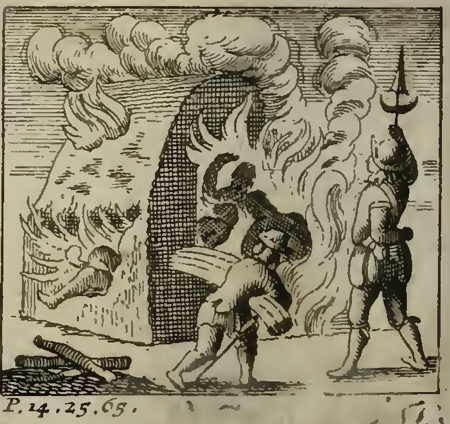
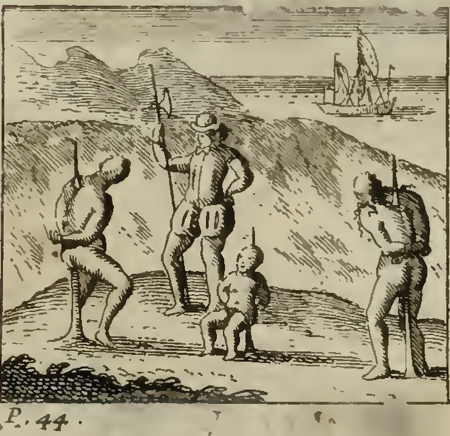
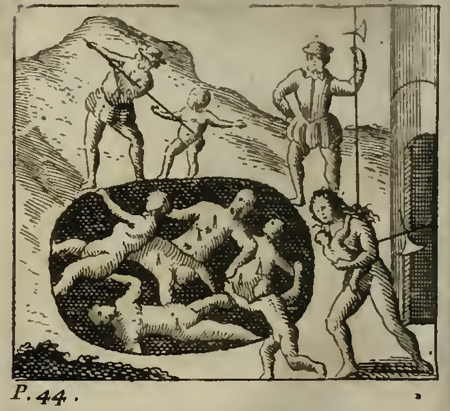
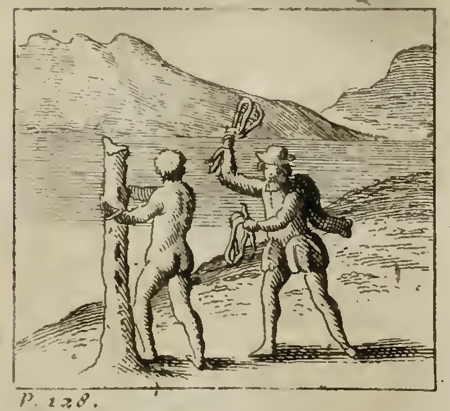
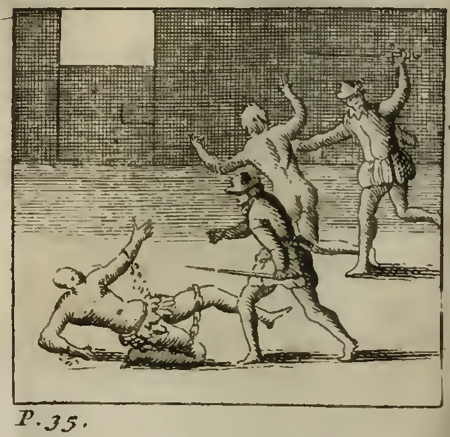
  • new: The Dominican priest Bartolomé de las Casas (1474-1566) wrote a devastating critique of the treatment of the native populations of America by the Spanish. His "Brief History" (1552) was republished and translated in many editions but often leaving out the important second half in which he gave his legal, moral, and religious reasons for defending the rights and liberties of these people. Here is the 1699 English translation which includes this section as well as many (22) gruesome woodcut illustrations depicting some of these horrors (see below for 8 images from the 1st panel). Interestingly, the publisher lists other books they have available, such as John Trenchard’s books criticising the existence of "standing armies", the Earl of Shaftesbury’s book on "An Inquiry concerning Virute", and the works of John Milton, which suggests a "Commonwealthman" connection. See Bartolomé de las Casas, An account of the first voyages and discoveries made by the Spaniards in America containing the most exact relation hitherto publish’d, of their unparallel’d cruelties on the Indians (1699) in enhanced HTML and facs. PDF; eBook HTML, PDF, and ePub.
    • see the facs. PDF of the original 1522 edition in Spanish.
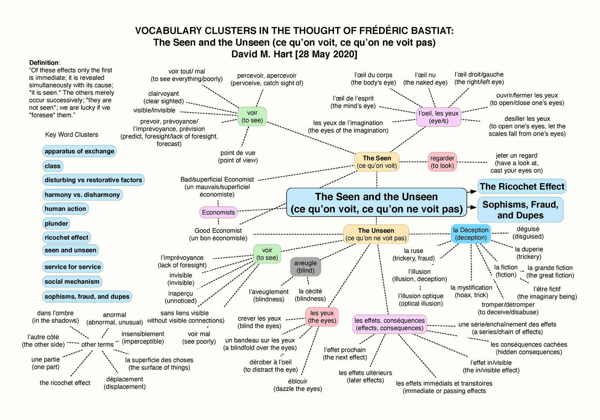
  • new: "The Students Edition" of Bastiat’s great pamphlet What is Seen and What is Not Seen in a new translation by me and with notes explaining the political and intellectual context in which it was written, and some of the complexities and richness of Bastiat’s economic and social theory. One of these is his notion of "seeing" and "not seeing", or only partially seeing, which are explored in a graphical depiction of what I call a "vocabulary cluster" (see image below). The chapter on "Trade Restrictions" is particularly appropriate at this moment. ["See" the photo on the left of Trump only seeing with one eye.]. In enhanced HTML; also in an iFrame format with the text on the left and the notes on the right. See also my paper on “Bastiat on the Seen and the Unseen: An Intellectual History” (2020) in HTML.
  • updated: the large Anthology of essays from Comte’s and Dunoyer’s journal Le Censeur (1814-1815) and Le Censeur européen (1817-1819) now has the 35 items listed in a sortable table with links to the individual French language versions (in HTML and facs. PDF) and English in HTM format (where available – more to come!). I am also updating the French versions into enhanced HTML format, beginning with the following which deal with their theory of "industrialism" and class analysis:
    • Comte, "De l’organisation sociale considérée dans ses rapports avec les moyens de subsistance des peuples" Le Censeur européen T.2 (March 1817) in enhanced HTML
    • Dunoyer, "Considérations sur l’état présent de l’Europe, sur les dangers de cet état, et sur les moyens d’en sortir" Le Censeur européen T.2 (March 1817) in enhanced HTML
    • Comte, “De la multiplication des pauvres, des gens à places, et des gens à pensions" Le Censeur européen T.7 (28 mar. 1818) in enhanced HTML
    • Dunoyer, "De l’influence qu’exercent sur le gouvernement les salaires attachés à l’exercice des fonctions publiques". Le Censeur européen T.11 (15 Feb. 1819) in enhanced HTML
  • new: another translation of an essay by Dunoyer from Le Censeur européen: "Considerations on the present state of Europe, on the dangers of this state, and on the means of escaping them" (March, 1817) in enhanced HTML
  • new: The French liberals Charles Comte (1782-1837) and Charles Dunoyer (1786-1862) came across the 3rd edtion of J.B. Say’s Traité d’économie politique in 1817 (ist ed. 1803 in enhanced HTML in French) and it added a whole new dimension to their undestanding of liberty. They incorprated his insights into a new theory of "industrialism", by which they meant any peaceful and productive activity which added to the well being of society. The "industrial class" produced the wealth which was taken and wasted by the unproductive and parasitic government class. They developed their new theory in the pages of their journal Le Censeur européen between 1817 and 1819. I have edited an anthology of 33 essays from their Journal which I am in the process of translating into English. Ten years later Dunoyer wrote an essay explaining how they and others understood the idea of "industrialism": "Esquisse historique des doctrines auxquelles on à donné le nom d’Industrialisme" (Historical sketch of the doctrines that have been given the name Industrialism) (1827) which is in French [HTML and facs. PDF] and now an English translation [HTML].
  • new: an essay by Vilfredo Pareto (1848-1923) on the changing structure of the ruling classes of Europe in the late 19th century and his pessimistic predictions for the coming century: Vilfredo Pareto, “Un’ applicazione di teorie sociologiche,” Rivista Italiana di sociologia, (Luglio 1900), p. 401-456. In Italian in enhanced HTML and facs. PDF.
    • see my English translation: "An Application of Sociological Theories" in enhanced HTML.

[See a larger verison of this image (3,000 px)]


Las Casas on “The Cruelties used by the Spaniards on the Indians” (panel 1)

Other Books this Month


MARCH 2025

Papers I am working on:

  1. A revised version of my "An Introduction to the Theory and History of the Classical Liberal Tradition".
  2. "Trump the "Tariff Man" and his Critics: An Intellectual History of the ongoing battle between (neo-)Mercantilism and Free Trade"
  3. "The Seven Pillars of (Economic) Wisdom of the Paris School of Political Economy: Part 1 – Gustave de Molinari and the Dictionnaire de l’Économie politique"

Additions to the Library:

  • new: a translation of Ambroise Clément, "De la spoliation légale" (On Legal Plunder), Journal des économistes (July, 1848). Written a couple of years before Bastiat’s long discussion of "legal plunder" in "The Law", Clément discusses 6 kinds of plunder (or "theft" as he also calls them): aristocratic, monarchical, regulatory, industrial, philanthropic, and administrative theft. English in enhancecd HTML; and the French original in facs. PDF and enhanced HTML.
  • new: my translation of Molinari’s chapter on "Public Consumption" in Cours d’économie politique (1863) on applying economic analysis to the functions of the state and opening all of its functions to free and open competition: in enhanced HTML.
  • new: My translation of Molinari’s pathbreaking book of 1849 in which he argues that ALL public goods can and should be provided by the free market, including police and defense services: Soirées on rue Saint-Lazare: Discussions about Economic Laws and a Defence of Property. It is bare bones draft with only Molinari’s footnotes included. In enhanced HTML. See also the French original in enhanced HTML and facs. PDF.
  • new: A Comparative and Bi-Lingual Edition of Frédéric Bastiat’s essay on "The State" (1848-49). I analyse the changes and additions Bastiat made to the three versions of his famous essay published between June 1848 and April 1849 in order to counter the growing appeal of the socialist groups in the elections in the first year or so of the Second Republic. It also includes a translation of the manifesto of the Montagnard party which was the main socialist group in the Chamber of Deputies and therefore a focus of Bastiat’s criticism in April 1849. In enhanced HTML.
  • new: a translation of Frédéric Bastiat, La Loi (1850): The Law: The Students Edition (2025) with copious notes; in enhanced HTML; also in an iFrame format with the text on the left and the notes on the right
  • new: a translation of Molinari’s important lecture given in Brussels in 1852 on the "material interests" of class. It is here that he coins the wonderful term "les mangeurs de taxes" (tax eaters) who exploit and live off "les payeurs de taxes" (the payers of taxes): "Revolutions and Despotism considered from the Perspective of Material Interests" (1852) in enhanced HTML. See aslso the original French version in facs. PDF and enhanced HTML.
  • There are several anthologies I have edited of French classical liberal thinkers which I would like to see translated into English. Most of them are accompanied by a lengthy introduction explaining why they are important and the intellectual context in which they were written. They are:
    1. Charles Comte and Charles Dunoyer, An Anthology of Articles from Le Censeur (1814-1815) and Le Censeur européen (1817-1819) (2022). 35 essays in French in enhanced HTML
      1. translated: Charles Comte, "On Social Organisation and its Relationship with the Means of Subsistance of Nations", Le Censeur européen, T.2 (March 1817), pp. 1-66. In enhanced HTML
      2. translated: Charles Comte, "On the Multiplication of the Poor, of Office-Holders, and of Pensioners", Le Censeur européen, T.7 (28 mar. 1818), pp. 1-79. In enhanced HTML.
      3. translated: Charles Dunoyer, "On the Influence exerted on Government by the Salaries paid for carrying out Pubic Functions", Le Censeur européen T.11 (Feb. 1819), pp. 75-118. In enhanced HTML.
    2. Frédéric Bastiat, La Spoliation, la Classe, et l’État (Plunder, Class, and State): An Anthology of Texts (1845-1851) (2023)
      1. 12 items plus some letters in French in enhanced HTML
      2. editor’s introduction: "Bastiat’s Theory of Plunder, Class, and the State" (2021) in HTML
    3. Gustave de Molinari, The Bicentennial Anthology of His Writings on the State (1846-1911) (2023)
      1. 24 items in French in enhanced HTML (the texts are preceded by my introduction)
      2. editor’s introduction: just my introductions to the above texts in HTML
      3. see also my paper, “Was Molinari a true Anarcho-Capitalist?: An Intellectual History of the Private and Competitive Production of Security” (2019) in HTML
      4. translated so far:
        1. "On the Production of Security", JDE (Feb. 1849) in HTML
        2. "Soirée 11", Les Soirées de l’a rue Saint-Lazare (1849) in HTML
        3. Chap. 10 "Les gouvernements de l’avenir" (The Governments of the Future) from L’évolution politique et la Révolution (1884) enhanced HTML
    4. Gustave de Molinari, Thoughts on the Future of Liberty (1901-1911) (2023)
      1. 3 items in French in enhanced HTML
      2. an English translation of these in enhanced HTML
      3. editor’s introduction: "Gustave de Molinari and the Future of Liberty: ‘Fin de Siècle, Fin de la Liberté’?" (2000) in HTML
    5. Gustave de Molinari, The Collected Articles from the Dictionnaire de l’Économie politique (1852-53) (2015)
      1. 33 items in French in enhanced HTML
      2. 33 items translated into English (draft) in enhanced HTML
      3. editor’s introduction: “The Struggle against Protectionism, Socialism, and the Bureaucratic State: The Economic Thought of Gustave de Molinari, 1845-1855” (2016) in HTML
  • new: Gustave de Molinari, The Collected Articles from the Dictionnaire de l’Économie politique (1852-53) translated into English, most for the first time (7 were translated and published in the late 19th century in the US). I put online this collection of 30 entries in French originally in 2019 as part of my celebrations of the 200th anniversary of Molinari’s birth. It was updated in December 2023 in enhanced HTML. My translation is a first draft and is available in enhanced HTML. It includes three additional pieces written by the publisher Guillaumin, the editor Clément, and Molinari who was one of the senior editors, which explain why the DEP project was undertaken and what they hoped to achieve. The Coppet Institute in Paris has recently republished Molinari’s entries as part of their Œuvres complètes de Gustave de Molinari (2019-). They were split across two volumes which were published in 2022 and 2023, and are only available for downoad in PDF. My edition includes them all in one volume and will be available in multiple electronic formats. It will also include an expanded introduction to the collection by yours truly. See the Coppet Institute’s edition here
    • entries in DEP T1 (1852): OC vol. 9 "En exil dans son propre pays (1852)", no. 062, pp. 49ff. [PDF elsewhere]
    • entries in DEP T2 (1853): OC vol. 10 "Deux années de transition (1853-1854)", no. 069, pp. 127 ff. [PDF elsewhere]


FEBRUARY 2025

Papers I am working on:

  1. A revised version of my "An Introduction to the Theory and History of the Classical Liberal Tradition".

Additions to the Library:

  • new: As a counterpoint to Molinari’s and Bastiat’s writings on free trade I have a number of mercantilist defences of tariffs, state subsidies to protected national industries, and planned or "directed" national industrial policy. The latest addition is Alexander Hamilton’s, then Secretary of the U.S. Treasury, "Report on Manufactures" (1791): a facs. PDF of the 1791 original; and the 1913 reprint in facs. PDF and enhanced HTML. On this see also:
    • updated: the 1909 English trans. of Friedrich List’s classic Das nationale System der politischen Oekonomie (The National System of Political Economy) (1841) in enhanced HTML.
  • new: After he left Paris to take up residency in Belgium in order to avoid living under the self-appointed "Prince President" Louis Napoleon (later Napoleon III) Molinari wrote several scathing critiques of his economic policies. The first was a lecture he gave in October 1852 on "Les Révolutions et le despotisme envisagés au point de vue des intérêts matériels" (Revolutions and Despotism seen from the perspective of Material Interests) [in facs. PDF and enhanced HTML] and a series of articles in a Russian journal (in Russian) in 1859 called "Napoléon III publiciste". This was later revised slightly and published as a book (in French) which we have here: Napoleon III publiciste; sa pensée cherchée dans ses écrits; analyse et appréciation de ses oeuvres (Napoleon III, the journalist) (1861) in facs. PDF and enhanced HTML; eBook HTML, PDF, and ePub
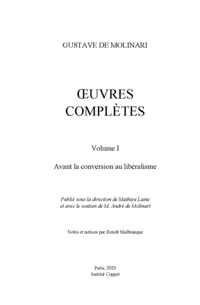
  • updated: The Institut Coppet in Paris is in the process of publishing the Oeuvres complètes (Complete Works) of Gustave de Molinari (1819-1912) [brief bio and full bibliography]. They began this enormous task in 2019 (the 200th anniversary of the brith of Molinari) with a volume which covers his first foray into the world of journalism in Paris in 1842 (vol. 1: Avant la conversion (1842-1845)) and have recently published vol. 19: Nationalités et Sécession (1861-1862). In preparing his work for publication they (i.e. the editor Benoît Malbranque) have uncovered a huge number of his hard to find journalism, letters, asnd notes for public talks and lectures. Unfortunately, Coppet does not provide the volumes in HTML but the PDFs are available for download from their website. Nor do they provide a full table of contents. So I have created one myself here. There are 103 "items" according to their cataloguing system.
  • new: the follow up set of "conversations" to Gustave de Molinari’s Les Soirées de la rue Saint-Lazare (1849) between another group of political and ideological rivals. Then it was between "a conservative", "a socialist", and "an economist". In Conversations familières sur le commerce des grains (1855) it is between "a food rioter," "a trade protectionist," and "an economiste" (i.e. a free trader) on the issue of the grain trade. In facs. PDF and enhanced HTML; eBook HTML, PDF, and ePub.
  • new: François Quesnay (1694-1774), "Observations sur le droit naturel des hommes réunis en société" (Observations on the natural rights of human beings when they are part of society), Journal de l’agriculture, du commerce & des finances, tome II, Première Partie, septembre 1765, p. 4-35. In facs. PDF and enhanced HTML; eBook HTML, PDF, and ePub
  • new: Gerrard Winstanley called himself a "Digger" or "True Leveller" because he advocated the right of ordinary people to "dig up" or farm common land, especially in times of economic hardship. His work is a darling of the Left because he experimented with communal living and the abolition of private property. The question is whether he was in fact making unowned land his own by "mixing his labour" with it in a Lockean way. See his The Law of Freedom in a Platform (1652) in enhanced HTML and facs. PDF; and eBook HTML, PDF, and ePub. This is part of the Leveller Tracts Project. which now has 331 items listed, of which 153 are available online.
  • new: Marchmont Nedham (1620-1678), The Excellencie of a Free-State: or, The right constitution of a Common-wealth (1656): facs. PDF and enhanced HTML; eBook HTML, PDF, ePub
    • see also the 1767 Hollis edition of this work in facs. PDF. It was one of the key texts in the Commonwealthman tradition.

Other Books this Month


Authors this Month

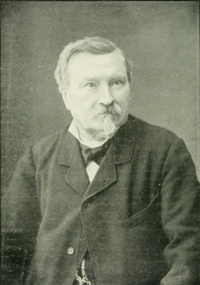
François Quesnay (1694-1774)

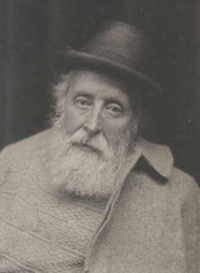
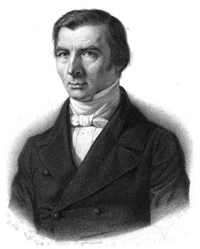
Gustave de Molinari
(1819-1912)


JANUARY 2025

Papers I am working on:

  1. A talk to a meeting of the University of the Third Age, Newport, Sydney (5 Feb. 2025): "Donald Trump: Friend, Foe, or Schmo?" Lecture overheads [PDF] and Lecture notes and images/graphs [HTML]
  2. A revised version of my "An Introduction to the Theory and History of the Classical Liberal Tradition"

Additions to the Library:

  • updated: my version of the table of contents of the Encyclopedia of Libertarianism (Cato, 2008) organised thematically and as a sortable table, with links to the articles on their webisite libertarianism.org
  • updated: three tracts by the pro-Leveller author John Warr (1642–1686) about whom very little is known. other than he was a passionate and elegant writer who was a great advocate for liberty:
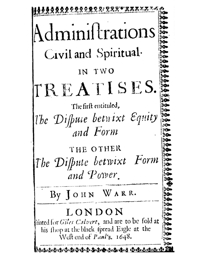
    • Administrations Civil and Spiritual in Two Treatises. The First Entitled The Dispute betwixt Equity and Form. The Other The Dispute betwixt Form and Power (1648) in enhanced HTML;
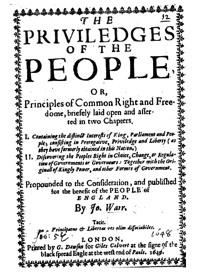
    • The Priviledges of the People, or Principles of Common Right and Freedome (5 February, 1649) in enhanced HTML;
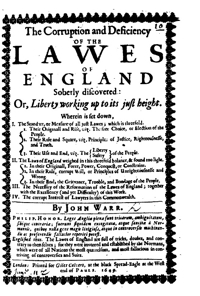
    • The Corruption and Deficiency of the Lawes of England (11 June, 1649) in enhanced HTML;
  • new: I have combined these three tracts into one file called "The Sparks of Freedom in the Minds of Men": Three Tracts by John Warr (1648-1649) in enhanced HTML; in eBook HTML, PDF, and ePub.
  • see this example of his prose:

    In this designe God co-operates with Man and makes him instrumentall in the work, by clearing his principles, and stirring up his spirit. There are some sparkes of Freedome in the mindes of most, which ordinarily lye deep, and are covered in the Darke, as a spark in the ashes. This spark is the image of Go* in the mind, which is indeed the Man, (for the divine Image makes the Man.) This Man is hid in most persons, onely the Tyrant, the Beast, or the slavish principle appeares, and the whole bulk is hurried about by the motion of that principle, and the Man within us swimmes with the stream.

Other Books this Month