
Revised: 27 June 2026
Introduction | Further Reading
Introduction
I have have lectured and written on the history of the classsical liberal tradition over a period of 40 years (beginning in 1986). This page gathers this material into a better organised format. The table below organises my material into the follwing categories:
- The Classical Liberal Tradition: A Series of Lectures
- The Classical Liberal Tradition: A Series of Blog Posts
- The Great Books of Liberty
- The Classical Liberal Tradition: A Reader
- 600 Quotations about Liberty and Power
- The Encyclopedia of Libertarianism (2008)
- A Collection of Legal and Political Documents about Liberty
Other items of interest:
- See my main list of Essays, Papers, and Talks (e.g. sort by "Type" for "Course", "Lecture", "Talk") – [here]
- See the list of my Blog Posts at "Reflections on Liberty & Power" [here] and [here].
- Topic: Images of Liberty and Power [here]
- Topic: Liberty in Film and Fiction [here]
- Topic: War and Peace in Art and Film [here]
Further Reading

Titian, “Sisyphus” (1548) 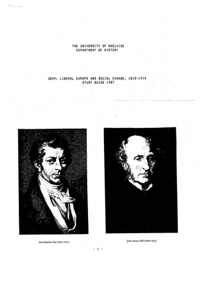
Title Page of the |
The Classical Liberal Tradition: A Series of LecturesI have written a series of lectures and blog posts (see below) which provide a survey of The Classical Liberal Tradition: A 400 Year History of People, Ideas, and Movements for Reform. This lecture/seminar series and related blog posts has evolved evolved over the years. The most recent version was updated in 2022:
In addition to material I have created and/or edited myself I have made much use of the Cato Institute’s Enclyclopedia of Libertarianism (2008) which has many excellent biographical and historical entries about the classical liberal tradition (see below for detals and this blog post "The Encyclopedia of Libertarianism (2008)" (6 December, 2020)).
University courses I have taught on CL ideas and movements – see course details [here]:
|
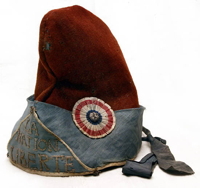
A Phrygian Cap of the freed slave from the French Revolutionary period.
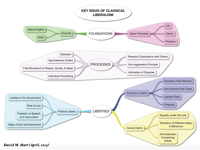
The Key Ideas of Classical Liberal Thought (see a larger image)
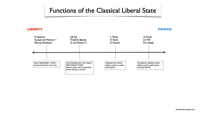
The functions of the classical liberal state (see a larger image)
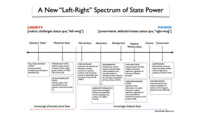
A new "left-right" political spectrum 1
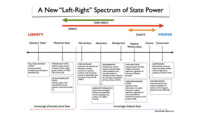
A new "left-right" political spectrum 2 |
The Classical Liberal Tradition: A Series of Blog PostsAn Overview
Recommended Reading
The Many Faces of Liberalism:
Classical Liberals on the Role and Power of the State:
What CLs were FOR and AGAINST:
CL Visions of the Future Free Society:
CL Movements and Crusades for Liberty:
CL’s Successes and Failures:
The threats to liberty and strategies to counter them:
The state of liberty and liberalism in Australia and elsewhere:
|
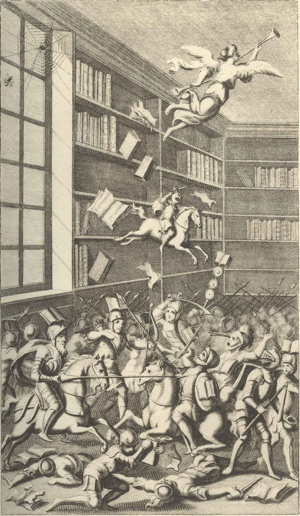
Jonathan Swift, “The Battle of the Books” (abc) 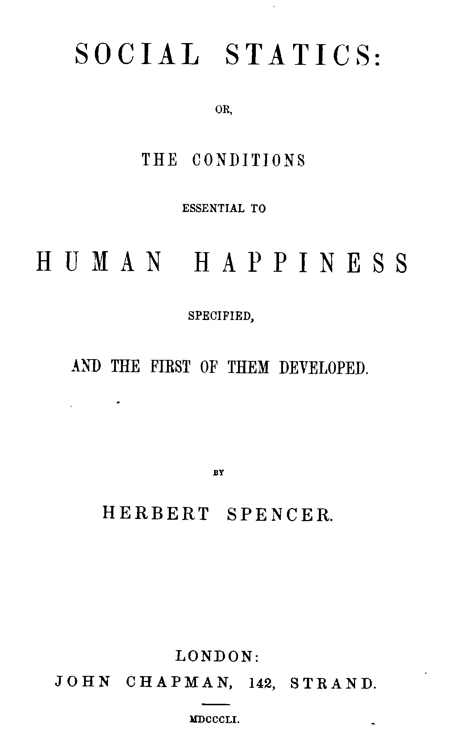
Herbert Spencer, Social Statics (1851) |
The Great Books of LibertyThe Guillaumin Collection I have named my collection of classic works about liberty and power the “Guillaumin Collection” in honour of the French publishing firm run by Gilbert-Urbain Guillaumin (1801-64) and his two daughters Félicité and Pauline, which published some 2,359 books, journals, dictionaries, and encyclopedias between 1837 and 1910 (see full list), and thus played a central role in the emergence of the “Paris School” of political economy (my paper and a list of key texts). The books in the “Guillaumin Collection” are some of the most important works in the development of the classical liberal / libertarian tradition (see also my list of “The Great Books of Liberty”). My aim is to create a “near replica” of the original classic text which can be used for scholarly purposes, either by being read online or downloaded for personal use. The texts are in their original language (English, French, German, and Latin), and are based upon either the first edition (such as Adam Smith’s Wealth of Nations (1776) ) or the last edition published in the author’s lifetime (such as Adam Smith’s Theory of Moral Sentiments (the 1st ed. appeared in 1759; the final revised edition appeared in 1790)). In addition, there is a facsimile PDF of the original text for those who wish to see an “actual replica” of the text. These books have been richly coded and have some features which scholars will find useful, such as the original page numbers of the text and a citation tool for scholars . As of May 2026 there were 241 works in the Guillaumin Collection
One Volume Surveys of Classical Liberal Thought In the late 18th and early 19th centuries classical liberals became self-conscious that they were advocating an entire worldview (Weltanschauung) of political, economic, and social relationships in general which was
On this page [here] I have collected 8 examples of these one volume surveys.
The Great Books of Liberty: A Personal Selection Here is a collection of 20 of my personal favourites. [here] |
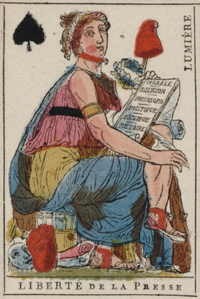
New Playing Cards for the French Republic (1793-94): Liberty of the Press – Motto: “Enlightenment” |
The Classical Liberal Tradition: A ReaderThe Classical Liberal Tradition: A Reader on Individual, Economic, and Political Liberty with a 100 or so chapter-length items to date. Each extract is accompanied by an introduction. [here]. I developed this Reader when I was Director of the Online Library of Liberty Project at Liberty Fund. It was designed to be a larger, online version of the excellent collection edited by David Boaz,The Libertarian Reader: Classic and Contemporary Readings from Lao-Tzu to Milton Friedman, ed. David Boaz (New York: The Free Press, 1997). The collection consists of chapter-length extracts from some of the key works in the Classical Liberal tradition, grouped into a dozen key topics. The original edition of the Reader had a brief introduction by the editor which was followed by the bibliographic details of the book, and a link to the extract, either at the OLL website or other external websites. There were 96 pieces in the main collection. Some of the links have been changed and I have not had the time to correct them. The Reader is divided into the following sections:
|

New Playing Cards for the French Republic (1793-94): Liberty of the Professions – Motto: “Industry” |
600 Quotations about Liberty and PowerI compiled this collection of 600 quotations about liberty and power over a 15 year period 2004-2018 for the Liberty Fund’s Online Library of Liberty of which I was the founding Director. It was designed to show the range of thinking about the 30 or so topics listed below, as well as to provide an entry point to the full text in order to allow the reader to explore the topic more deeply. This collection of shorter pieces is organised into 30 topics. Each quotation has a brief commentary. The OLL has broken the links back to the specific paragraph where the quotation is located. The link still takes you eventually to the whole text. From there you will have to navigate to the quote yourself. Sorry! |
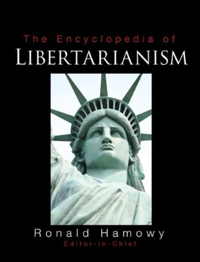 |
The Encyclopedia of Libertarianism (2008)The Encyclopedia of Libertarianism. Editor-in-Chief Ronald Hamowy. Assistant Editors Jason Kuznicki and Aaron Steelman. Consulting Editor Deirdre McCloskey. Founding and Consulting Editor Jeffrey D. Schultz.(Los Angeles: Sage, 2008. A Project of the Cato Institute). Ronald Hamowy’s Encyclopedia of Libertarianism (Cato Institute, 2008) was an important work which brought together into one volume a survey of the modern libertarian movement which covered the key ideas, historical events and political movements, as well as policy matters. It was eventually put online and I linked to many of its its entries for my lectures and teaching guides on the classical liberal tradtiion. It has been reorganised online several times and thus links have been changed and some broken. I have made my own table of contents of the enrtries which have been organised into themes and topics. This this sortable table [HTML]. I was a minor contributor to the project for which I wrote several biographcial articles on French classical liberals.
|
Magna Carta 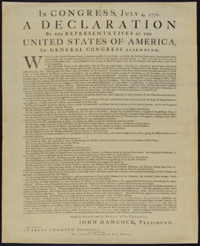
The Dunlap broadside edition of the Declaration of Independence (see a larger image) |
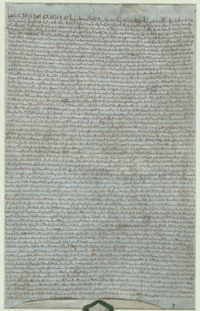
A Collection of Legal and Political Documents about LibertyVarious authors, On Limiting the Power of the State: A Collection of Petitions, Charters, Decrees, and Declarations of Rights and Liberties (1215-1848) (The Pittwater Free Press, 2024). A collection of 25 key documents in the history of the evolution of our individual, political, and economic rights, here This is a collection of 25 key documents in the history of the evolution of our individual, political, and economic rights. It is modelled on, although much larger than, the French Civil Code and the Cato Institute’s The Declaration of Independence and the Constitution of the United States (The Pocket Constitution), the idea of which was to enable every citizen to carry in their pocket a summary of the rights which they enjoyed under the law. When challenged by an overly officious government employee, the citizen could pull out the pocket book of rights and recite the constitutional chapter and verse to defend their rights. This collection takes a longer term view than the above mentioned pocket guides, stretching back to the English Magna Carta (1215), and a more international perspective, in which our modern understanding of rights encompasses the historical experience of England, the American colonies and early republic, the Netherlands, Belgium, and France during and immediately after its revolution. Given the lack of a Bill of Rights or a Declaration of Independence in the Commonwealth of Australia I wrote my own for "Australia Day" 26 January 2026. See:
|
