| The Digital Library of Liberty & Power incorporating the Guillaumin Collection of the Great Books of Liberty |
Home | New | Authors | Works | Papers | Blog | About | Email | Search |
 |
|
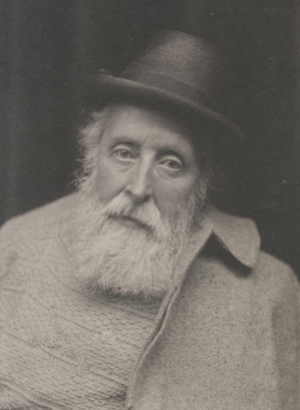
JOHN A. HOBSON AND
AUBERON HERBERT,
Their Debate in The Humanitarian (1898-99)
|
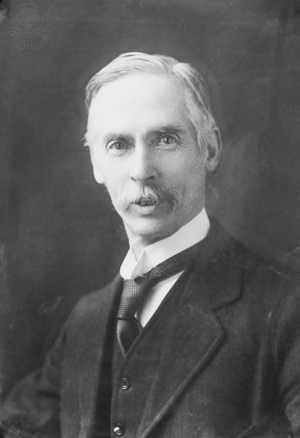
John A. Hobson (1858-1940) |
The Guillaumin Collection
 |
This title is part of “The Guillaumin Collection” within “The Digital Library of Liberty and Power”. It has been more richly coded and has some features which other titles in the library do not have, such as the original page numbers, formatting which makes it look as much like the original text as possible, and a citation tool which makes it possible for scholars to link to an individual paragraph which is of interest to them. These titles are also available in a variety of eBook formats for reading on portable devices. |
Source
, Their Debate in The Humanitarian (1898-99). Edited by David M. Hart (Pittwater Free Press, 2025).http://davidmhart.com/liberty/EnglishClassicalLiberals/Herbert/1898-99-HobsonHerbertDebate/index.html
John A. Hobson and Auberon Herbert, Their Debate in The Humanitarian (1898-99). Edited by David M. Hart (Pittwater Free Press, 2025).
The debate consisted on the following essays published in The Humanitarian: A Monthly Review of Sociological Science:
- Auberon Herbert, "A Voluntaryist Appeal," The Humanitarian, vol. 12 (1898), pp. 313-29.
- John A. Hobson, "Rich Man’s Anarchism," The Humanitarian, vol. 12 (1898), pp. 391-7.
- Auberon Herbert, "Salvation by Force," The Humanitarian, vol. 13 (1898), pp. 265-72.
- Auberon Herbert, "Lost in the Region of Phrases," The Humanitarian, vol. 14 (1899), pp. 320-30.
This title is not yet available in a facsimile PDF of the original.
This book is part of a collection of works by Auberon Herbert (1838-1906).
Table of Contents
- Auberon Herbert, "A Voluntaryist Appeal," The Humanitarian, vol. 12 (1898), pp. 313-29.
- John A. Hobson, "Rich Man’s Anarchism," The Humanitarian, vol. 12 (1898), pp. 391-7.
- Auberon Herbert, "Salvation by Force," The Humanitarian, vol. 13 (1898), pp. 265-72.
- Auberon Herbert, "Lost in the Region of Phrases," The Humanitarian, vol. 14 (1899), pp. 320-30.
- Endnotes
Auberon Herbert, "A Voluntaryist Appeal"↩
Source: Auberon Herbert, "A Voluntaryist Appeal," The Humanitarian, vol. 12 (1898), pp. 313-29.
"The widest possible liberty, only limited by the like liberty of all others." —HERBERT SPENCER.
"Progress is difference.. —HERBERT SPENCER.
"Over his own body and mind, the individual is sovereign." —J. S. MILL.
Why believe in force, or compulsion of each other, instead of believing in liberty?
WE ask you to renounce force, or compulsion of each other, as a wrong instrument for securing political advantages for yourselves, or for advancing your own opinions and interests. We ask you resolutely to condemn force [except when employed simply and directly for defence] as an instrument unworthy and unfit to take any part in the work of true civilisation.
We ask you not to allow any governing body to pass laws which restrict and regulate the actions of those, who live honestly and at peace with their fellow-men —laws, which interfere with their social habits, or take any side in the disputes between employers and employed, or impose either compulsory services or compulsory payments of any kind upon the people.
We ask you not to allow Parliaments or Governments to use force for any purpose except to restrain force —that is, to "keep the peace" between us all, and to insure for all, rich and poor alike, perfect security of person and property —whether such property be public or private. [1]
We ask you to look both upon yourselves and upon all your fellow men as free men, free in mind and body by natural right, free to choose your own manner of life, to exercise your faculties in your own fashion, to reap the full reward of your labour, without paying a compulsory share to the State, and in return for this full perfect freedom to be ready to bear the burdens and responsibilities of your own life, whatever they may be, without asking Parliaments and Governments to grant favours and privileges for yourselves, or to place restrictions and burdens of any kind upon others.
We ask you to choose this full perfect freedom, as the highest and best gift that all persons, whether poor or rich, can possess; and to look upon all your fellow.men and women [so long as they live honestly and peacefully, and respect these same rights of freedom in all others], as SELF-OWNERS —that is to say, owners of their own minds and bodies, and of all property honestly and peacefully acquired.
The self-owner, who owns his own faculties, owns also property, since property is won by means of faculties.
We ask you not to fall into the slavish way of looking upon either Parliament or Government as the owner of property, that is won by individuals for themselves. We ask you to treat the earnings of men as sacred; to look upon all property, honestly and peacefully acquired, as belonging by right to those who have acquired it, and not as belonging to Governments and Parliaments, which —except so far as they keep the peace —have not shared even with a little finger in the toil of those who have won it. It is absurd to look for the ownership of John Smith's property in any person but in John Smith himself. All honest and peaceful men are the only true owners of their own property, just because they are the only true owners of those faculties of mind and body, by means of which property is created or won. In what way, we ask, would it profit a man if he were told that he owned his own body and mind, and if at the same time he were debarred, as some politicians and socialists propose, from the full and perfect possession, as an individual, of any of the good things of the earth —either from the possession of land, or of the products of land, for the sake of which the labours of his body and mind have been expended? [2]
The rights of self-ownership are supreme rights, and rest on the hard rock.
We ask you to place these rights of Self-ownership —these rights of free men over their own minds, bodies, and property —above all Parliaments, Governments, laws, institutions, all edicts of emperors, and all votes of majorities; and to believe that there is no edict of an emperor, no vote of a majority, which can take from the individual what he possesses as a moral right. We ask you to believe in these rights of Self-ownership, because they are, so to speak, founded on the hard rock, and can scarcely be disputed by those who take the trouble to think clearly. The truth of these rights rests on the evidence: (1) of natural facts; (2) of critical reason; (3) of morality, which itself depends for its own existence on the existence of these rights; (4) of human experience.
(1) On the evidence of natural facts: —First, because every individual possesses a separate and distinct mind and body —separate by itself, and not mixed up with other minds and bodies; and nature thereby affirms for us that the mind and body of John Smith belong to John Smith, and not to anybody else; secondly, because Nature is, so to speak, a thorough-going Free-trader. All improvement, whether of plant, animal, or man, only comes through the improvement of the individuals, and as the result of free competition in excellence —the individuals, which acquire new and superior qualities, gradually taking the place of the unimproved individuals, and in this way raising and improving the race. Thus difference, competition between the individuals, and the constant emergence of the improved individual, are the conditions of progress; whilst uniformity and artificial protection of any kind (which restrains this emergence of the improved type) are the conditions of failure and ultimate extinction. It is owing to this law in nature that the plants and animals, which for a time have escaped competition [because they were secluded by a barrier of sea or mountain] are destroyed by the races which have undergone competition and selection, when the two races —so to speak, the free-trade race and the protected race —once come into contact.
(2) On the evidence of reason: —Because if John Smith is not the owner of himself, where shall we look for his owner? The idea of men owning each other is an altogether confused and contradictory and impossible idea; for if men own themselves, then they cannot own each other; and yet if they do not own themselves, they are just as incapable of owning each other, for how shall a man, who has no ownership in himself, be capable of owning his fellow-men?
(3) On the evidence of morality: —Because all our ideas of right and wrong are inseparably bound up with and depend upon this ownership of our own minds and bodies. How can we say what is right and wrong for John Smith, until we know if he belongs to himself or to others? If he belongs to himself, his right and wrong will be of one kind; if he belongs to others, then his right and wrong will be of another kind. Until you have settled to whom the ownership of human beings belongs, there can be no certain and definite morality, no certain and definite relations of men to men. Until you have decided once for all that John Smith is the owner of John Smith, there can only be a reckless and continual strife over the ownership of John Smith, in which in the end the strongest —the most brutal or the most cunning —must win. Remember also, whenever you are tempted to restrict your fellow-men, that Freedom and Morality are inseparable from each other for another reason. Where Freedom is not, morality is not. Only the free act is the moral act; only the free man is the moral being. He whose hands are tied by others, and who acts under constraint and fear of punishment, is hardly removed from the animal, that is bitted and bridled. A man only becomes a moral being —that is one who acts from a sense of right —when he possesses freedom. Morality and Liberty exist together, and cease together.
(4) On the evidence of human experience: —Because the history of progress has been the history of Liberty. Only as, one by one, the chains, binding the individual, have been broken, peace, industrial effort, and security, have become possible, knowledge and reason have founded their empire, brutality has lost ground, and men have shed a large part of their old savage nature. Everywhere the free man has gained in vigour, intelligence, and conscience, over the restricted man.
All liberty carries with it conditions or limits.
From the principle of universal liberty follows another principle. There is one condition, or limit, which arises out of and goes with these rights of Self-ownership. If A.B. may act in a certain manner, it follows that C.D. must not act in a certain way —that is, in a way that would prevent A.B.'s action. Those who claim the rights of Self-ownership for themselves, those who claim to be the owners of their own bodies, minds, and property, are bound by that very claim not to encroach upon the same rights of Self-ownership in others. Our liberty or Self-ownership is therefore limited by the condition that we must not take away any part of the liberty or any of the rights of Self-ownership of others; in other words, that we must not injure by force or fraud the person or the property of others —for this is the plain and practical meaning of Self-ownership: —That the person, the faculties, the property, of each individual belong to that individual, and not to others —whether those others are private individuals, or a collection of persons, such as we call a Government; and therefore that we may not use force or fraud [which mean compelling or deceiving those who should be free agents] in our dealings with each other.
We must provide for the due observance of these conditions or limits.
From this principle of the limit of liberty there follows again another principle. We must take the necessary steps to insure the due observance of the limit. Every honest and peaceful individual, rich or poor, should be protected in his rights of Self-ownership. No individual should suffer a loss of these self-owning rights through the force or fraud of others. Whilst therefore we would not allow any Government to use force to take away the least part of the rights of Self-ownership from honest and peaceful citizens, whilst we would not allow such Government to use force to impose any compulsory payment or compulsory service, to use force to favour any interest or any opinion, to use force to carry on any moral crusade, or to interfere with any action that is not in itself an attack upon the person or property of others, we would allow Government —in the phrase already employed —to USE FORCE TO RESTRAIN FORCE. We would employ the force-machine of Government to ensure that the limits of Self-ownership were not over-stepped, —in other words, to provide that no man, such as the thief, murderer, violent man, swindler, or foreign enemy, should be allowed to injure the person or property of others. If you ask us why force should be used to defend the rights of Self-ownership, and not for any other purpose, we reply by reminding you that the rights of Self-ownership are —as we have explained —supreme moral rights, of higher rank than all other human interests or institutions; and therefore force may be employed on behalf of these rights, but not in opposition to them. All social and political arrangements, all employments of force, are subordinate to these universal rights, and must receive just such character and form as are required in the interest of these rights. Force, which is at best a brutish thing, may be employed —when necessary —in the service of Self-ownership, but it can never be put on an equality with Self-ownership, can never be allowed to enter into conflict with it. Whenever this happens, whenever force escapes from the drudge's hole, which is its one fit dwelling place, and lays claim to universal direction, it should be treated as men treat the presuming pretender, who seeks to lay base hands upon a great empire. Indeed, to thrust aside the rights of Self-ownership in order to set up a system of force, can only be compared to placing an ape upon the throne and bidding him rule over human beings. It is the inversion of the true moral order.
As has just been said, we may rightly use the force-machine of Government to check force and fraud, in other words, to protect person and property (or again, in other words, to defend the rights of Self-ownership), but in order to understand this right of using force, it is necessary to perceive clearly what Government is, and what it is not. Government has no sacred, no super-human element in it. It is simply a machine created by the individuals of a nation for their own use and convenience. It is their servant and instrument; it can never, except by usurpation, become their master and owner. Whatever rights a Government possesses of using force, are rights derived solely from the individuals who have created it, for there is no other human source of any kind from which they can be derived. The Government is made by John Smith. It is true then that a Government may reasonably possess certain limited and definite rights; for if John Smith may defend himself, or his house, or his purse, with (defensive) force against (aggressive) force, then also he may transfer to the Government, which he and others like him have created, this office of using defensive force on his behalf; but if John Smith has no right, because he happens to be stronger than his neighbour to walk into that neighbour's house, and use force to compel him to educate his children, or to prevent his working more than eight hours, or to prevent his drinking spirits or beer, or to compel him to serve as a soldier, or to compel him to contribute to various undertakings to which he does not wish to contribute, then it is equally plain that no Government, created by John Smith, or any number of John Smiths, can have the right to do any of these things, which John Smith himself has no right to do. It is quite impossible for John Smith and those like him to create an institution in their own image, and then to give rights of using force to that institution —rights, which neither John Smith himself nor any of John Smith's fellows and equals possess in themselves. It is quite impossible to give to others what you do not possess yourself; just as it is equally impossible for the created thing to possess greater authority than those who created it. Exactly the same truth holds good as regards majorities. Majorities are only collections of individuals, and can never possess larger rights of using force than the individuals —of whom they are composed —possess. It is plain, therefore, that no majority can possess power over the person and property of John Smith —so long as he respects the rights of others —unless John Smith of his own free choice consents to make himself subject to the decisions of such majority. Remember always —numbers cannot affect rights. Numbers cannot create them; numbers cannot take them away. You may pile as many stones together as you ike, but it will not alter their nature. Stones they were; stones they will remain. So it is with men. A million of men can have only the same moral rights [to employ force, for example] as one man.
At the same time, whilst we, the individuals (having in ourselves the right to protect ourselves against aggressive force), may commission the Government to use defensive force on our behalf —that is, to use force against those who, like the robber and murderer, are themselves users of force —we must never allow the Government to use force to compel any peaceable person to become subject to it against his own consent; or allow the Government to impose upon such person compulsory services, or compulsory payments, even for the sake of providing those systems of defence, which are necessary to us all. Freedom must always come first; and all services, however important, must come second. All men must join the State as free men, with their own consent; all men must serve it and contribute to it as free men and with their own consent. Otherwise men would cease to be Self-owners, and the disposal of their minds, bodies, and property would no longer rest with themselves, but with others —with those who claimed to be the Government. We ask you, therefore, to help us to change the present Compulsory State, with its usurped ownership of the minds, bodies, and property of men, into the Voluntary State, in which men would co-operate together for all their needs, as free men and Self-owners, not as those who have sold themselves into a bondage, from which, when once they have entered it, it is so hard to escape.
Summing up the voluntaryist principles
Let us sum up the great principles in a few words: —
The rights of Self-ownership, or Liberty —in other words, the rights of free unrestricted faculties —are supreme.
All political institutions must exist simply for the sake of Self-ownership. Self-ownership must never be sacrificed to any political institutions.
All force, which is not employed simply for defence, is an evil and a wrong, because it violates the rights of Self-ownership. We may only use force for one purpose —force to restrain force; we may only use it against one class of persons —the users of force.
All rights are universal. We, therefore, who claim the rights of Self-ownership for ourselves, must concede exactly the same rights to all others. All Liberty necessarily has limits. These limits are drawn by force or fraud. [3] Our task, therefore, is to make a free world, everywhere, in everything, and for everybody, only barring force and fraud —whether it be the force and fraud of Governments or of private persons.
Government is nothing but an instrument, a creature, called into existence by the individuals, and employed by them for their service. It may receive from the individuals such moral rights as they possess in themselves of using force, but it can never receive from them larger rights of using force than they themselves possess; nor can numbers create rights.
The voluntaryist watchwords.
Now take as your watchwords: —Establish Free Trade in everything; face all competition fearlessly —don't try to escape from it by Chinese walls, or dodges, privileges, and artificial restrictions; let all peaceful faculties be unrestricted and unregulated; make liberty the universal basis of your thoughts and actions; remember always that laws are force, that the passing of laws means the use and the sanction of this evil thing —force; say resolutely to yourselves: —"force is destructive of moral rights; force is no true remedy for existing evils"; refuse to use force to advantage yourselves; refuse to use force to attack vices, or to fight moral crusades, or to carry out any sanitary reforms, which pass beyond the restraint of actions, that directly injure person or property; hate and despise force in all its forms; trust resolutely to moral weapons; fight with voice and pen the peaceful battle of persuasion; reason with and teach men —don't compel them; remember that a convinced man is worth everything, a compelled man is worth nothing; don't build up great governing machines with any powers, however slight, of compulsion lodged in the body of them —they will not remain your servants, they will always tend to become your masters; avoid all systems that make for uniformity, and that put all men, the good and bad alike, under the same regulations; favour difference —"progress is difference"; avoid all war —war between nations, war between classes, war between rich and poor, war between employers and employed; seek peaceful solutions by allowing every individual concerned to act after his own fashion; for the sake both of peace and of liberty, don't seek to mass men together in great fighting organisations; follow after peace with a whole heart, remembering that peace is the blessed child of liberty, and apart from liberty is only a dream; don't be a politician, for a politician too often lives by stirring up prejudice and passion and by persuading the people to use compulsion as their easiest and cheapest instrument; take no share in any action that divides the nation into two great factions, always fighting and quarrelling with each other; don't help the majority to force their opinions or interests upon the minority; don't be content to belong either to the party of those who compel or of those who are compelled; don't attack property in any form, even of the richest men —to attack any form of property, honestly acquired, is to weaken all forms of it; let there be no uncertainty for any living man about the reward of his labours, but keep the possession and enjoyment of property —this great basis of all human effort —perfectly steady and assured; get rid of all existing public debt; submit to severe voluntary taxation for a time so as to be rid of this curse for ever; let no penny ever be raised again on compulsory conditions; don't believe in the common compulsory fund, which is the devil's favourite instrument for teaching us all to quarrel with and hate and fear each other; never mortgage the faculties of your fellow-man for services, which he may not perhaps desire to have rendered to him; never deal with the faculties of any single man, living or unborn, as if they belonged to you and not to him, or place compulsory burdens on those who should exercise their own choice; above all never allow any man to be used compulsorily, in purse or person, for war purposes; work heartily in the cause of voluntary taxation, since voluntary taxation means not only the escape from State bondage and the victory of free faculties but means the ending of a long series of oppressions of each other —oppressions sometimes petty, sometimes almost destructive of energy and life —means the beginning of a long series of friendly services, joyfully exchanged, means the spirit of peace instead of the spirit of war, means a far truer and higher recognition of our common fellowship; train and fit yourselves to serve the Voluntary State generously; do all in your power to make it a good and efficient national instrument; whilst you employ it as a force instrument —strictly limited to force purposes —with great moderation and scrupulousness, employ it, as a Voluntary instrument and dependent upon Voluntary contributions, freely and without grudging, wherever it can perform useful public services or assist in our common civilisation; do not be persuaded for a moment that you cannot learn to contribute by gift or service under persuasion instead of compulsion; organize great national holidays for the collection of public revenue; but on no plea whatsoever give any man forcible control over the smallest part of your property, faithfully remembering that your property is the outcome of your faculties, that it has been won in the sweat of your brow, that it is a very part of you, and that he who rules your property also rules you.
Why force-methods are not only morally wrong but fail practically
(1) They are very costly, requiring complicated machinery, and hosts of officials to supervise officials. (2) They are too easily applied, without sufficient discussion, and therefore lead to grave mistakes. (3) A series of great departments with complicated machinery can never be controlled by the public, who have not leisure enough to understand the details. (4) Such departments, being uncontrolled, are liable to be expensively, and even corruptly administered. (5) When these administrative machines are created, they provoke bitter quarrels as to which party shall own and direct them; and thus divert the valuable energies of good workers from their own work. (6) The use of force discredits and weakens the moral weapons of reason and persuasion, turning moral reformers into mere politicians and force-men. (7) It makes those, who compel, brutal, and those, who are compelled, stupid. (8) Where force-methods prevail, there is only a short-lived toleration for the competition of voluntary methods. (9) Force-methods create a wrong moral atmosphere, encouraging men to believe that they may suppress anyone who differs with them, and anything that offends them. (10) They always tend to grow indefinitely —one measure of force making other measures of force necessary. (11) They give the first place to organisation and discipline, and the second or last place to conscience and sense of right. (12) They favour uniformity, mechanical arrangement and showy pretentious system, discouraging difference, which is the first condition of progress. (13) They cannot discriminate, but put good and bad under the same conditions. (14) They cannot remedy human evils, but only produce a change of form in such evils. (15) They make the reform of all moral evils more difficult by driving such evils under the surface. (16) They prevent the improvement of men by shielding them for a time from the consequences of their actions. (17) They always lead to persecution, involving mankind in a wretched perpetual war of punishment on the one side and evasion on the other side.
Land nationalisation, illogical in theory, and mischievous in practice.
When Land Nationalisers assert the right of everybody to possess the soil of a country, and deny the right of individuals to possess it, they overlook the many intellectual contradictions and fallacies in which they are involved by their creed. (A) If the individual has no moral right to possess the soil, then a multitude of individuals can have no moral right to possess it, since this multitude is simply composed of individuals, and neither the physical nor the moral nature of the individuals is in any way changed by their being brought together and placed side by side in one lot. As already pointed out, a stone remains a stone, whether it is left by itself or made one of a heap. All the stones in the world placed in the same company will not make them like potatoes, or in any way different from themselves. (B) If it were true that the land of the country belonged to all the people, and could not belong to individuals, then the only form of tenure, which would be right, would be pure communism in its most extreme form —that is to say, that every person would have an equal right to use every acre or indeed every yard of land. Nobody would be morally entitled to place a building upon the land, or to cultivate it to his own use, for no person could take even temporarily from the Nation what belonged to it. If it is true that the land belongs to "everybody," then whatever the cost or inconvenience, we must give to "everybody" what belongs to "everybody." We cannot offer the Nation something in the place of its rights —for example, a share in the tax, levied on the owner, as the Land Nationalisers propose. That is mere playing with a great principle. If the land really belongs to "everybody," then give it to "everybody," if it does not, why pillage the unlucky owners by taxing them? The truth is, that until the Land Nationalisers become pure Communists of the most extreme type, dealing with land as belonging to everybody, and therefore practically belonging to nobody —their position must remain quite illogical and contradictory, since in one breath they assert the existence of a certain right in the whole Nation, and then in their proposed arrangements they immediately and completely disregard it. (C) If it is true that the soil of a country belongs to everybody, then it is "everybody," and only "everybody," that can deal with it. No majority can deal with it. A majority is not "everybody"; a majority is only a conventional and artificial arrangement, not resting on any moral basis. It is only a part of "everybody" [sometimes indeed not really representing even the half of "everybody,"] and therefore without any true authority to deal with what belongs to "everybody," unless "everybody" first sanctions such an arrangement. (D) If the soil belongs to "everybody," then we must discover who is "everybody." The boundaries of nations consist of very artificial lines, often indistinct at present, and perhaps destined in the future to disappear altogether. If "everybody" is the true heir, then does not the soil of the world belong to all the races taken collectively, and not to the particular nations which happen at any given moment to possess particular bits? If this principle, "the soil belongs to everybody," were true, it must be interpreted in its widest and most logical sense; and in this case the Russian peasant or Chinaman may rightly claim a re-distribution of the world's soil in his favour. The Land Nationaliser denies that possession, or purchase, or inheritance, gives any rights to the present land holder as against the moral claims of "everybody," it is therefore impossible for him to put forward any such plea as possession, and to maintain that it confers a good title in the case of particular nations as against the claim of the whole human race. If the claim of "everybody" in a nation is better than the claim of the possessing individuals, then the claim of the whole human race must be better than the claim of the possessing nations. The whole soil of the world therefore must go into hotch-pot. (E) If the soil belongs to "everybody," then it is clear that the products of the soil must belong to "everybody." It is a very halting logic which asserts that what lies in the field belongs to "everybody," and what is taken out of the field in the form of hay, corn, roots, or wool (which are actually in part the converted soil of the field) can belong to particular persons. Whoever is the owner of the whole, is the owner of a part. The Land Nationaliser, therefore, if he wishes to make his creed logical, must join himself on to the State Socialists, and preach their doctrine, that not only the soil belongs to "everybody," but the soil products belong to "everybody." (F) At another point the Land Nationalisation logic equally fails. Nobody has made the land —it is asserted; but they have made hedges, roads, drains; they have dug, ploughed, manured and reclaimed land; so that it is truer to speak of land, in Mr. F. Harrison's phrase, as "a manufactured article," than as a raw natural article. But independently of the difficulty of separating what is artificial from what is natural, in the soil, if it were true that what is produced by nature cannot be owned by the individual, then there is another reason why the crop cannot be owned by the individual —for the solid part of the crop draws a larger part of its bulk from the air than it does from the soil, and therefore it is plain that if the soil cannot belong to the individual, because it is a natural product, neither can the crop belong to the individual, seeing that the larger part of it (the carbon element) is purely a natural product.
Now take the practical evil of Land Nationalisation. (1) When land had been made State-property, it would become one more of the incessant battle grounds of party. New theories, as regards the best way of dividing it amongst its owners, would be continually appearing; and as a consequence there would be a state of uncertainty and strife, paralysing effort and industry, by the constant settlements of the conditions of tenure. (2) The resulting complications would cause infinite annoyance. Every sort of perplexing and practically insoluble question would arise: —Should men hold only for a few years, or for life? Should the children succeed to the property held by the parents? If buildings and improvements could not at a given moment find a purchaser —should the State keep the land unlet, or force a sale of the improvements at a price that would represent but a small part of their value? Might a State tenant do what he liked with the land; or must he obtain State permission for all his dealings with it? What quantities of land might be sold to a tenant? Should it be by public auction? Or is every man who claims land, to be entitled to an equal share? Should this destructive taxation be placed on the land in the form of a perpetual settlement? If so, then the district that became prosperous would bear a light share of the general burden; and the backward district would bear a heavy share; if, on the contrary, this settlement (i.e., the land taxation) might be altered the increasing of the tax would not only penalise and hinder enterprise, but it would encourage much political jobbery. (3) Nationalised land would mean an enormous increase of officialism, and probably of jobbery. The valuations, revaluations, questions of improvements, the appeals, the central machinery necessary to control local officials, would so increase official influences as to greatly depress the free action of the people. It is quite idle for the Nationalisers to cry out against officialism and to profess to favour Liberty, when they propose to add so immensely to the dominance of the State. (4) A fixed yearly rent from which there is no escape possible is a great discouragement to the most industrious men. Land (under a system of real ownership) is "the bank" in which they invest their labour during the years of their best strength. (5) In a progressive country it is of the first importance to have no fixed and uniform system. One of the great virtues of free trade —we mean free purchase and free sale —is that it lends itself so readily to the new wants of men as they arise. (6) The State as the one owner, would be almost certain to use its power despotically and unfairly. It must be remembered that what we call the State can never be the State in reality. What we call the State is only certain managing persons in a party. It is not the nation; it is not even the majority; but it is a small number of politicians in whose hands the majority place their guidance. What we call the State is therefore almost bound by its nature to act with a partiality that often amounts to corruption. (7) Any sudden wave of feeling at a general election, or any rash proposal passed by a House of Commons, might suddenly destroy half the value of the property that consisted of houses and buildings. (8) The countries such as India and Egypt, in which land is nationalised, are not the prosperous and progressive countries. They show that there is no magic in paying rent to the State, as the Nationalists so strangely contend, but rather a dull depressing effect, stereotpying existing conditions, and restraining the changes and developments that must prepare the ground for a higher civilisation. (9) The land of a country could only be nationalised by a great act of spoliation. It could not be paid for; and if it could be, we have no right to force those who don't wish to have it to incur this huge debt. The act would be simply an act of violent taking. But no such violent acts ever lead to prosperity. They destroy all fixed landmarks of conduct, they banish the idea of friendly co-operation, they unloose passions, and plunge a nation into a sea of unlimited strife, in which it is likely enough to be wrecked and lost. No violence ever stands alone; it is always succeeded by new acts of violence. (12) Lastly, the Nationalisers would destroy one of the greatest sources of human enjoyment. The attachment of the small owner to his plot of ground sinks very deep into his nature; and but for the mischievous effect of compulsory taxation, by which in many countries, the politicians have done their best to destroy the value of the land, the small owner's life might be very peaceful, and happy, and prosperous. What can the Nationaliser offer in return for this sense of security and happy attachment that millions of men feel throughout Europe for the land that they have bought, or their fathers have bought before them, in the sweat of their brow?
One last consideration should be borne in mind. During the past years many of the great organisations of the workmen have been fighting organisations. They will not remain much longer in that dangerous and unprofitable phase. Our workmen —so full of capacity for organisation —can do much better, as they themselves will find out, with their energies and their resources, than to spend their lives fighting the employers. In a near future, as some of us believe, the Trade Unions will re-organise themselves on a peaceful and progressive basis. They will become some of the largest owners of property in the country. The shillings that now go so uselessly into the war chest will be employed in amassing property of all kind, especially land. Every great Trade Union (and so also with the Co-operative Societies and the Benefit Societies) will not only have its hall and library and lodging-houses, but its farms in the country —its landed estate, combining use and pleasure, and offering employment when work is slack, and at all times a most healthful rest and change. It is difficult to realise how much more enjoyable life will become for the workmen of the cities, through the possession of land, held in good fee simple to deal with as they like. This is the next phase of development lying just in front of our great trade organisations; but in order that this great change may come easily, it is of the highest importance that all claims of the State to establish a monopoly in land should be resolutely resisted, and Free trade in land defended and enlarged.
Why state socialism, or the ownership by the state of all land, railways, houses, factories, mills, and machinery, would produce misery dnd not happiness.
(1) Because it would strip the individual of all rights of self-direction, placing him as regards the employment of his faculties and the conduct of his life, as regards his labour, his food, his clothing, his house, all his daily wants, his amusements, his home and family life, his education and therefore, as an eventual consequence, his religion, under State direction —in a word, changing the free individual into a bit of State property. Only a little careful thought is needed in order to understand clearly the complete powerlessness of the individual in presence of the one employer and one owner of everything. (2) Because home life and family life, as we know them at present, would cease to exist —the State, when once it became the food supplier and the employer of everybody, refusing to allow children to be born except under its own conditions, and probably transferring the children at an early age to its own barracks. (3) Because, as the State would be responsible from hour to hour for the food, clothing, housing and employment of millions of men and women, it would be obliged to employ compulsion of a very strict kind, in order to prevent any disarrangement of so vast a system. (4) Because, it would divide the nation into two bitterly opposed classes —those who rule, and those who are ruled; and in endeavouring to remove by violent methods the inequalities of wealth, that exist between rich and poor, it would introduce into every part of life the worst form of inequality —the inequality that exists between those who force their own opinions and interests upon others and those upon whom such opinions and interests are forced —the inequality that exists between the compellers and the compelled. While every year under a perfectly free system would gradually and eacefully lessen the difference between rich and poor, no time could ever lessen the differences between those who compel and those who are compelled. (5) Because no human skill or knowledge would be sufficient to direct successfully and without great failures the immense machinery by which a nation would be fed, clothed, and employed. The system would be a huge example of Protection, and, like all systems of Protection, would go rotten at the core, in the absence of that competition, which alone checks the growth of the evils which fasten on to every system that is made to depend on force. (6) Because a nation, divided in itself by its many differences of thought, and possessing no real unity, could not undertake the direction of such machinery, but would be obliged to place such direction in the hands of a few persons, holding absolute power. (7) Because it would lead to the most bitter struggles between opposed parties for the possession of this universal machinery —each party dreading to leave in the hands of its rival the possession of power, when such power was employed to direct all concerns of life. (8) Because, to sum up, State Socialism succeeds in combining in itself all the elements that are most opposed to real progress —the restriction and regulation of the individual; the confiscation of his faculties, whether he wills it or no, for the use of the State; an unlimited use of violence and spoliation to establish itself as a system; an unlimited use of force to carry itself on when once established as a system; a complete disregard of all the rights of minorities; and a belief —exaggerated to the point of superstition —in the rights of majorities, as if three men were something higher and two men something lower than their fellow-men; a belief in machinery and external appliances and great uniform systems, as if men lived by bread alone, and as if any gifts of the State could make up for the imprisonment of the spiritual or moral part of their nature within the prison-house of universal regulation. Add to these moral failures of Socialism, the practical evils that would arise —the huge army of officials; the imperfect direction and organisation of labour, and the constantly recurring mistakes in such direction of labour; the employment of spies and detectives to prevent abuses of every kind; the sharp military discipline; the oppressions resulting from personal power; the constant war between the officials and the people, —war of evasions on one side and of restrictions on the other; the destruction of home life, and the bitter unending conflict for the possession of that power which would regulate everything.
Anarchy, a contradiction.
So also we reject the Anarchist creed. Well aware that there is a reasonable and peaceful group of Anarchists, quite distinct from the violent and half-insane groups, we believe that Anarchy is a contradiction in thought, —except indeed as taught by Tolstoi —the only consistent Anarchist —who refuses to use force even for self-defence. Those, who on principle bear injuries without resistance, are the only persons who have no need of a Government. In all other cases Anarchy (or no-Government) is a misleading term. So long as men intend to resist force and to protect person or property in any form, there must be government; and Anarchy would only mean the establishment by many groups of many forms of government, with very imperfect guarantees for the administering of justice, and great uncertainty as to what was or was not forbidden. The thing, government, would still exist, though broken up into innumerable fragments. The word would be changed, but not the institution. We Voluntaryists reject all such illusions as regards Government. We believe in a national Government, voluntarily supported, always kept subject to the rights of Self-owners, and only entrusted with force for the protection of person and property.
J. A. Hobson, "Rich Man's Anarchism: A Reply to Mr. Auberon Herbert"↩
Source: John A. Hobson, "Rich Man’s Anarchism," The Humanitarian, vol. 12 (1898), pp. 391-7.
GIVEN a mind keenly logical but driven by the unconscious bias of "great possessions," it inevitably spins out a social philosophy like that of Mr. Auberon Herbert. If logic were a commoner gift of the "upper and undistressed middle classes," as Mr. Ruskin calls them, Mr. Herbert would have plenty of followers. There are a good many persons, Mr. Mallock, the Duke of Argyll, Lord Wemyss, to name prominent instances, who go a certain way with Mr. Herbert, but they have a well-founded instinctive fear of the policy of "thorough" in reasoning on social matters, which keeps them from "giving themselves away," as the more rigorous logician commonly does. Not that Mr. Herbert is absolutely "thorough," for it is the one step in logic which he refuses to take that undoes him. The Tolstoic position of complete anarchism, with its absolute reliance upon moral forces, is an ultimately temperamental attitude which it is not easy to controvert, retiring, as it ever does, when assailed, into hidden recesses of the spiritual nature of man. But Mr. Herbert's "voluntary state," with its coercion derived from the individual rights of its co-operative members, is nothing else than a timid form of rich man's anarchism which exploits the philosophic doctrines of monadism for the defence of unsound forms of property.
This, however, is but assertion. Let me proceed to proof. Mr. Herbert's position may, I think, be thus fairly summarised in his own terms. Every one, by natural and moral right, owns himself, his body and mind; with the faculties of this body and mind he creates property, which thus becomes his own by right; no one else has a right to interfere with this ownership of body, mind, and property; if they do so interfere, he has a right to resist by force, and by agreement with other similar self-owners to establish a Government and a State which shall act as his delegate in preventing attacks on his self-ownership. No State is justified in acting that does not act by the consent of all its members, and State action must be strictly confined to preventing attacks upon the individual rights of these members.
Now the terms "self-ownership," "property," "State," as used by Mr. Herbert, contain three sets of distinct, though related, fallacies.
Those related to his conception of State are fundamental, and may conveniently be treated first. To Mr. Herbert there is no such thing as Society, he does not even use the term. Therefore, the common idea of a State as the instrument of the self-government of a Society never presents itself to his mind. The thing called a Society is to him merely an aggregation of individuals, it has no corporate existence, no "self" which can be governed. Such terms as social or national life, will, conscience, conduct, are to him either unmeaning or incorrect. This being so, a State, if sound, is nothing else than an improvised and delegated activity of individuals, if unsound, a power, not ourselves, which makes for tyranny. Of this latter order is the rule of the majority, which has no right whatever to dictate to the minority, to tax them or otherwise to interfere with them in the alleged interest of the majority or of the nation as a whole. For a nation is not a whole, and it is a pernicious falsehood to regard it as such. What right has Society, or the State, to take away some of the property which I have made? Clearly none whatever, if Society or State is what Mr. Herbert assumes it to be. Once grant with him that a Society is nothing but a number of "self-owners" living in proximity, who are at liberty to cover with the aegis of self-ownership any material upon which they can impress their power, and his position is well-nigh impregnable. But what is the evidence for this being a real state of things? Mr. Herbert first appeals to "natural" facts, to attest the right of self-ownership. But "nature" attests no such thing. To Aristotle, and to many thinkers in all ages, the inferiority of some bodies and minds to others attests the "right" of slavery. Moreover, the mental separation is not a "natural" fact: nature not only shows everywhere direct contact of one mind with another in domination or subjection, but all the mental phenomena of social life are an express denial of the isolation of minds. The modern science of psychology brings a cloud of witnesses to prove the direct organic inter-action of mind and mind: the familiar experience of everyone exhibits thoughts, emotions, character, as elaborate social products. Mr. Herbert's "monadism" is merely a crude materialism which regards the mind as a secret core within the body, occupying place there and really a secretion of the brain. Only when one looks to the body and finds the mind in the brain, can one even plausibly sustain this doctrine of separate life and self-ownership. It is not merely that minds breathe a common atmosphere and habitually influence one another by constant interferences. An individual mind so dignified and so touchy about its self-ownership as to keep strictly to itself would not be a mind at all: self-consciousness could not exist except by such identification with, and at the same time differentiation from, other minds, as posits society. The so-called "individual mind" is distinctly a social product, made, maintained, and constantly influenced by other minds. Only when we confine our attention to bodies is Mr. Herbert's view of self-ownership even plausible.
"If John Smith is not the owner of himself, where shall we look for his owner?" seems to Mr. Herbert a convincing argument. But there is no reason why John Smith should "own" himself or any other person be his "owner" in Mr. Herbert's sense. The use of "self-ownership" begs the entire question. Just as there exists no separate self in his sense, so there is no own-ing.
"Morality" is pressed into the service of this individualism. It is quite true that "A man only becomes a moral being when he possesses freedom." But the freedom required for moral conduct is not what Mr. Herbert means by freedom; it consists not in the absence of interference, but in the presence of opportunity. The history of progress is not, as Mr. Herbert conceives it, merely the growth of freedom from restraint, it is also the growth of social restraint. The State and the individual are not really opposed, so that the strength of the one implies the weakness of the other. The organised action of Society through the State is one of the most important instruments of the growth of positive freedom of the individual life. There is no individual in Mr. Herbert's sense except as a body: the mind, the conscious person does not exist apart from his relations to other persons: to suppose these relations absent is to make a false abstraction. For an individual it is doubtful whether such a thing as moral action can be imagined to exist, one's duty to oneself can hardly form the basis of any morality; the sense of obligation to others, of social conduct, is essential.
But all this, which is the commonplace of most social philosophies, implies the conception of a society which is not the mere addition of its individual members but an organic system of the relations between individuals. Without pressing the metaphysics of the question, an appeal to plain facts is possible. Is public opinion the mere mathematical resultant of individual opinions, are the feelings and the conduct of a crowd, the simplest form of social organism, merely the large-scale copies of the feelings and conduct of its constituent parts? Do we not know how the contagion of emotion will give a moral life, a character, even to a casual throng of citizens, inspiring beliefs and impelling actions which do not reflect the mere activity of the separate minds? If anyone doubts this, let him read M. Le Bon's interesting study of "The Crowd," or watch the living creations of a great dramatist, such as Shakespeare, or Victor Hugo. But these are the feeblest and least definite forms of social union. The social bond in a nation or a city is far more powerful. Can a national enthusiasm for war be resolved into the desire of individual American citizens to fight individual Spaniards, or vice versâ? To a materialist it is difficult, if not impossible, to prove the existence or reality of any non-material entity. Though common speech, thought, and experience attests everywhere the acceptance of the organic conception of social life in a city or a nation, Mr. Herbert has the effrontery to deny it. To him a society is nothing more than "numbers." "You may pile as many stones together as you like, but it will not alter their nature. Stones they were: stones they will remain. So it is with men." Mr. Herbert's statement even as to stones is incorrect. The nature of the stones which compose an arch is not ascertained by a separate investigation of the separate stones: the relative position which the several stones occupy is part of their "nature," and that position is imposed or determined by the nature of the arch as a unity or organization of individual stones. Even were Society merely an organization of persons in this sense, as perhaps an army or a factory may be held to be, it is an unity that is essentially different from the mere addition of its parts. But when we pass from a mechanical organization to a living organism, containing within itself a capacity of growth, Mr. Herbert's conception is still more false. Society is not, perhaps, an organism in the physical sense, though the material interdependence of man and man in a society, as that of trees in a forest, makes even this conception tenable: but the concession of physical independence is no bar to the unity of a moral organism for anyone whose thought has passed beyond the crude materialism which conceives mind as a physical function of brain. The "self-ownership" of mind, by means of which Mr. Herbert denies the moral unity of Society and posits all "rights" as individual possessions, is a fiction, not a "natural" fact. What Mr. Herbert's doctrine really aims to establish is, not so much the self-ownership of body and mind, which, so far as everyone is capable of it, is practically conceded in a "free" country like England, but the security of all existing rights of property which he seeks to deduce from self-ownership. Now the fallaciousness of this attempt to extend the ownership of self to outside material property can be demonstrated without positing Society as a moral organism. Admission of the rights of self-ownership, it is urged, implies the admission of the rights of "free, unrestricted faculties," and therefore the unfettered ownership of property created or won by these faculties, the land or products of land which constitute material property. Now, in the first place, Mr. Herbert makes a bold but illicit jump from self-ownership to something which is not even in his sense self-ownership. His principle, though it may justify him in retaining property in the labour or personal energy bestowed upon land and its products, by no means justifies him in claiming ownership of the materials furnished by nature. It may be, perhaps generally is, socially expedient to allow some such property, but it cannot be fairly deduced from any "right" of self-ownership. The doctrine of individual rights may give property in labour-power, but not in the material in which it is invested. This is not in the least involved in the rights of "free, unrestricted faculties." Mr. Herbert here leaps from a negative freedom to a very positive freedom which, as easily appears, involves a freedom to interfere with the opportunity of others to use their faculties. Mr. Herbert claims the right for favoured individuals to ear-mark particular pieces of earth (which their faculties have not created) and to hold them against others who need them as means of maintaining their rights of self-ownership in the narrower sense of the right of physical existence. Mr. Herbert elsewhere insists that "We —who claim the rights of self-ownership for ourselves, must concede exactly the same rights to all others." But his interpretation of property denies this. If unlimited amounts of "best" land and other material conditions were available, no difficulty would arise. But Mr. Herbert, by allowing first-comers to monopolise without restriction the best natural supplies, enables them to thwart and restrict the similar freedom of those who come after. Upon one who professes rigid logic we are justified in pressing the familiar, extreme instance of an island, the whole of which is annexed by a few individuals, who use the rights of exclusive property and transmission which Mr. Herbert assigns to them, to establish primogeniture. It is evident that the bulk of their descendants, and other outsiders who come there, have not the "perfect security of person and property," or "the right to exercise their faculties in their own fashion," or "to reap the full reward of their labour" which are stated to be prime inalienable rights of all. It is thus that the "freedom" of a few (in Mr. Herbert's sense) involves the "slavery" of many. The case of the land is, of course, merely the crucial instance of familiar economic phenomena, wherever absolute private ownership of land or of other essentials of life is permitted. On a given piece of land every one is to be free to increase and multiply without restriction and to claim for his own any land or product into which he puts his labour. You have thus an unlimited demand for a limited supply, and yet Mr. Herbert's "freedom" requires that every one should be satisfied, and no one should interfere with the property of anyone else. The dilemma requires no fuller setting.
No possible adjustment of these conflicts between individuals which of necessity arise from the "niggardliness" of nature, is possible by reference to individual rights. If, as Mr. Herbert has admitted, self-ownership involves material opportunities for the use of faculties, this can only be secured equally for all, as he demands, by social arrangement, that is to say, by the State guided by considerations of social right or expediency. The falsehood of Mr. Herbert's antithesis of individual and State is here proved, for the motive and the result of such State interference will be to create or arrange the largest aggregate of freedom or "self-ownership" in the very sense he accords to the term. In order that all or the greatest number may have the fullest freedom to use their faculties and reap the reward of their labour, Society must act for the good of itself, considered as a whole.
Mr. Herbert posits as a first principle of property, that all property is by right individual. I have first shown that his own doctrine, for its application, requires the admission that land and all natural opportunities are "social," and that only by treating them as such can the "rights" of individuals be conserved.
In the second place, the means by which property is acquired is not, as is alleged, by the use of individual faculties alone. Even in the most primitive form of human life, property is really the creation of the organic co-operation of the family or tribal group: this most primitive division of labour strictly disables us from imputing any single product to the activity of the individual who was alone directly engaged in producing it. The hunter and his industrial squaw, by their mutual support, enable one another to produce whatever is produced in food, or clothes, or shelter. By a nice and almost infinite series of gradations, we pass from the simple co-operation to the highly complex co-operation of a modern society. Mr. Herbert still supposes an individual can, by himself, produce a piece of property. Now firstly, there is, as we have seen, no such individual; the modern man, in mind at any rate, is himself a highly social product; his thoughts, feelings, the skill with which he works, the tools he employs, all essential to his effective labour, are made by society. Upon material got from nature, and administered by society, he bestows this socially educated skill under the organized protection of society, without which protection, as all history teaches, individual industry is impotent. Nor is that all. The property which Mr. Herbert seeks to conserve, is not really the ownership of a material thing, that is generally useless to the individual, it is the "value" of the property which he really prizes: that value is a strictly social product dependent upon the needs, the appreciation, and the purchasing power of other persons working with the same social protection and aid which he himself enjoys, and having developed, by slow process of social civilization, an elaborate system of markets and mechanism of exchange. This is what is meant by saying that property is social in origin and nature. No one can make anything by himself that is worth making: is it a cobbler making a pair of shoes, he cannot get the leather without social help, his tools and the knowledge of his craft are elaborate social products, the security with which he works is given by society, the price he gets for the shoes (which is the property he seeks) is determined by social habits. All these facts the gospel of self-ownership ignores.
Again, not only the origin and the value but the use of property involves social considerations. We cannot live for ourselves alone, i.e., as Herbertian individuals, dwelling in proximity and in physical as well as moral relations to others; no single act is purely self-regarding, though for convenience we may, with J. S. Mill and others, make this distinction. Certainly the use of property is not purely self-regarding. Not merely does the contagion of example assign a social meaning to every use of property which is known to others; there is not even that physical separation which the rights of self-ownership require; the effect of a public-house upon neighbouring property and its value, the directly physical influence of insanitary property of any kind, involve the right of social interference, upon the ground that the existence and use of such property is essentially social. An almost incredible perversity or obtuseness of vision prevents individualists from facing these facts when they frame their indictment against the unjust encroachments of public authorities upon the rights of property.
Property, then, being social as well as individual in origin, value and use, must be limited by due regard to the social good. As an institution it cannot be defended upon individualist grounds: the so-called "rights of property" must be delegated from or sanctioned by Society, on the ground that they are socially needed to encourage the activity of individuals or definite groups of individuals by allowing them to exercise, within limits of use or time, an exclusive control over certain portions of the material world.
The objection to any State action, in which every member of the State does not acquiesce, has been shown to rest upon a false denial of the organic unity of a State: where some object, it is not the case of a majority coercing a minority, for that is a mere return to the false conception of Society as "numbers," but of a weaker or less decisive action of the social will. But while it is right to admit that Mr. Herbert's Voluntary State is a just, logical consequence of his denial of organic society, it is also right to recognise that it does not release him from the practical difficulties of oppressive and coercive conduct imputed to tyrannous Governments. Take the case of Oldham, already the most co-operative town. Suppose its co-operative faculties developed to the utmost, so that all the inhabitants of the town were members of a Voluntary Co-operative Society which owned and administered all the property and industry of the place. What would be the actual position of a child born in Oldham and grown up to manhood? He would have to do whatever work he was ordered to do by an elected Board, at whatever wages they appointed, to live in the locality and kind of house they chose to sanction, to use his "liberty" and spend his time and money subject to restrictions from this coercive Authority. If he objected to such restricted freedom, he could leave Oldham. Thus in a "Voluntary State" would arise the same practical coercion which Mr. Herbert and his friends denounce in a modern State, and they have the same alternative open to them. If they don't like it they can leave it, and pass away from a state of positive freedom, socially made and socially supported, to the state of negative freedom which alone they can even plausibly derive from individual rights, and which would in the modern state of the world, signify freedom to starve. Anyone who seriously considers the different coercive manifestations of the human will through law, customs or public opinion, will recognise that the only "voluntary state" in Mr. Auberon Herbert's sense, is the one-man state.
Auberon Herbert, "Salvation by Force"↩
Source: Auberon Herbert, "Salvation by Force," The Humanitarian, vol. 13 (1898), pp. 265-72.
MY criticism upon Mr. Hobson's recent paper in defence of Socialism [4] must be that he takes much trouble to prove that which is not in dispute, that which almost all of us, I presume, are ready to admit, and which, when admitted, can be of no use as regards the defence of the Socialist position, whilst he altogether passes by the real point at issue —the crux of the whole question —by which Socialism has to stand or fall.
Now let us get to business and see how the matter stands. Mr. Hobson justifies Socialism —or the compulsory organisation of all human beings —by the fact of our social interdependence. In many forms of words he returns again and again to the same point of view. Psychology brings, he tells us, "a cloud of witnesses to prove the direct organic interaction of mind upon mind;" Society is "an organic system of the relations between individuals;" "the familiar experience of every one exhibits thoughts, emotions, character as elaborate social products;" "minds breathe a common atmosphere, and habitually influence one another by constant interferences." We are not, as he says, to look at "numbers," but rather at "the action of the social will." Without examining critically these metaphors, that he employs, we need not so far have any quarrel. We are all agreed probably that we are subject to innumerable influences, that we all act and re-act upon each other in the great social whole, that the environment constantly affects and modifies the individual. Marvellous indeed is the great subtle web of relations in which we are all bound together —man and nature, man and man, body and mind, nation and nation, each for ever interacting on the other. But what in the name of good logic and plain common sense have this universal interaction and interdependence to do with the fundamental dogmas of Socialism? Socialism rests upon the assumed right of some men to constrain other men. It naturally exhibits several varieties; but all the thoroughgoing forms of it are so far alike that they depend upon universal compulsory organisation. It must be always borne in mind that Socialism differs from other systems in this essential, that it recognises, and, so to speak, sanctifies compulsion as a universally true and proper method; and the compulsion, which it sanctifies, must for practical reasons, as well as for the assumed virtues in compulsion itself, be left undefined and unlimited in extent. It represents the belief that prosperity, happiness, and morality are to be conferred upon the world by force —the force of some men applied to other men.
That may be, or may not be. Force may be the greatest and most far-reaching thing in the world; or it may be the weakest and most contemptible. But before we discuss the strength or the weakness of force as a reforming instrument, before we decide what force can or cannot do on our behalf, we have to consider, first of all, if we have a moral right to employ force. The Socialist assumes —he is obliged to assume for the sake of his system —that men have a right to use force for any purpose and to any extent that he desires, in order that he may be enabled to restrain men from using their faculties for their own individual advantage. If you ask which men are to be the depositories of force, he can only answer, the biggest number of men; or if not the biggest number, then such a number of men as by efficient organisation can succeed in obtaining possession of power and in retaining it.
I need not spend time in proving this point. Every thorough-going Socialist, who is willing to deal frankly in the matter, will admit that Socialism rests on the corner-stone of force. Private property is by force to be turned into common property; and when that has taken place, no individual will be allowed to acquire private property or to employ it for his own purposes, except to a very small extent, and under strict regulations. John Smith could not be allowed to work for Richard Parker, as this would be a return to the system of free labour, and must necessarily endanger the system of State labour. Richard Parker could not be allowed to open a shop and sell his wares to John Smith, for this would be to allow free enterprise and the individual acquisition of wealth once more to re-appear in the world. The whole meaning of Socialism is force, applied in restraint of faculties. For good or for evil, it is the attempt to place all men and all human affairs under a compulsory system; and to allow no free system to exist by the side of its own system, which would be necessarily endangered by such rivalry. It differs from every free system in this essential particular: that under liberty, you may give away your own liberty, if you think good, and be Socialist, or anything else you like; under Socialism, you must be Socialist, and may not make a place for yourself in any free system.
Now we can all see that any writer, with the literary abilities and instincts possessed by Mr. Hobson, who under these circumstances proposes to plead the cause of Socialism, finds himself involved in considerable difficulties. He has to apologise for and to defend a system of universal force, and he instinctively dislikes the task. Of course he might openly take force under his protection, declare that it was the reformer's true weapon, and glorify the whole business of compelling all dissidents. But the systematic glorification of force is an awkward piece of work; for as it is generally conceded for good and for evil that we are all to be free and equal in forming our opinions, so as a necessary consequence it must be conceded that we are to be free and equal as regards the methods of advancing our opinions. A method that is good for one must be good for all; and in accepting the method, we must expect to find that, here too as in every other human matter, considerable differences will exist as regards the application of the method. Tot homines, tot sententiae. Tastes must vary. Some men will prefer the confused mixture of force and liberty that usually prevails under the system of party government; some men will prefer the stronger article of compulsory Socialism; some men will prefer military despotism; and some the force of the Anarchist, who employs dynamite as a social corrective. On what ground can the believers in force quarrel with or even very seriously criticise each other? They are all fellow-worshippers in the same temple, and at the shrine of the same principle. Once admit that force is right in itself, and then you cannot pick out any special sect or party, confer special privileges upon them, and declare that they alone, and nobody else, are entitled to use force. That would be a mere arbitrary and fanciful selection, as arbitrary and fanciful as picking out certain opinions, and declaring that these opinions are orthodox, and that all other opinions are heterodox. If force is good in the hands of some men, it is good in the hands of other men; if it is a good instrument to serve some causes, it is good to serve other causes. You can't have a monopoly in the use of so valuable "a resource of civilisation." If the Socialist with his compulsory system can succeed in justifying his use of force so also can the ordinary politician, or the military despot, or the dynamiting Anarchist, with his newly-awakened perceptions that force can be applied in very uncomfortable fashions, without any machinery of government, or policemen, or soldiers. Having once arrived, after much searching of heart, at the belief that we must concede to all men the right to think as they like, and having got rid of the old-world idea that we can authoritatively pronounce some opinions to be good and some to be bad, we must take the further step, and admit that every holder of opinions has an equal right to use the same methods of advancing his opinions. In a word, we must concede equality as regards the method of advancing opinions, just as we have conceded equality as regards the holding of opinions. We must therefore choose between either altogether rejecting force as an instrument for advancing our opinions and our interests, or recognising equality in the use of method —accepting, so to speak, free trade in force, even if this last alternative is not altogether reassuring as regards the peaceful and friendly relations of men to each other. This difficulty therefore confronts the Socialist. If he is resolved to employ a frank and consistent logic, he must admit that force is a good instrument in the hands of all who can possess themselves of it; or employing the defective and halting logic that all his predecessors in power have employed, he must try to persuade us that force is good for him, but not for the rest of his fellowmen, and claim, in common with the other worshippers of force, that there exists a mysterious dispensation given from some unknown quarter in his own special favour.
But the literary difficulties of those who plead for the compulsory organisation of all men, under the name of Socialism, do not end here. I will not touch now upon the difficulties of conceiving that you can organise society upon the principle of dividing every five men in the nation into two groups —a group of three men, who have all rights, and a group of two men, who have no rights, of turning the three men into those who own others, and the two men into those who are owned by others. Apart from the verdict, which reason and morality if fairly questioned, must pass upon every system which splits the nation into a crowd that owns, and a crowd that is owned, into a conquering and a conquered faction, the Socialist, who plainly and frankly invites men to banish freedom of action from the world, will find himself opposed by a large number of persons who, as the result of living in a fairly free country, and who, guided by their feelings and daily experience, have a strong moral and intellectual dislike to force. It is only a few persons as yet amongst us who consciously submit themselves in this matter to the discipline of first principles; but there is a large number of persons whose general habit of thought and whose instinct tell them that force is the wrong method, and that discussion, persuasion, the light of reason and the attraction of example, are the right method. They see that force is at best a clumsy and brutal argument. They remember the wise saying: "Any fool can govern with bayonets." They see that those who use force most freely are as a one-eyed race, with very limited perceptions, able to perceive dimly the immediate consequences, but not the more remote consequences of what they do. And just as these disbelievers in force see that those who accustom themselves to the use of force grow stupid, and not only stupid but brutal, so they see that those, who are subject to force, also grow stupid in their own way, indifferent, apathetic, and generally revolutionary in temper. They see that mistakes made under force-systems are apt to persist, that they are not easy to discover or remedy, when you have discouraged the growth of all other systems by their side. They see that every force-system requires a great complicated machinery, and that this machinery always eludes popular control, and falls under the management of some not very intelligent or disinterested clique. They see not only that every act of force requires continual new extensions of force, but also that force breeds many forms of intrigue and deception. Even when you have force in your hands, it is not an easy task to compel a great number of persons to do what they don't want to do —it is much like the labour of making water flow up-hill; and force, therefore, naturally allies itself to trick and to management. The moral transition is always an easy one.
Those persons who have taken the one short cut readily persuade themselves to take the other short cut. No believer in force truly respects his fellow-men. He always slightly despises them, even whilst he serves them. They tend to become to him mere material for carrying out his views. His views may be honestly and sincerely held; they may be excellent in themselves; but when he uses force on their behalf he commits the capital mistake of exalting himself and his views into the first place, and of degrading his fellow-men, with an intelligence and conscience like and equal to his own, into the second place. Thus it comes about that the user of force loses all hold on moral principles; he becomes a law, and a very defective law, to himself; and thus it comes about also that politics —which are simply the method of force —are in every country not only the battlefield of opposed fighters, but the hot-bed of intrigue and corruption. The career of a politician mainly consists in making one part of the nation do what it does not want to do, in order to please and satisfy the other part of the nation. It is the prolonged sacrifice of the rights of some persons at the bidding and for the satisfaction of other persons. The ruling idea of the politician —stated rather bluntly —is that those who are opposed to him exist for the purpose of being made to serve his ends, if he can get power enough in his hands to force these ends upon them. Is it wonderful then, if trick and intrigue grow rank and fast in the garden of politics; or that amongst the many things which you may find there, you will rarely find flowers that are fragrant, and fruits that are clean and wholesome?
And again, men see another evil, which arises where the use of force is admitted. So long as we remain in the region of discussion and persuasion, so long there is a sure guarantee that the truest view will gradually prevail. The truest view necessarily commands the best arguments, just as it gradually attracts to its side the higher class of minds; and therefore having the best arguments and the best fighters on its side must win in the free open field, sooner or later. But when we abandon the free open field, in which reason and persuasion, the appeal to reason and the appeal to conscience, are the only admitted weapons, and allow force to be recognised as an equally righteous method, then this certainty of ultimate victory for the truest view entirely disappears. Why? Because force enlarges and degrades the issues. It adds inducements of an effective, if of a very coarse kind, in order to win men over to its side. As long as we are only seeking to persuade, we can only offer the fruits of persuasion. We can promise men that they shall be better, happier, more prosperous, by certain changes in their conduct, but we cannot promise that they shall find to-morrow or the next day five shillings or five pounds, magically placed in their pocket, without any effort of their own. But this is exactly the kind of promise that force can make; indeed, not only can make, but must make. From the nature of things, force cannot fight a pure battle, or appeal simply to pure motives. There is nobody amongst us who can become possessed of force, unless he can first of all induce a very large number of persons to fight on his side. To be the possessor of force you must possess a force-army; and your force-army must be larger than the force-army of any of your rivals. How are you to collect together and keep together such a force-army? You cannot do it by appeals to reason and conscience, for that is a slow affair, which wins its way by influencing individuals, and these individuals, who are influenced, are influenced by the same appeal in very different degree and fashion. To obtain a force-army, capable of defeating another highly organised force-army, you must bring in the recruits in shoals and masses, you must bring them in on a given day, at a given spot, you must bring them in in such a state of discipline, that they will all keep step together and follow their leader like one man. But if appeals to reason and conscience, being, as I have said, essentially individualistic in their action, cannot produce disciplined masses on the given spot and at the given moment, force has a store of arguments exactly suited for the purpose. Give me force enough, and I can promise you almost any material prize for which your heart lusts. If you are a poor man, I can promise you three acres and a cow, gratuitous education, State pensions, and State insurance, novels provided at the public expense, and taxes thrown upon your richer fellow-citizen; or better still, all private wealth converted at a touch of my wand into public wealth; if you are a rich man, I can promise you bigger armies and fleets, more territory, more glory, and many noble opportunities of making a splash before the eyes of the world; and if you are nervous about the safety of your possessions in these Socialistic days, I can turn the nation into an army for your convenience, and submit it to military discipline —an excellent way, as some persons think, of conjuring away, at all events for some twenty-four hours, all Socialistic dangers. Give me force enough, and I can offer every kind of glittering ware for every class of customer. In this way, if I am only a skilful buyer of men, I can recruit my force-army; and when I have recruited them, I can pay them out of the prize-money which I employ them to win.
From certain practical points of view the system is excellent, as the politicians have discovered, only you must not ask from it, what it cannot pretend to offer —any test as regards the moral and intellectual value of conflicting views; or, if does offer you such a test, it can only offer it by the rule of contraries. If we wished to be ingenious, we might perhaps say that the moral and intellectual value of the views, which are backed by force, is generally in inverse proportion to their momentary attractiveness. The more any particular kind of political prize-money attracts, the less clean, and sound, and wholesome, and really desirable in itself, it will probably be discovered to be under searching criticism. I do not know if the philosophers will some day be able to extract a more definite moral canon for our guidance as regards the attractions of force, but meanwhile, we may content ourselves with certain homely but useful truths. You cannot possess force, without first recruiting a force-army; you cannot recruit a force-army, without the free use of prize-money; and you cannot offer prize-money without putting the prize-money in the first place, and the appeal to conscience and reason in the second place, with a very large interval disclosing itself between the two classes of inducements. [5]
I have dwelt at some length on this question of force, because it is the test-question, by which Socialism has to be tried. Socialism under-takes to save the world from all its sorrows by a greatly extended use of force, a use of force, far exceeding the force which even emperors and despotic Governments employ; and what the philosophical and literary defenders of Socialism —I do not mean the mere promisers of prize-money —have to do is to convince us first of all that force is a right weapon in itself —that we are morally justified in using it against each other; and secondly, that it is likely —as far as we can judge by past experience —when applied in this new universal fashion, to make men better and happier. Socialism intends to found itself upon force; and therefore we stand upon the threshold, and call upon it, before it goes any further, to justify force. Does Mr. Hobson do this? Does he lay any moral foundations for the use of force? Does he satisfy us that three men may rightly do whatever they please with the minds, bodies and property of two men? Does he satisfy us that the three men can produce any lawful commission for saying to the two men: "Henceforth your faculties belong to us and not to you; henceforth you are forbidden to employ those faculties for your own advantage, and in such fashion as you choose; henceforth they are to be employed for what we are pleased to call the public good." In another paper, I hope to follow Mr. Hobson's argument, and see how far it is suited to remove the hesitations and scruples of those who believe that every man and woman are the true owners of their own faculties, and that every forcible annexation of these faculties by others has prevented the world from discovering the ways of true happiness.
Auberon Herbert, "Lost in the Region of Phrases"↩
Source: Auberon Herbert, "Lost in the Region of Phrases," The Humanitarian, vol. 14 (1899), pp. 320-30.
I OWE many apologies both to the Editress and to Mr. Hobson for the long delay which has taken place as regards this discussion. I can only hope that they may both be willing to forgive me. And now to our business in hand. I tried in my last paper to show, that whilst Mr. Hobson had written with much literary skill an interesting paper about Socialism, he had left the great fortress untaken, even unbeseiged, which stands in the way of the advance of Socialism. He made a delightful excursus into the region of metaphor and literary imagination, but he never troubled himself to convince us that force was a weapon which the larger number are morally justified in using against the smaller number, or that, when used, is likely to produce the happiness which we all desire. But if Mr. Hobson did not raise this all-important question, but passed it by, as skilful leaders sometimes pass by strong positions, which threaten heavy loss for those who attack them, he tried to open out a new road towards his end with no little literary ingenuity. By the way of metaphor and abstract conception he sought to steal our senses from us, inspiring us with the Socialistic temperament, and leading us along pleasant and flowery paths towards that new form of Catholic Church, in which he invites us to find our rest. Some of his readers probably felt much the same influence gently stealing over them as they have felt in listening to some of the great Jesuit teachers. In both cases the real issues are passed by, and side issues, sentimentally and artistically tricked out, are skilfully put in their place. It is only natural it should be so. Our Socialist friends and the Jesuits plead for their own causes in much the same spirit. They both believe absolutely in great external organisations; they each put their own external organisation above and before everything else; conscience, judgment, and will are, on a fixed system, bent and bowed before it; and reason and individual judgment, who always demand to stand at the gate with erect head, become to both of them as the voice of the Evil One moving man to his ruin. If I remember rightly, even Luther spoke of reason as "the harlot" —I presume because reason requires that every claim put forward by authority should first pass before its own tribunal.
Now let us examine Mr. Hobson's apology for Socialism, and see how far it carries us. I think I am right in describing his paper as an attempt to reduce the individual to nothingness, and on the ruins of the individual to exalt and glorify "the social organism." The individual deserves no thought or consideration at our hands; he is the product of the Social Entity; all that he is and all that he has are borrowed from the Social Entity; not only his material possessions, but his very qualities and thoughts —just as a flower, we might say, contributes nothing of its own, but borrows all its beauty and fragrance from the air and the soil on which it feeds. To which little parable —which I freely offer to Mr. Hobson for his acceptance and use —I must however attach the Individualist's comment —that it is the skilful chemistry of which the flower is master that turns these contributions of a lower order to its own profit; and that it is just on account of this marvellous vital power that the flower is far higher in rank than the elements which it transmutes into colour and fragrance.
Now let me ask, is there any solid reality in this view of the Social Entity, or must we treat it as a mere literary creation? When we oppose the Social Entity to the individual, are we not tricking ourselves with words; are we not simply opposing some individuals to other individuals? If the individual is moulded and formed by the Social Entity, it can only mean that he is moulded and formed by other individuals. If John Smith's thoughts are formed for him, it is as the result of what other John Smiths have spoken or written. If you like to christen all these other John Smiths by the rather fine name of "Social Entity," there is no great objection, perhaps, provided only you keep the simple truth in view that it is the individuals who act on each other; and (setting aside the action of the forces of nature and the existence of higher beings than man) that in no conceivable way can we think of influence as passing except from individuals to individuals. So also with our material debt to each other. If in an expanding community A.X. grows rich, because, as a doctor, he has more patients to look after, or as a tradesman, because he has more customers to serve, or as a landowner, because he has more persons to whom to sell his land, it is in every such case the result of the actions of some definite individuals affecting other definite individuals. If the individuals who come to reside in a place increase the prosperity of A. the lawyer, B. the doctor, C. the tradesman, and D. the landowner, so in return do these four persons increase the prosperity of those for whose wants they provide in their different ways. It is the exchange of services and useful commodities by which each benefits the other, and each in turn is benefited. The increase of prosperity simply results from the interaction of the individuals amongst themselves. It seems cruel to break butterflies on logical wheels and to deal harshly with Mr. Hobson's poetical creation, but outside and beyond this action of the individuals there is no place left of any kind for the action of the Social Entity. Like so many other things of imposing pretensions, it fades into nothingness at the touch of simple analysis. Again, even if Mr. Hobson could make good the existence of his Social Entity, as distinct from the action of individuals, would he be any nearer the object that he has in view —the investment of the Social Entity with supreme importance, and the reduction of the individual to insignificance? If the Social Entity —supposing that such a thing existed apart from the individuals —acts upon the individual, so beyond dispute must the individual in his turn, as regards the work that he does and the thoughts that he thinks, act upon the Social Entity. What therefore might be claimed for the one must also be claimed for the other. The two factors, being placed in opposition to each other, would then simply cancel each other —would "go out," as school-boys say about opposed factors in a sum of arithmetic. What then is left of the supremacy of the one, and the insignificance of the other? The truth is that the contrast that it is attempted to draw between the individual and the Social Entity is a wholly unreal one. You might as usefully contrast pence and pounds. The Social Entity really means: some individuals; nothing less and nothing more.
And here it may be useful to follow Mr. Hobson a little further in his adventurous attempt to get rid of the individual. Many things have been dared and attempted by philosophers in their day; but the elimination of the individual out of the social system is an undertaking that throws into the shade most other philosophical exploits. Mr. Hobson writes: "The modern man, at any rate, is a highly social product; his thoughts, feelings, the skill with which he works, the tools he employs, all essential to his effective labour, are made by society." Again: "The so-called individual mind is distinctly a social product, made, maintained, and constantly influenced by other minds." "Other minds," I think, must be a slip of the pen, for that is simply to make the plain and matter-of-fact statement that individuals influence each other. Mr. Hobson should have written "influenced by the Social Entity." Again he writes: " ... the conception of a society which is not the mere addition of its individual members, but an organic system of the relations between individuals." So, we poor mortals are evidently greater than we know. John Smith, like most of us addicted to the prose of every-day life, has probably looked on himself hitherto as an individual, possessing a distinct separate body and mind of his own, not in any way to be confused with the body and mind of his neighbour Thomas Robinson. At the same time John Smith is quite aware that he shares, in common with Thomas Robinson and his other neighbours, a certain number of thoughts, feelings, and interests; he knows that he agrees with them on some points, whilst he disagrees with them on other points. But no amount of such agreement has hitherto affected John Smith's conviction that his individuality is one thing, and the individuality of Thomas Robinson is another thing. At last, however, better days are coming for good John Smith. The new knowledge and the new gospel have abolished his old status. Henceforth he is invited to exchange his prose for poetry, and to look upon himself, not as an individual, but as part of the Social Entity, as a something included in "an organic system of the relations between individuals." It sounds grand, even if it is a little difficult to understand. Let us piously hope that John Smith will not only understand, but will also profit by his newly-acquired dignity, if not mentally or morally, at least by finding more bread and cheese in his cupboard.
Then Mr. Hobson illustrates his idea of the individual who is lost in the crowd (I am afraid that this is a very homely presentment of the fact, which Mr. Hobson himself would express by speaking of a man's inclusion in the "organic system of the relations between individuals") by appealing to the state of a nation at war. "Can a national enthusiasm for war," he asks, "be resolved into the desire of individual American citizens to fight individual Spaniards, or vice versa?" Even a crowd, "the simplest form of social organism," is something more than a large scale copy "of the feelings and conduct of its constituent parts." Now, how much of this will bear analysis? Is it not all conceived in the dangerous region of metaphor and abstraction, and, I must add, of exaggeration? If a crowd, a town, a nation, is not in each case a collection of individuals —more or less acted upon, it is true, by certain common feelings, more or less possessing certain common interests —what can it be? That when you bring men together for any purpose, either for the purpose of listening to speeches or for some common undertaking, such men act upon each other in a very marked manner, both for good and for evil, sometimes heightening the good that is in their nature, and sometimes heightening the evil, is what we all daily know and experience; but I cannot see how this heightening of emotion can in any way affect the fact that those who thus influence and are influenced are individuals, each with his own set of feelings, each with his own separate body and mind, and each with his own responsibility (to which Mr. Hobson must very much object) for what he does with that mind and body. Because John Smith and Richard Parker are under the influence of the same class of feelings, or are engaged in seeking the same ends, that does not in any way get rid of the individuals John Smith and Richard Parker, or put in their place a new sort of being made up half of Smith and half of Parker, or —to state the case of the Social Entity even more exactly —made up of some twenty or thirty millions of Smiths and Parkers. But why should we create this monster, simply because men under certain states of feeling act powerfully on each other? A man, I presume, still remains a man, and a woman a woman, even when their feelings are so heightened by the words and actions of others, that they are, as a consequence, more ready to die for each other, or to cut each others' throats —as the case may be. There at the bottom of it all —whether it is a crowd shouting for war, a political party rejoicing over an election victory, a body of school-boys triumphant over the victory of their eleven or their eight, a professional body clamouring for some professional interest, a clerical meeting denouncing some heresy, a Socialist congress rejoicing in the onward march of universal coercion, a trades-unionist body denouncing non-unionists, or a gathering of capitalists drawing tighter the bonds of their organisation —there in every case are the individuals sharing in some common aim, and therefore sharing in the same feelings —the John Smiths and the Thomas Robinsons, exciting both themselves and their fellows by the old love of strife, or the old craving for Utopia, and borrowing what is both good and bad —sometimes ugly passions, and sometimes splendid devotion, from each other.
This, then, is the first point to notice —that no literary phrases about social organisms are potent enough to evaporate the individual. He is the prime, the indispensable, the irreducible element in the whole business. The individual has a far too solid and matter-of-fact existence to be eliminated by any arts of literary conjuring. Now take the second point. Is there a resemblance, on the one side, between the individual and certain social wholes, in which he is included, and on the other side, between an organism and its component parts? The answer must be: yes. All parts included in wholes have a generic likeness to each other of a certain kind. A brick in a house, a muscle in a body, have each of them relations to their own whole (the house and the body) which may be compared to the relations existing between an individual and the various social bodies in which he is included. But if there is a certain resemblance, there are also striking differences. The life of the muscle exists simply for the sake of the organism. Taken out of the organism it dies, and has no further use. So with a brick. Like the muscle, it does not exist (excluding, perhaps, the case of a certain town in the Midlands on election days in the old times) for its own sake. It has no use or purpose apart from the building in which it is to form part. It is not an end in itself. In these cases the organism is greater than the part; but with the individual it is not so. He is included in many wholes —his school, his college, his club, his profession, his town or county, his church, his political party, his nation; he forms part of many organisms, but he is always greater than them all. They exist for him; not he for them. The child does not exist for his family, the boy does not exist for his school, the undergraduate for his college, the member of a church or dub, or 61. trades union, or co-operative society, or joint stock company, for his church, club, society, trades union, co-operative society, or joint stock company, the member of a village or town does not exist for his village or town, or the member of a nation for his nation. All these various wholes, without any exception, in which an individual is included —these so.called organisms of which he forms part —exist for the sake of the individual. They exist to do his service; they exist for his profit and use. If they did not minister to his use, if they did not profit him, they would have no plea to exist. The doom of any one of them would be spoken, if it were found to injure, not to benefit, the individual. He, the individual, joins himself to them for the sake of the good they bring him, not in order that he may be used by them, and be lost to himself, as the brick is lost in the house, or the muscle in the organism. The individual is king, and all these other things exist for the service of the king. It is a mere superstition to worship any institution, as an institution, and not to judge it by its effects upon the character and the interests of men. It is here that Socialist and Catholic make the same grand mistake. They exalt the organisation, which is in truth as mere dust under our feet; they debase the man, for whose sake the organisation and all other earthly things exist. They posit a priori the claims of the external organisation as supreme and transcending all profit and loss account, and they call upon men to sacrifice a large part of their higher nature for the sake of this organisation. They both of them sacrifice man, the king, to the mere dead instrument that exists for man's service. But why is a man to be sacrificed to any organisation? How can any organisation stand in front of, stand higher than, man? Test the matter by mere common sense. Could we go to a man and say: "You will be so much worse off materially, mentally, morally, by joining such and such an association, but for the sake of the association itself I entreat you to join it." Does not every person, who pleads for an association, take pains to show that in some way, materially or morally, the individual will be profited by joining it; and in so speaking he bears evidence to the simple truth that the association —whatever it be, church, nation, or penny club —exists for the individual, and not the individual for the association.
There is another striking example of this tendency to put phrases in the place of realities in Mr. Hobson's paper. We all of us depend, says Mr. Hobson, upon services rendered by and to each other; we are all of us influenced by the thoughts and actions of each other; therefore —so the argument seems to run —we can have no individuality of our own, we can have no private possession of our own faculties (still less, of course, of the property won by faculties); no rights over ourselves; being parts of the social whole, and not in reality separate individuals, we cannot own ourselves, we can only be possessed in common; we can only share in owning all our fellow-men, whilst at the same time we ourselves are owned by our fellow-men. Humanity, in the Socialist view, cannot be divided up into such valueless and insignificant fractions, as individuals; it must be treated in a more dignified manner —wholesale, in the lump.
Now let us put these curious abstractions into more concrete form. My baker and I every day exchange services. He leaves me so many loaves, and I put into his hand so many bits of money. We are both of us quite content with this arrangement; but because I depend (in part) upon his bread, and he depends (in part) upon my shillings, given in payment, therefore for the sake of this common dependence we are both to be bound up together, whether we wish it or not, in Mr. Hobson's universal compulsory organisation. How little, during our simple and innocent transactions, did either of us realise the yoke, which we were silently and unconsciously forging for our own necks and for the necks of the rest of the world. Because quite voluntarily and for our mutual convenience one of us bought, and the other sold, therefore henceforward all our relations are to be regulated by an all-embracing compulsion. That may be literature, but it is not logic, and it is not reason. The syllogism, I presume, would run: We all depend upon the exchange of voluntary and mutually convenient services, arranged according to our own individual likings and requirements; therefore we are to be placed, as regards our material wants, under the system of universal compulsion, which has been amiably devised for us by Mr. Hobson's friends in their spare moments of abstract contemplation, and which may not in any way correspond to our own individual likings and requirements. Take, now, the case of the intellectual services which men perform for each other. I read the writings of certain authors and am influenced by them; and perhaps in my own turn try to influence others; therefore, as a penal consequence of this intellectual influence I am to be placed under a universal compulsory system which is to undertake the regulation of my mind, and of all other minds. This syllogism again, I presume, would run: We all influence each other by our words and our writings; therefore we are all to be yoked together under a system of intellectual compulsion, chosen for us by others." Literature apart, I think Mr. Hobson will admit that it is a bold transmutation of unlike things unto each other —voluntary service and the free exchange of influence, passing into the universal compulsion of each other, worked by the votes of a majority. If he has not as yet hit upon the alchemist's stone, he has at all events discovered the secret, that lies at the opposite pole, of degrading gold into lead.
In all the annals of reasoning —and they are many and strange —was there ever such a perverse method followed of reaching a conclusion? And to what is it due? It is all due to the fact that the Socialist is under the unhappy destiny of having to plead for an impossible creed —a creed founded on old-world reactionary and superstitious ideas, that are only waiting half-alive to be decently buried for ever by the race that has suffered so much and so long for them. The Socialist, as an individual, is often infinitely better than his creed of power-worship. You can't read the papers of Mr. Hobson or of some other Socialistic writers without feeling that generous impulses and desires, and in a certain sense large ideas, run through them; but unfortunately all these generous impulses and large ideas turn, like fairy gold, to dust and ashes, because they are wedded to compulsion, which degrades all that it touches. What can be pettier, narrower, more reactionary, more superstitious and irrational, than the worship by the Socialist of majority rule —the crowning of every three men, because they are three, and the moral and material effacement of every two men, because they are two; or the building up of a gigantic fabric of unlimited power, with the arbitrary suspension and limitation of the faculties of the individual in every direction? What moral or intellectual redemption can possibly be found for such a system? It would be as narrow and stifling as a prison cell; as full of trick and intrigue as the inner council chamber of the College of the Jesuits; as timorous and despairing as the creed of the ascetics, who pronounced the world to be evil and the cloister to be the only safe place in it; as brutal as the politics of a Napoleon or a Bismarck. Is there any reason, then, to wonder that men, with the literary tact and ability of Mr. Hobson, seek, almost unconsciously to themselves, to cover up the dead bones of their system with metaphor and abstract conception, and to ask us to admire the something of their literary manufacture, which has as little to do with the real thing, as hothouse flowers have to do with the poor decomposing remains that lie inside the coffin on which the flowers are flung. The highest art in the world cannot gild Socialism. It is impossible to make beautiful the denial of liberty. To slightly alter a famous saying —Socialism is the negation of all personal rights, erected into a system; and literature, even in the hands of a master, is powerless to make us look with anything but scorn on that negation. The bones and the bare skull grin through all the false decorations that you hang about them, making them only more the ghastly, the more skill you expend in trying to adorn them. I would suggest to Mr. Hobson whether it would not have been truer art to have left on one side the plaster and stucco work of literature, and to have simply said: "Our creed is a brutal and stupid one —all compulsion is brutal and stupid —but the world is an evil one, and its evils must be pounded with cudgel and club, just in such fashion as we can most easily get at them."
And here, in conclusion, I am tempted to say a rather unkind thing. Is not our friend the Socialist the very one special person in the world who is unfit to preach the doctrine of his Social Entity? Granting its existence —where is the Social Entity to be found? Our answer must be that it can only be found in the whole mass of individuals —in the whole nation, with all its many differences, freely allowed to find their own expression; and not in that mock imitation of the nation, a majority worked by the politician's machinery. There is, as I believe, a something which we may rightly call the Social Entity, but Mr. Hobson and his friends skilfully contrive to turn a blind eye in its direction, to pass it by on one side, and thus conveniently to miss it altogether. They do not see that it is vain to look for it in any faction or part of a nation overriding other factions or parts of a nation; that it is vain to look for it in a handful of men sitting in a council chamber and fondly imagining themselves to be the nation; that it has nothing to do with laws and regulations, and the effacement of the individual by a system of huge and complicated State machinery; but that it can only be found where all bodies and minds are free, and each individual gives his contribution of bodily or mental labour voluntarily, after his own kind and his own fashion. Clearly the Social Entity must embrace the whole, no part excluded; otherwise the very idea of unity —of organic oneness —at once disappears. Freedom is the only one thing that offers a possibility of such unity, because under freedom no man can place another man in subjection to his views, and because unrestrained difference offers the nearest and truest approach to true unity which this world allows. The unity of unrestrained difference is a far truer unity than the unity of compulsory sameness. Let us take a simple example. Suppose a country, where education is free, in the true sense, free from all possibility of Government compulsion and authoritative direction. Then, in every effort and every experiment made, in every joining together for practical purposes of those who are in sympathy with each other, in every formation of co-operating groups, in every discussion of the truer meanings of education, in every meeting called, in every book or letter written, you have the real expression of the Social Entity. Whatever force of conviction, whatever practical energy there is anywhere in the great mass of individuals, these find their outlet and their own method of working, and represent the Social Entity for exactly what it is in its reality. The Social Entity must be represented by free contributions of mental and bodily labour, for only in such a way is it possible for every individual, without exception, to take part in the expression of the common life and work. It cannot be represented where there is an effacement of minorities by majorities, where there is a cooked-up thing, called representation, which simply means the utterly false and artificial merging of thousands of persons into one person, and where one faction imposes its will on another faction, whilst the great mass of individuals simply look on, and a handful of self-seeking and self-glorifying persons act in their name. What is there of "entity" and what of "social" in such systems? The truth is, that the Socialist, unknown to himself, is the most anti-social of all human beings, and, if he had his way, would render all true social action impossible. His creed of universal compulsion and wholesale effacement of the individual is the very essence of anti-socialism. The true social life is the sum of all individual differences and energies; and if these component elements are to be suppressed, the resulting whole, the Entity, necessarily disappears. Mr. Hobson —will he forgive me? —is the deadliest enemy conceivable to his own creation, his well-beloved Social Entity, just because he makes war upon the individual. In slaying the unit he slays the whole, that is compounded from the units. In truth, under his system the individual, who is the living active element of the Social Entity, and apart from whom the Social Entity is a mere phrase and nothing more, is not simply to be suppressed, but is sentenced to an even harsher and more ignominious fate. Hitherto, most of the tyrants and autocrats, who have tried the experiment of fashioning the world in their own image, have been content, like the present German Emperor, with planting their Imperial feet upon the individual, and so suppressing him; but it has been left for Mr. Hobson and his friends to discover a more subtle and deadly way of abolishing him. They have buried him alive in the Social Entity, and explained him away. Even the modest luxury of a theoretical existence is denied him at their hands. And what "ploughing of the sands"; what good literary labour thrown away ! For, as we have just seen, the more you suppress the individual, the further the possibility of the Social Entity, in its true sense, recedes. There is only one result you can get out of the suppression of the individual, and that is the organised dominant faction, triumphing over the defeated faction. Every form of Socialism only represents the dominant faction —that and nothing more; and if Socialists wish to bring names and things into a true correspondence with each other, they should change their name and call themselves the Anti-Socialists. But that is to ask for much. For they are at present lost in the region of phrases, and have yet to learn the simple truth, that there is no real social life conceivable, apart from the free movement of the individual and conscience.
Endnotes↩
[1] Where property belongs to the public, rules of course must exist as regards its use, and force must be employed —however sparingly —to ensure observance of such rules.
[2] As regards inherited property, clearly the owner is the one person who can rightfully pass it on to whom he wills at death. It is absurd to place the claims or any non-owners and outsiders in competition with the rights of the owner. At the same time the dead owner should not be given the privilege of attaching conditions. Such privilege, implying the rights of the dead man to regulate a world he has left and property which has ceased to belong to him, must be held to be unreasonable.
[3] Fraud, from a moral point of view, is the equivalent of force. It cunningly eludes the consent of the person concerned, just as force violently overpowers it. Consent is the distinguishing mark of the Self-owner.
[4] "Rich Man's Anarchism," by J. A. Hobson. —HUMANITARIAN, June, 1898.
[5] A qualification ought to be made here. Where force has inflicted much suffering on a people, in such cases, as crushing taxation, protection, restriction of faculties, military despotism, etc., the sense of wrong may be quite sufficient without prize-money to make a nation remove the cause of its suffering, and to undo what force has done. But apart from such cases, the present race of politicians cannot reasonably hope for place and power except by the generous use of prize-money. Force-armies, like all other fighters, must be paid.