The Golden Age of French Liberalism in the 19th Century: An Anthology in French

9782729881962.indd

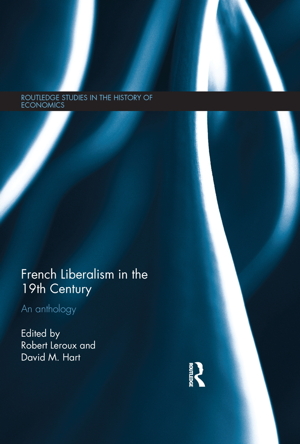
L’âge d`or du libéralisme français. Anthologie. XIXe siècle. Robert Leroux et David M. Hart. Préface de Mathieu Laine (Paris: Editions Ellipses, 2014).

This anthology in French is slightly larger than the English language one we did for Routledge. It contains 41 extracts. However, the master collection contains 79 extracts in French which can be found here.

ToC:

Read more

Frédéric Bastiat (1801-1850) and Rethinking Classical Economics in the mid-19th Century

Talk given to a Conference on “A Brief History of Economic Thought,” Institute for Liberal Studies, The University of Toronto, Bahen Centre Friday 29 September, 2012 Online here Abstract: The decade or so 1845-1856 saw a major re-thinking taking place in the nature of classical economic thought in France. The first generation of 19th century … Read more

Cato Institute Book Forum: The Collected Works of Frédéric Bastiat, vol. 1

Online here Abstract: This was a talk I gave at the Cato Institute Book Forum on the occasion of the publication of vol. 1 of Liberty Fund’s 6 volume Collected Works of Frédéric Bastiat in October 2011. The volume contains his correspondence and many political essays. In the correspondence we see him moving from being … Read more

Gustave de Molinari and the Future of Liberty in 1901: ‘Fin de Siècle, Fin de la Liberté’?

Online here Abstract: This paper examines Molinari’s assessment in two articles he wrote at the turn of the 20th century of the achievements of liberty in the 19th century and his prognosis for liberty in the coming 20th century. Concerning the latter, he successfully predicted two related things: firstly, that anti-liberal policies being introduced in … Read more

How Austrian were the French? Or, How French are the Austrians? An Austro-Australian Perspective.

(Left to right, top to bottom: Jean-Baptiste Say (1767-1832); Ludwig von Mises (1881-1973); Charles Dunoyer (1786-1862); Augustin Thierry (1795-1856); Friedrich Hayek (1899-1992); Frédéric Bastiat (1801-1850); Jean-Gustave Courcelle-Seneuil (1813-1892); Murray Rothbard (1926-1995); Gustave de Molinari (1819-1912).) A paper given at the Inaugural Mises Seminar, Sydney, 26 November 2011 http://davidmhart.com/liberty/Teaching/2011/MisesSeminar/HowAustrian.html Abstract: This paper examines the mid-19th century … Read more

Is Biography History? The Relationship between Ideas and Human Action in the Life of Frédéric Bastiat (1801-1850)

A paper given at the Historical Society’s 2012 Conference, University of South Carolina, Columbia, South Carolina, 1 June, 2012 June 1. Online here Abstract: “Is Biography History?” My conclusion is that the life of FB is a good example of how the “biography of ideas” developed by Ashcraft for Locke and Scott for Sidney, and Mises’ … Read more

Frédéric Bastiat’s Distinction between Legal and Illegal Plunder

A Paper given at the Molinari Society Session “Explorations in Philosophical Anarchy” at the Pacific Meeting of the American Philosophical Society, Seattle WA, 7 April, 2012. http://davidmhart.com/liberty/Papers/Bastiat/Bastiat_LegalPlunder.html Abstract: This paper comes out of a larger research and publishing project on the life and work of the French advocate for free trade, economic journalist, arch-critic of … Read more

Opposing Economic Fallacies, Legal Plunder, and the State: Frédéric Bastiat’s Rhetoric of Liberty in the Economic Sophisms (1846-1850)

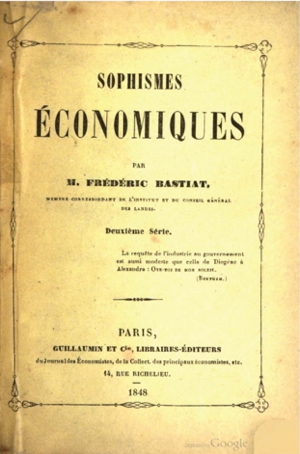
Bastiat_1848SophismesEconomiques_TP

A Paper given at the History of Economic Thought Society of Australia (HETSA) annual meeting, RMIT Melbourne, Victoria, July 5-8, 2011.

Online here.

This paper examines the origin, content, and form of Bastiat’s Economic Sophisms which will comprise volume 3 of Liberty Fund’s translation of his Collected Works. It is argued that in opposing the economic sophisms which he saw around him Bastiat developed a unique “rhetoric of liberty” in order to make his case for economic liberty. For the idea of debunking “fallacies”, he drew upon the work of Jeremy Bentham on “political fallacies” and Col. Perronnet Thomas on “corn law fallacies”; for his use of informal “conversations” to appeal to less well-informed readers, he drew upon the work of two women popularizers of economic ideas, Jane Marcet and Harriet Martineau.

Read more

On Ricochets, Hidden Channels, and Negative Multipliers: Bastiat on Calculating the Economic Costs of ‘The Unseen’.

Bastiat-fromDEP300

A Paper given at the “History of Thought” Session of the Society for the Development of Austrian Economics. 
Southern Economic Association 83rd Annual Meeting,
November 23-25, 2013
Tampa, Florida

The paper is online here

In this paper I would like to examine a theory Bastiat developed in the latter years of his life (1847-1850) on calculating the costs and benefits of what he called “the unseen”. This is an important part of Bastiat’s economic theory which has been ignored by researchers to date, partly because the relevant articles were not included in the FEE translation of his Economic Sophisms (but which will be included in LF’s new translation of the complete Sophisms), partly because of mistranslations of those that have been translated (the key word “ricochet” was often translated figuratively, often as “indirect” or “rebounds”, and not as the technical economic word Bastiat intended it to be), and partly because a full electronic version of his complete works did not exist until recently when comprehensive key word searches could be used for the first time to uncover the rich and colorful vocabulary Bastiat used in formulating his ideas on this topic.

Read more

Leveller Tracts vol. 7 (1650-1660)

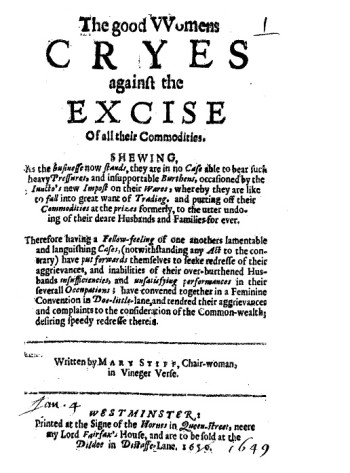
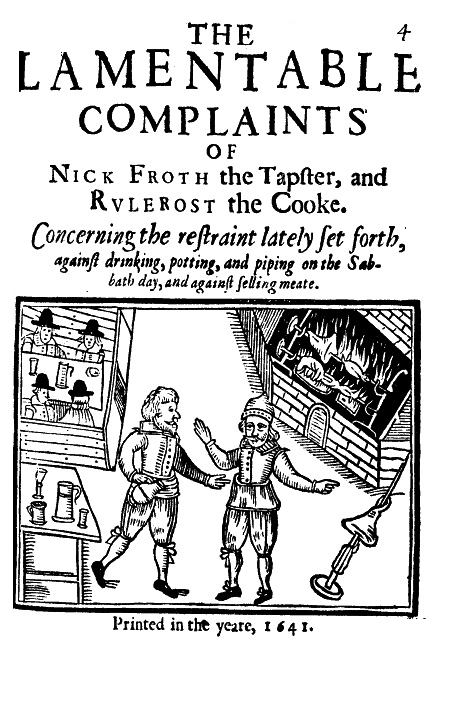
1650-01-04-Stiff_AgainstExcise_TP516

The uncorrected HTML of volume 7 of the Leveller Tracts (1650-60) is now online at the OLL. There are 42 pamphlets which have a total of 1,055 illegible words and characters which need to be corrected before it will go into the main OLL library. It covers the period of the Commonwealth, the rise of Cromwell’s Protectorate, and the gradual defeat and dispersal of the Leveller movement.

Highlights include more tracts on economic matters (such as taxes and free trade), Sexby’s notorious pamphlet advocating the killing of Cromwell as a tyrant, and the pamphlet by Margaret Fell Fox advocating the right of women to speak in Church:

  • Mary Stiff, The good Womens Cryes against the Excise of all their Commodities (4 January 1650)
  • Anon., The Soap-makers Complaint for the losse of their Trade (24 September 1650)
  • William Walwyn, Walwyns Conceptions; for a Free Trade (May 1652)
  • William Prynne, A Declaration and Protestation against New Taxes (18 October, 1653)
  • James Freize, A Moderate Inspection into the Corruption of the Common Law of England (17 June, 1656)
  • Edward Sexby, Killing, No Murder (21 September, 1657)
  • Margaret Fell Fox, Womens Speaking Justified (c. 1666)

Read more

Gustave de Molinari and the Seven Musketeers of French Political Economy

7Musketeers

See the full paper at my main website.

This is part of a book-length “introduction” (300 pp.) I have written to the translation of Molinari’s Les Soirées de la rue Saint-Lazare (1849). It includes a brief biography of Molinari; a discussion of the struggle against protection in France from the 1820s to the late 1840s; the socialist attack on private property and the legitimacy of profit, interest and rent in the 1840s; a brief history of the popularisation of economic theory and the role played by the “conversation” format; Molinari’s and the economists’ activities during the 1848 Revolution; and Molinari’s theory of liberty and the “natural laws” of political economy which he presents in Les Soirées.

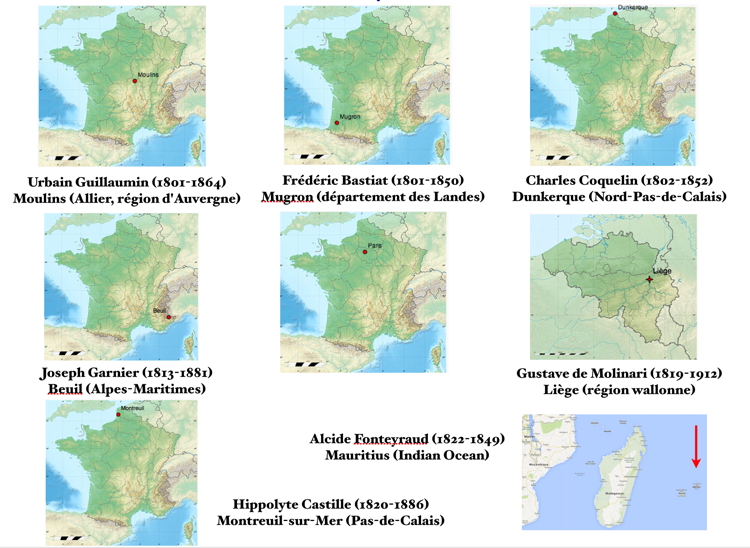
Abstract: In Paris in the 1840s there emerged a very special and unique collection of individuals who came together to promote classical liberal and free market thought and to fight socialism and interventionism. I call them “the Seven Musketeers” of French political economy. The term “Musketeer” comes from Gérard Minart’s new biography of Gustave de Molinari (2012) in which he described Frédéric Bastiat, Molinari, and 2 other colleagues (Guillaumin, Coquelin) as “The Four Musketeers”. This is quite appropriate as Dumas’ popular novel came out in 1844 [it was serialised in Le Siècle] and Bastiat, like D’Artagnan, came from the south-west province of Gascony. These economists formed a close band of liberal intellectuals and activists in Paris who were fighting protectionism and socialism not the Protestant enemies of the King of France as the original Musketeers were. My research has revealed that 7 individuals actually fit this description. They are made up of two generations who were key figures in the classical liberal and political economy movement. The 1st were born around 1800 and were in their mid to late 40s in 1848; the 2nd were born around 1820 and were in their late 20s in 1848.

Read more

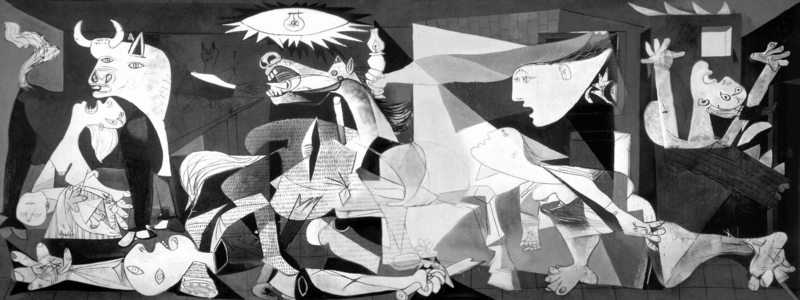
Pablo Picasso’s “Guernica” (1937)

Guernica_800

The Spanish painter Pablo Picasso (1881-1973) painted a mural depicting the bombing of the Basque town of Guernica by the German air force in 1937 during Spanish Civil War. It depicts the victims of war, such as suffering women, children, and a horse. It is perhaps the greatest painting about war ever made as it focuses on the victims and is timeless and universal in its themes.

Read more

Waving the Flagg (again)

Flagg_photo-284

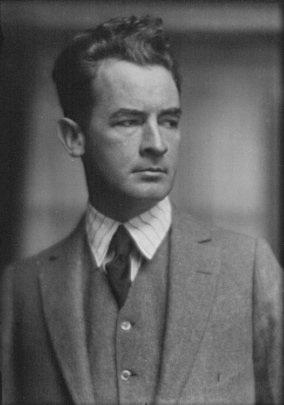
James Montgomery Flagg (1877 – 1960) is a good example of how someone who works for peaceful, productive, market activities can get corrupted by the state in wartime. Flagg began work as a magazine and book illustrator before turning to creating wartime propaganda for the US government during World War I. Here is a fairly typical example of the kind of commercial illustration he did for magazines and newspapers before the war:

Read more

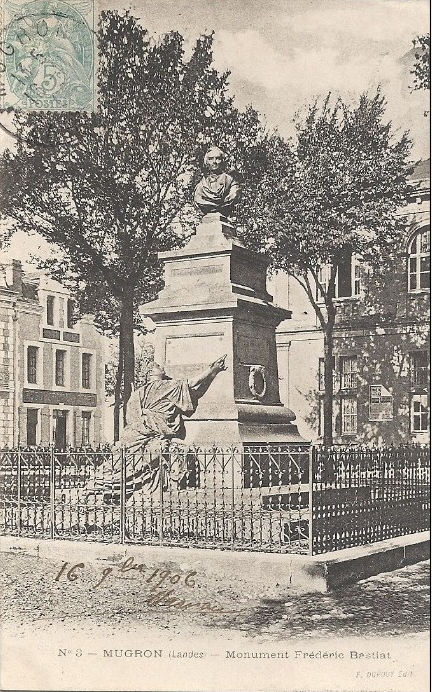
The Bastiat Monument in Mugron, 1878

Bastiat_Statue_Postcard432

(A Monument erected to the memory of Bastiat was unveiled in Mugron, 23 April, 1878.)

After Bastiat’s death on Christmas Eve 1850 his friend Prosper Paillottet went through Bastiat’s papers in order to get them organized for a printing of his collected works. Six volumes of the first edition appeared in 1854-55. A second edition with an additional 7th volume appeared in 1862-64 and it was this edition which was reprinted several times during the 19th century. Many of Bastiat’s other single volume works were kept in print by the Guillaumin publishing firm during this time as well, especially the Economic Harmonies. His friends and colleagues wanted to do more for his memory than to just keep his books in print. It was decided to raise money (privately of course) to design a statue of him which would be erected in his home town of Mugron. The illustration on the cover of volume 1 of Liberty Fund’s edition of his Collected Works shows a postcard of the Place Bastiat in the town of Mugron where the statue was displayed.

Read more

Twelve Key Concepts of Liberty

I have selected “12 Key Concepts of Liberty” to examine in more detail:

  1. Natural Law and Natural Rights
  2. Private Property
  3. Individual Liberty
  4. Idea of Spontaneous Order
  5. Free Markets
  6. Limited Government
  7. Rule of Law
  8. Freedom of Speech & Religion
  9. Free Trade
  10. Peace
  11. Progress
  12. Right of Exit

Read more

About this Blog

This blog contains the thoughts and musings of David Hart concerning the classical liberal tradition, war and the state, and film and art. His main website contains his research and a growing library of books in the classical liberal tradition. See the most recent additions. [David contemplating the move back to Sydney.] See the list … Read more

One Volume Surveys of the CL Tradition

When did theorists become self-conscious that they were advocating a unique, consistent and all-encompassing liberal worldview (Weltanschauung) which could be articulated in one volume; that their ideas were interconnected, were based upon a well thought out set of fundamental principles, and resulted in a comprehensive set of proposals for liberal reform?

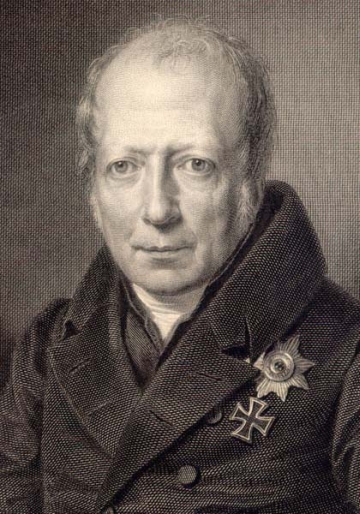
Humboldt360

Wilhelm von Humboldt (1767-1835)

Read more

Thomas Hodgskin and the Philosophic Radicals

Date: July, 2014

I have added the following titles to the Guillaumin Library of Classical Liberal ThoughtEnglish Classical Liberals. Hodgskin is a radical individualist and supporter of free trade, yet is is claimed by the left as one of their own. The French historian Élie Halévy wrote the first biography of Hodgskin after writing a massive three volume history of the Philosophic Radicals in England, namely Jeremy Bentham, James Mill, and John Stuart Mill:

Hodgskin_1825LabourDefended_TP150

Read more

The Classical Liberal Tradition – A History of Ideas and Movements over 400 Years

IHS Advanced Studies Summer Seminar, “Liberty & Scholarship: Challenges and Critiques” Bryn Mawr College, Philadelphia, PA.

Date: 13-19 June, 2015

Lectures on:

  1. “The Classical Liberal Tradition – A History of Ideas and Movements over 400 Years” – two lectures
  2. “Images of Liberty and Power: State Propaganda and its Subversion”
  3. “Competing Visions of the Future: Socialist and Classical Liberal”

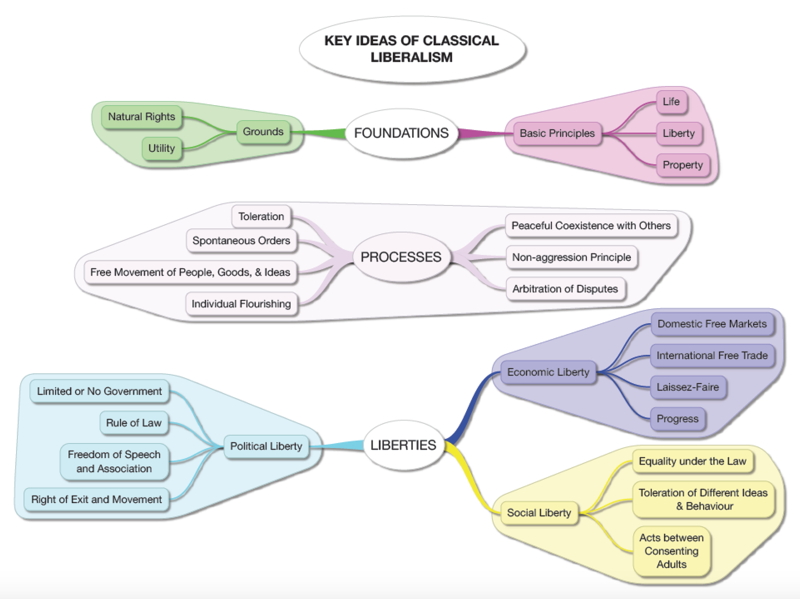
Lecture 1. “The Classical Liberal Tradition: Theory and History (A Two-Part Lecture)”

KeyIdeasClassicalLiberalism4

Read more

Images of Liberty and Power: State Propaganda and its Subversion

IHS Advanced Studies Summer Seminar, “Liberty & Scholarship: Challenges and Critiques” Bryn Mawr College, Philadelphia, PA.

Date: 13-19 June, 2015

Lectures on:

  1. “The Classical Liberal Tradition – A History of Ideas and Movements over 400 Years” – two lectures
  2. “Images of Liberty and Power: State Propaganda and its Subversion”
  3. “Competing Visions of the Future: Socialist and Classical Liberal”

Lecture 2. “Images of Liberty and Power: State Propaganda and its Subversion”

Emily1-344

(Arthur Hiller, “The Americanization of Emily” (1964))

Read more

Competing Visions of the Future: Socialist and Classical Liberal

IHS Advanced Studies Summer Seminar, “Liberty & Scholarship: Challenges and Critiques” Bryn Mawr College, Philadelphia, PA.

Date: 13-19 June, 2015

Lectures on:

  1. “The Classical Liberal Tradition – A History of Ideas and Movements over 400 Years” – two lectures
  2. “Images of Liberty and Power: State Propaganda and its Subversion”
  3. “Competing Visions of the Future: Socialist and Classical Liberal”

Lecture 3. “Competing Visions of the Future: Socialist and Classical Liberal” – PDF 6MB and HTML

metropolis03

Read more

Bastiat’s use of Literature in Defense of Free Markets

Date: 14 April, 2015

“Literature IN Economics, and Economics AS Literature I: Bastiat’s use of Literature in Defense of Free Markets and his Rhetoric of Economic Liberty.”

A paper given at the Association of Private Enterprise Education International Conference (April 12-14, 2015), Cancún, Mexico. HTML and PDF.

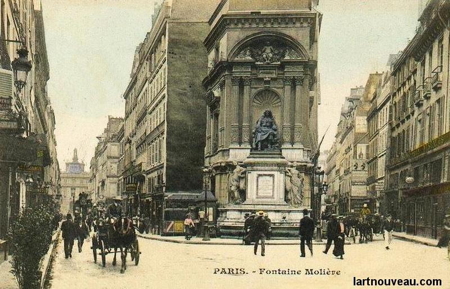
FontainMoliere450

The fountain dedicated to Molière on the rue de Richelieu, Paris where the publishing firm Guillaumin was located. They published all of Bastiat’s books.

Abstract: In this paper I will show how one economist used literature in creative and amusing ways to assist him in defending free trade and free markets from their intellectual and political opponents in France during the 1840s. The economic journalism which Frédéric Bastiat produced at this time is some of the best ever written and is still a model for economists today. His knowledge of both high and low French culture and literature was extensive, drawing upon the plays of Molière and the fables of La Fontaine at one end of the spectrum, as well as the political drinking songs and poems of Béranger at the other. These are all examples of Bastiat’s use of “literature in economics”.

Read more

The Economics of Robinson Crusoe from Defoe to Rothbard

Date: 14 April, 2015

“Literature IN Economics, and Economics AS Literature II: The Economics of Robinson Crusoe from Defoe to Rothbard by way of Bastiat.”
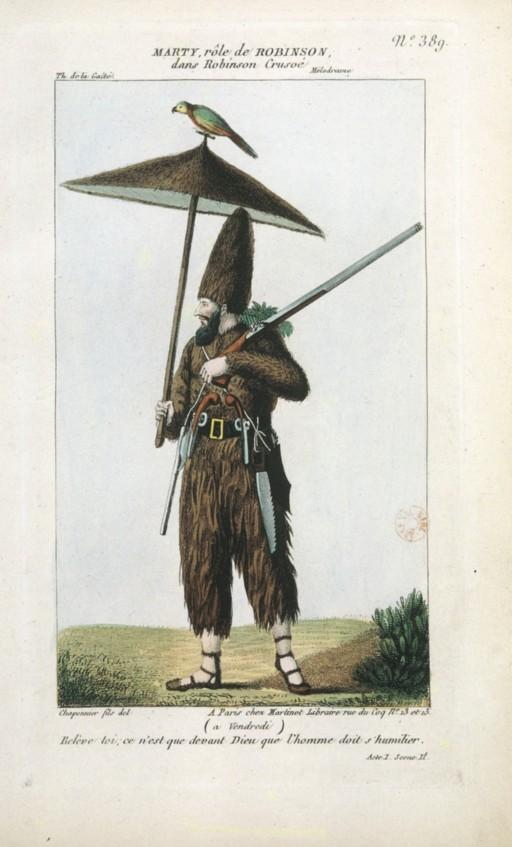
Crusoe1805

A paper given at the Association of Private Enterprise Education International Conference (April 12-14, 2015), Cancún, Mexico. HTML and PDF. An earlier working title was “Robinson Crusoe and Praxeology: A History”.

Abstract: Daniel Dafoe’s novel The Life and Strange Adventures of Robinson Crusoe of York, Marriner (1719) has provided economists and social theorists with a rich and seemingly infinitely broad canvas on which they can paint whatever picture they like of the nature of economic activity. In addition to Dafoe’s own economically informed, English Protestant original story, there have been Marxist, feminist, post-colonial, neo-classical, as well as Austrian accounts of the activities of the man ship-wrecked on the Island of Despair. These have been termed “Robinsonades” or “Crusoe economics.”

Read more

Molinari’s “Eleventh Soirée” on the private provision of security

Date: 6 April, 2015

Molinari_Soirees_0383_TP

A revised translation of Molinari’s “Eleventh Soirée” on the private provision of police and defence will be published in an anthology on Panarchy: Political Theories of Non-Territorial States edited by Aviezer Tucker and Gian Piero de Bellis for Routledge (2016). I updated the translation and added many footnotes.

Read more

The Liberal Roots of American Conservatism

Date: 28 March, 2015 “The Liberal Roots of American Conservatism: Bastiat and the French Connection.” A paper given to the Philadelphia Society meeting March 27-29, 2015 on “The Roots of American Conservatism – and its Future”. HTML and PDF Abstract: The paper discusses the contribution to American conservative thought of the economist Frédéric Bastiat (1801–1850) … Read more

On the Spread of Classical Liberal Ideas

Date: 1 March, 2015 David M. Hart, “On the Spread of (Classical) Liberal Ideas” (March 2015) Liberty Matters Online Discussion Forum. I wrote the Lead Essay for this discussion as well as extensive appendices on “Historical Examples of Radical Change in Ideas and Political Structures”, “The Spread of Pro-Liberty Ideas in the Post-WW2 Period”, A … Read more

The changing Optics of Bastiat Studies

Date: 1 Dec. 2014

A paper on “Seeing the ‘Unseen’ Bastiat: the changing Optics of Bastiat Studies. Or, what the Liberty Fund’s Translation Project is teaching us about Bastiat” given to the “Colloquium on Market Institutions & Economic Processes” at NYU

Bastiat-fromDEP300

Abstract: The translation project being undertaken by Liberty Fund to translate the Collected Works of Frédéric Bastiat provides us with an opportunity to reassess the work of this mid-19th century French political economist. This paper examines the changing perception of Bastiat’s work from the late 1840s until the conference held in Mugron in June 2001 to celebrate the 200th anniversary of his birth when the decision was made to translate into English all of his available work for the first time. His contemporaries recognized his talents as a brilliant economic journalist, a free trade activist, and an elected politician who dabbled in economic theory but died in 1850 before he could complete his work. His reputation went into decline for the next 100 years as his approach to economics went against first the classical and then the neo-classical schools. Except for a very few economists like W.S. Jevons Bastiat was dismissed as a serious economic theorist. Joseph Schumpeter summed up the consensus view in 1954 describing him as not a theorist at all.

Read more

The French Connection: Say to Jasay

Date: 23 Sept. 2014

A paper on “Negative Railways, Turtle Soup, talking Pencils, and House owning Dogs”: ‘The French Connection’ and the Popularization of Economics from Say to Jasay.” HTML

anthony_de_jasay250

A much shorter version of this essay will appear in a special issue of The Independent Review in June 2015.

Read more

Interview about the Bastiat translation project

Date: 30 August, 2014 This is an interview I gave in Nov. 2013 about my work on the Bastiat Translation Project. I have only just now edited it to go online. It lasts for 12 mins. Page with video embedded. Summary: This is an interview conducted by Liberty Fund staff of Dr. David M. Hart … Read more