The Declaration of Independence after 250 Years: Success or Failure?

“The Declaration of Independence after 250 Years: Success or Failure?” A talk given as as part of Campion College’s Classsical Liberalism Lecture Series. Dr. David M. Hart 22 April, 2026 Campion College, Parramatta On this lecture/talk, see Contents: Preliminary Remarks My more scholarly title was: “The Role played by Declarations of Rights and Independence in the … Read more

The Great Books of Liberty – the “Guillaumin Collection”

Interview with Ross Cameron on TNT Radio 24 Sept. 2023 My collection of texts about liberty is in the tradition of earlier publishers who helped promote the spread of classical liberal ideas, such as Thomas Hollis (1720-1774) and Gilbert Guillaumin (1801–1864). Thomas Hollis (1720-1774) was active in pre-revolutionary North America and published beautifully bound copies … Read more

The Class Structure of the Modern Welfare/Administrative State

Date: 6 July, 2023 A Summary View The Sovereign Power The Ruling Elite The Political Class The Bureaucratic or Functionary Class Force Wielding Institutions The Welfare State The Regulatory State The Plutocratic or “Crony Capitalist” Class State Privileged or Dependent Firms & their Employees State Owned Firms State Privileged Firms State Dependent Firms The Dependent … Read more

The Key Ideas behind Classical Liberal Class Analysis

[Frontispiece to John Wade’s “Black Book” (1835) showing John Bull (i.e. the British people) who has been captured and tied down (like Gulliver in Jonathan Swift’s Gulliver’s Travels (1726) by the Lilliputians, who in this case are figures representing the army, the church, members of parliament, and the judiciary. The Lilliputians taunt him and rifle … Read more

A Workers Party Reunion: What’s in a Name?

A group of founders and early supporters of Australia’s first “libertarian party” – provocatively and toungue-in-cheek perhaps called the “Workers Party” – are getting together later this month for a “Reunion”. To encourge discussion and reflection on those tumultuous years nearly half a century ago I have listed below some of my recent blog posts … Read more

An Introduction to the Paris School of Political Economy

(E)n général on gouverne trop … (mais) comment s’y prendre pour simplifier une machine administrative compliquée où les intérêts privés ont gagné du terrain sur l’intérêt public, comme une gangrène qui s’avance dans un corps humain lorsqu’elle n’est pas repoussée par le principe de vie qui tend à le conserver ?. Pour guérir cette maladie … Read more

The Guillaumin Network and the Paris School of Political Economy

[The Molière Fountain on the rue de Richelieu (down the left). The Guillaumin firm was located at no. 14 rue de Richelieu.] Note: See also the following: my blog post on “A Publishing History of the Guillaumin Firm (1837-1910)” (5 Aug. 2022) here my summary webpage on The Paris School a brief description of the … Read more

A Publishing History of the Guillaumin Firm (1837-1910)

Source of Data Benoît Malbranque, “Liste complète des titres publiés par Guillaumin (1837-1910)”, Institut Coppet (janvier 2, 2017) here. David M. Hart, “Gilbert-Urbain Guillaumin (1801-64) and the Guillaumin Publishing Firm (1837-1910)” with my list of their titles. It also contains many links to individual Guillaumin book catalogs which were often appended to the books they … Read more

Frédéric Bastiat’s Philosophy of Markets

Introduction The French political economist, politician, and journalist Frédéric Bastiat (1801-1850) placed “markets” and mutually beneficial “exchange” at the very heart of of his theory of economics which he elaborated in a two volume collection of essays Sophismes économiques (Economic Sophisms) (1846, 1848), a long essay on “La Loi” (The Law) (1850), and his unfinished … Read more

The Negative Political Party

Introduction There was a sizable swing in the 2022 Federal election to the DNV (did not vote) camp as well as the “informal” vote, though this is less marked with the revised updated results than with the early and incomplete result I used in my earlier post. I now calculate that the total number of … Read more

On Making the Argument/s for Liberty

[Honoré Daumier’s “Le Défenseur (Council for the Defense),” c. 1862-1865.] Note: This is part of a collection of posts on “The Current State of Liberty and the Threats it faces”. In this post I want to discuss the following issues: the multi-dimensional nature of Liberty requires a multi-dimensional approach to arguing for it the main … Read more

The “Big Picture”: Part 2

[The British Atlas holding up the Political Establishment.] Note: This is part of a collection of posts on “The Current State of Liberty and the Threats it faces”. This is part 2 of a two-part post on “The Big Picture”. See part 1 7.) We need to show the public in a more convincing way … Read more

The “Big Picture”: Part 1

[Australia peeping through the clouds.] Note: This is part of a collection of posts on “The Current State of Liberty and the Threats it faces”. This is part 1 of a two-part post on “The Big Picture”. See part 2 Below is a sketch of what I consider to be the “Big Picture” of where … Read more

Liberty in Australia and the Asia-Pacific Region

[Building the “beacon of liberty” (1876)] Where now is “the beacon of liberty”? The problem for a small, remote, and relatively insignificant country like Australia is to figure out what it can do to contribute to the broader, international liberty movement and where it fits in. One possibility is for it to become a “beacon … Read more

600 Quotations about Liberty and Power

[Note: This post is part of a series on the History of the Classical Liberal Tradition] In another post I focus on the “Twelve Key Ideas” which I believe defines what it means to be a “classical” liberal, rather than a modern or “new” liberal who holds views which are inconsistent (even incoherent) and is … Read more

Liberty as the Sum of All Freedoms

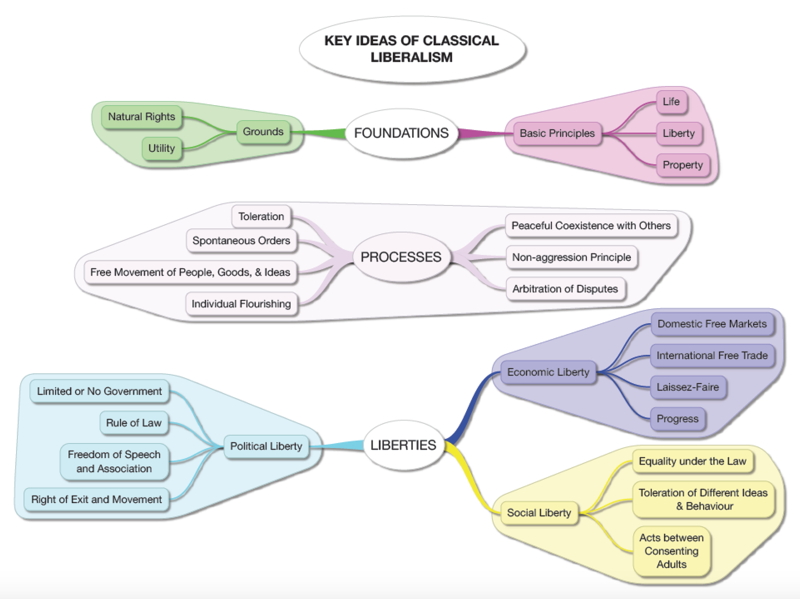
[Note: This is an updated version of “The Key Ideas of Classical Liberalism: Foundations, Processes, Liberties” (23 June 2015) here.] [Note: This post is part of a series on the History of the Classical Liberal Tradition] In a recent post I discussed the “ends” that CLs sought and “the means” which they believed would help … Read more

The Classical Liberal Tradition – A 400 Year History Of Ideas And Movements: Lecture/Seminar Outline

Date: 22 Apr. 2022 [Note: This post is part of a series on the History of the Classical Liberal Tradition] This is an outline/overview of my Lecture/Seminar and extended paper on the history of the Classical Liberal tradition. It consists of the following sections: Introduction: What is Liberalism? CL and the State Liberal Ideas Key … Read more

A Balance Sheet of the Success and Failures of Classical Liberalism

[Note: This post is part of a series on the History of the Classical Liberal Tradition] Introduction Following the rise to power of Louis Napoleon, who declared himself Emperor Napoléon III in 1852, the radical French CL and political economist Gustave de Molinari (1819-1912) gave a lecture at the Musée royale de l’industrie belge in … Read more

On the (im)Possibility of finding a “Third Way” between Liberalism and Socialism

[Note: This post is part of a series on the History of the Classical Liberal Tradition] Some people can see the logic in applying political, moral, and economic principles consistently and avoiding contradictions which make being consistent impossible. Thus for example, if you really do believe that profit, interest, and rent are immoral (as many … Read more

The Multi-Dimensionality of Classical Liberalism

[Note: This post is part of a series on the History of the Classical Liberal Tradition] [See also another post on “Plotting Liberty: The Multi-Dimensionality of Classical Liberalism and the Need for a New ‘Left-Right’ Political Spectrum” (17 April, 2022) here.] Another aspect to consider is the multi-dimensional nature of liberalism. The one dimensional political … Read more

Plotting Liberty: The Multi-Dimensionality of Classical Liberalism and the Need for a New ‘Left-Right’ Political Spectrum

[Note: This post is part of a series on the History of the Classical Liberal Tradition] The Multi-Dimensional Nature of Liberty The full richness and complexity of the nature of Liberty is not well appreciated by most observers, especially mainstream media journalists and political scientists. In other posts I have explored the relationship between the … Read more

The Fading of Pierre Goodrich’s Dream to Spread the Word about Liberty

“Fade to White” The party politicization (pro-Trump republican) of Liberty Fund and its rapid turning away from the Founder’s “original intent” of promoting long-term educational and academic goals is the subject of an article in this month’s Indianapolis Monthly magazine. As the victim of the first round of purges of those who defended that vision … Read more

The History of the “Great Liberal Emancipation” 1750-1914

Francisco Goya, “The Sleep of Reason produces Monsters” Abolitionist Medallion – “Am I not a Man and Brother?” I have put online some old teaching material (both lecture notes and Seminar Reading Guides) I wrote decades ago when I was working in the Department of History at the University of Adelaide. I wanted to show … Read more

Some Thoughts on Liberal History

[Hyacinth Rigaud, “Louis XIV” (1701)] [Pierre-Paul Prud’hon, “Liberty” (1793) slaying the hydra monster of tyranny] I interpret “liberal history” in several ways. It might mean (1.) The history of the classical liberal tradition, which has at least two components: a history of how and when liberal ideas first emerged and then evolved over time – … Read more

J.B. Say and the Transformation of Restoration French Liberalism

Note: This post is a continuation of an earlier one on the scandalous neglect of classical liberal sociology (especially classical liberal class analysis). See “The Scandalous Neglect of Classical Liberal Sociology” (30 May, 2021). Note 2: A longer version of this was written for my website (with lengthy quotes). The writings of the economist Jean-Baptiste … Read more

What CLs were For – Part 2: Ends and Means

[Note: This post is part of a series on the History of the Classical Liberal Tradition] Liberal Ends require Liberal Means to build Liberal Institutions Introduction Here are some further thoughts to add to my earlier post on “What Classical Liberals were For” (13 Aug. 2021). They have been stimulated and enriched by my reading … Read more

Classical Liberalism as the Philosophy of Emancipation II: The “True Radical Liberalism” of Peter Boettke

[Note: This post is part of a series on the History of the Classical Liberal Tradition] This year Peter Boettke from George Mason University and the Mercatus Center has published a collection of his talks and papers on The Struggle For A Better World (Arlington, Virginia: Mercatus Center, 2021). See the table of contents here … Read more

Classical Liberalism as a Revolutionary Ideology of Emancipation

[Liberty has overturned the Hydra (monster) of Tyranny and smashed the yoke of Despotism (1793)] [Note: This post is part of a series on the History of the Classical Liberal Tradition] Several CL/L thinkers have regarded the efforts of groups of people over the past 400 or so years to create a freer society as … Read more

Hyphenated Liberalism Part II: Utopian, Democratic, Revolutionary, and State Liberalism

[Eugène Delacroix, “Liberty leading the People on the Barricade” (1830)] [Note: This post is part of a series on the History of the Classical Liberal Tradition] I thought it might be interesting when discussing the different kinds of “liberalism” to borrow from the common practice of distinguishing between the different types of socialism which have … Read more

Hayek on Law, Legislation and Liberty (1973-79)

Some Questions and Discussion Topics to Consider Hayek’s Terminology FAH used a special set of terms in his theory which can get confusing for the reader. Here is a list of some of them (see the detailed table of contents of the three volume Law , Legislation and Liberty for an overview): Law: “nomos (the … Read more

Hayek and Spontaneous Order

In the coming academic year I will be leading an online discussion on Hayek and Spontaneous Order which is part of a series of Discussion Colloquia for graduate students organised by the Institute for Humane Studies. In this discussion we will focus on the work of a leading classical liberal whose work has become “canonical” … Read more

Hayek on a Liberal Utopia

[Friedrich Hayek (1899-1992)] [Note: This post is part of a series on the History of the Classical Liberal Tradition] Since so many contemporary CL/Ls quote Hayek’s 1949 appeal for the rediscovery of a liberal utopia to guide and motivate liberals in their intellectual struggle against fascism, socialism, and other forms of government interventionism I thought … Read more

Classical Liberal Visions of the Future II: The Contribution of Gustave de Molinari (1819-1912)

[Note: This post is part of a series on the History of the Classical Liberal Tradition] One of the most radical visions of the future written by a radical liberal was that by the Belgian-French political economist Gustave de Molinari (1819-1912)). His conception of “the political and economic organisation of the society of the future” … Read more

Classical Liberal Visions of the Future I

[Note: This post is part of a series on the History of the Classical Liberal Tradition] Part 1: Introduction We have noted elsewhere Hayek’s nearly despairing plea in 1949 for CLs to rediscover their “utopian vision” of what a free society might look like in order to inspire a new generation of young CLs to … Read more

How Modern Day CL/Libertarians Differ From “Classical” Classical Liberals

[Note: This post is part of a series on the History of the Classical Liberal Tradition] There are numerous similarities as well as considerable differences which separate modern day CL/L (classical liberals and libertarians) similarities from their intellectual forebears – the radical and moderate liberals of the 19th century. The Similarities Like the CLs of … Read more

Classical Liberal Movements: A Four Hundred Year History

[Note: This post is part of a series on the History of the Classical Liberal Tradition] The Intellectual and Political History of the Liberal Tradition There is a complex relationship between the emergence and development of political and economic ideas about liberty and the actions taken by people to put these ideas into practice. Elsewhere … Read more

What Classical Liberals were For

[Note: This post is part of a series on the History of the Classical Liberal Tradition] Introduction When it comes to identifying what Classical Liberals were FOR, as opposed to what they were AGAINST (see the previous post), I have divided them into three main categories: foundations (or grounds for belief), processes (or actions which … Read more

What Classical Liberals were Against

[Note: This post is part of a series on the History of the Classical Liberal Tradition] It is often the case that you do not articulate clearly what you are “FOR” until you are forced to, by being challenged by something you know you are “AGAINST”. I think this can be said about the CLT … Read more

The Conservative and Revolutionary Faces of Classical Liberalism

[Note: This post is part of a series on the History of the Classical Liberal Tradition] The “Two Faced” Nature of CL [The revolutionary Marianne with a sword in her hand vs. the conservative Marianne with a torch and constitution in her hands.] There are two different “faces” or “aspects” to CL which it has … Read more

The History of Classical Liberalism in 1730 words (and one picture)

Eugène Delacroix, “Liberty leading the People on the Barricade” (1830) [Revised: 12 Apr. 2022] [Note: This post is part of a series on the History of the Classical Liberal Tradition] In a nutshell (1730 w) this is my view of how the Classical Liberal (CL) movement and ideas have evolved over the past 400 years: … Read more

Classical Liberals on the Size and Functions of the State

Updated: 25 Apr. 2022 [Note: This post is part of a series on the History of the Classical Liberal Tradition] [See a larger version of this image.] A key factor in distinguishing the differences between the various strains of liberalism is their attitude towards the state (not just between liberalism and other political philosophies like … Read more

“Hyphenated” Liberalism and the Problem of Definition

[Note: This post is part of a series on the History of the Classical Liberal Tradition] Introduction and the Problem of Definition “Liberal” and “Liberalism” as concepts have been contested since their first appearance, most probably sometime in the late 18th century, when the adjective “liberal” began to be used to describe an individual’s behaviour … Read more

The Scandalous Neglect of Classical Liberal Sociology

Histories of the discipline of sociology usually give short shrift to the classical liberal tradition. ((See for example the massive and comprehensive (weighing in at 5 vols. and over 5,000 pages) The Blackwell Encyclopedia of Sociology. Edited by George Ritzer (Oxford: Blackwell, 2007); The Handbook of Economic Sociology. Second Edition. Neil J. Smelser and Richard … Read more

The Classical Liberal Tradition: A 400 Year History of Ideas and Movements. An Introductory Reading List

[Delacroix’s “Liberty leading the People on the Barricade” (1830)] Date: 20 May, 2021 Revised: 22 Apr. 2022 [Note: This post is part of a series on the History of the Classical Liberal Tradition] An Essential Reference Work An accessible and very comprehensive introduction to CL /Libertarianism can be found in the Cato Institute’s The Encyclopedia … Read more

The Socialist Critique of Private Property and Free Markets and the French Political Economists’ Response

[The cartoonist “Cham” ridicules the plans of the French socialists like Ledru-Rollin who dreams of a new socialist Terror. See, Amédée de Noé, dit Cham, “Ce qu’on appelle des idées nouvelles en 1848” (Paris?: Imp. Aubert & Cie, 1848).] Before turning to the criticism of socialism by the French political economists it is important to … Read more

Socialism is Zombie Economics

Zombie Economics A couple of years ago (July 2018) I gave a talk at a Students for Liberty conference on “Zombie Economics” with particular reference to the Marxist “manifestation” of this intellectual beast which refuses to die, no matter how many times it has been “killed” (intellectually speaking of course). It has been the revolutionary … Read more

One Volume Surveys of Classical Liberal Thought

[Katsushika Hokusai, “The Great Wave off Kanagawa” (c. 1829–1833)] [Note: This post is part of a series on the History of the Classical Liberal Tradition] When did classical liberals become self-conscious that they were advocating an entire worldview (Weltanschauung) of politics, economics, and social relationships in general which was a) consistent internally, b) was different from … Read more

The Institut Coppet’s Collected Works of Molinari

Institut Coppet, Oeuvres complètes The Institut Coppet is a fabulous resource for material on the very rich and fascinating French classical liberal tradition. It was founded in 2010 by Damien Theillier, a philosophy teacher in Paris, its current president is Mathieu Laine, and its very active publishing program is headed by the indefatigable Benoît Malbranque. … Read more

Plutology I: William Edward Hearn (1826-1888)

I first came across the name William Hearn in Rothbard’s history of economic thought where he discusses some early precursors of Austrian economics. ((Volume II: Classical Economics (2006), “14.8 Plutology: Hearn and Donisthorpe,” pp. 463-65. See Hearn’s bio page for an extract from this here.)) That he lived and worked in Australia at the University … Read more

My “Farewell to America” tour (January 2020)

As part of my “Farewell to America” tour in January 2020 I gave the following talks and papers on my way back to Australia: On Bastiat at the Political Economy Project at Dartmouth College, New Hampshire On Bastiat at the American Institute for Economic Research, Great Barrington, Massachusetts On classical liberal class analysis at the … Read more

Entrepreneurs, Investors, and Scribblers: An Austrian Analysis of the Structure of Production and Distribution of Ideas

A Paper given at the Southern Economics Association 2015 Annual Meeting New Orleans, November 21-23, 2015 An online version of this paper is available here: HTML and PDF. Abstract: Austrian capital theory is applied to the study of how ideas (in this case classical liberal or libertarian ideas) have been produced, distributed, and consumed. It … Read more

Slavery and the Hypocrisy of July 4

A useful corrective to the unthinking patriotism usually on display on July 4th is to read Frederick Douglass’s great “July 5th Oration” which he gave in 1852. He asks his listeners the following important question and then gives a devastating answer to it: “What, to the American slave, is your 4th of July? I answer; … Read more

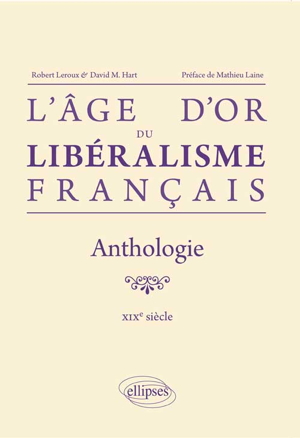
The Golden Age of French Liberalism in the 19th Century: An Anthology in French

9782729881962.indd

L’âge d`or du libéralisme français. Anthologie. XIXe siècle. Robert Leroux et David M. Hart. Préface de Mathieu Laine (Paris: Editions Ellipses, 2014).

This anthology in French is slightly larger than the English language one we did for Routledge. It contains 41 extracts. However, the master collection contains 79 extracts in French which can be found here.

ToC:

Read more

Frédéric Bastiat (1801-1850) and Rethinking Classical Economics in the mid-19th Century

Talk given to a Conference on “A Brief History of Economic Thought,” Institute for Liberal Studies, The University of Toronto, Bahen Centre Friday 29 September, 2012 Online here Abstract: The decade or so 1845-1856 saw a major re-thinking taking place in the nature of classical economic thought in France. The first generation of 19th century … Read more

Gustave de Molinari and the Future of Liberty in 1901: ‘Fin de Siècle, Fin de la Liberté’?

Online here Abstract: This paper examines Molinari’s assessment in two articles he wrote at the turn of the 20th century of the achievements of liberty in the 19th century and his prognosis for liberty in the coming 20th century. Concerning the latter, he successfully predicted two related things: firstly, that anti-liberal policies being introduced in … Read more

How Austrian were the French? Or, How French are the Austrians? An Austro-Australian Perspective.

(Left to right, top to bottom: Jean-Baptiste Say (1767-1832); Ludwig von Mises (1881-1973); Charles Dunoyer (1786-1862); Augustin Thierry (1795-1856); Friedrich Hayek (1899-1992); Frédéric Bastiat (1801-1850); Jean-Gustave Courcelle-Seneuil (1813-1892); Murray Rothbard (1926-1995); Gustave de Molinari (1819-1912).) A paper given at the Inaugural Mises Seminar, Sydney, 26 November 2011 http://davidmhart.com/liberty/Teaching/2011/MisesSeminar/HowAustrian.html Abstract: This paper examines the mid-19th century … Read more

Is Biography History? The Relationship between Ideas and Human Action in the Life of Frédéric Bastiat (1801-1850)

A paper given at the Historical Society’s 2012 Conference, University of South Carolina, Columbia, South Carolina, 1 June, 2012 June 1. Online here Abstract: “Is Biography History?” My conclusion is that the life of FB is a good example of how the “biography of ideas” developed by Ashcraft for Locke and Scott for Sidney, and Mises’ … Read more

Frédéric Bastiat’s Distinction between Legal and Illegal Plunder

A Paper given at the Molinari Society Session “Explorations in Philosophical Anarchy” at the Pacific Meeting of the American Philosophical Society, Seattle WA, 7 April, 2012. http://davidmhart.com/liberty/Papers/Bastiat/Bastiat_LegalPlunder.html Abstract: This paper comes out of a larger research and publishing project on the life and work of the French advocate for free trade, economic journalist, arch-critic of … Read more

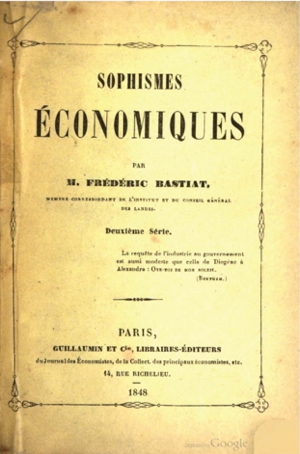
Opposing Economic Fallacies, Legal Plunder, and the State: Frédéric Bastiat’s Rhetoric of Liberty in the Economic Sophisms (1846-1850)

Bastiat_1848SophismesEconomiques_TP

A Paper given at the History of Economic Thought Society of Australia (HETSA) annual meeting, RMIT Melbourne, Victoria, July 5-8, 2011.

Online here.

This paper examines the origin, content, and form of Bastiat’s Economic Sophisms which will comprise volume 3 of Liberty Fund’s translation of his Collected Works. It is argued that in opposing the economic sophisms which he saw around him Bastiat developed a unique “rhetoric of liberty” in order to make his case for economic liberty. For the idea of debunking “fallacies”, he drew upon the work of Jeremy Bentham on “political fallacies” and Col. Perronnet Thomas on “corn law fallacies”; for his use of informal “conversations” to appeal to less well-informed readers, he drew upon the work of two women popularizers of economic ideas, Jane Marcet and Harriet Martineau.

Read more

On Ricochets, Hidden Channels, and Negative Multipliers: Bastiat on Calculating the Economic Costs of ‘The Unseen’.

Bastiat-fromDEP300

A Paper given at the “History of Thought” Session of the Society for the Development of Austrian Economics. 
Southern Economic Association 83rd Annual Meeting,
November 23-25, 2013
Tampa, Florida

The paper is online here

In this paper I would like to examine a theory Bastiat developed in the latter years of his life (1847-1850) on calculating the costs and benefits of what he called “the unseen”. This is an important part of Bastiat’s economic theory which has been ignored by researchers to date, partly because the relevant articles were not included in the FEE translation of his Economic Sophisms (but which will be included in LF’s new translation of the complete Sophisms), partly because of mistranslations of those that have been translated (the key word “ricochet” was often translated figuratively, often as “indirect” or “rebounds”, and not as the technical economic word Bastiat intended it to be), and partly because a full electronic version of his complete works did not exist until recently when comprehensive key word searches could be used for the first time to uncover the rich and colorful vocabulary Bastiat used in formulating his ideas on this topic.

Read more

Leveller Tracts vol. 7 (1650-1660)

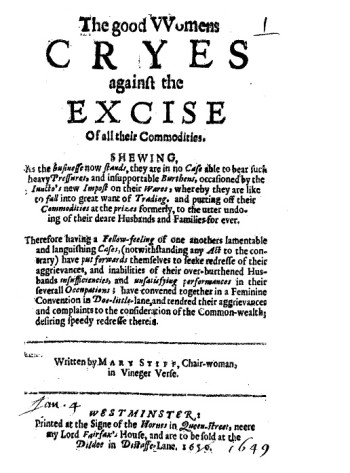
1650-01-04-Stiff_AgainstExcise_TP516

The uncorrected HTML of volume 7 of the Leveller Tracts (1650-60) is now online at the OLL. There are 42 pamphlets which have a total of 1,055 illegible words and characters which need to be corrected before it will go into the main OLL library. It covers the period of the Commonwealth, the rise of Cromwell’s Protectorate, and the gradual defeat and dispersal of the Leveller movement.

Highlights include more tracts on economic matters (such as taxes and free trade), Sexby’s notorious pamphlet advocating the killing of Cromwell as a tyrant, and the pamphlet by Margaret Fell Fox advocating the right of women to speak in Church:

  • Mary Stiff, The good Womens Cryes against the Excise of all their Commodities (4 January 1650)
  • Anon., The Soap-makers Complaint for the losse of their Trade (24 September 1650)
  • William Walwyn, Walwyns Conceptions; for a Free Trade (May 1652)
  • William Prynne, A Declaration and Protestation against New Taxes (18 October, 1653)
  • James Freize, A Moderate Inspection into the Corruption of the Common Law of England (17 June, 1656)
  • Edward Sexby, Killing, No Murder (21 September, 1657)
  • Margaret Fell Fox, Womens Speaking Justified (c. 1666)

Read more

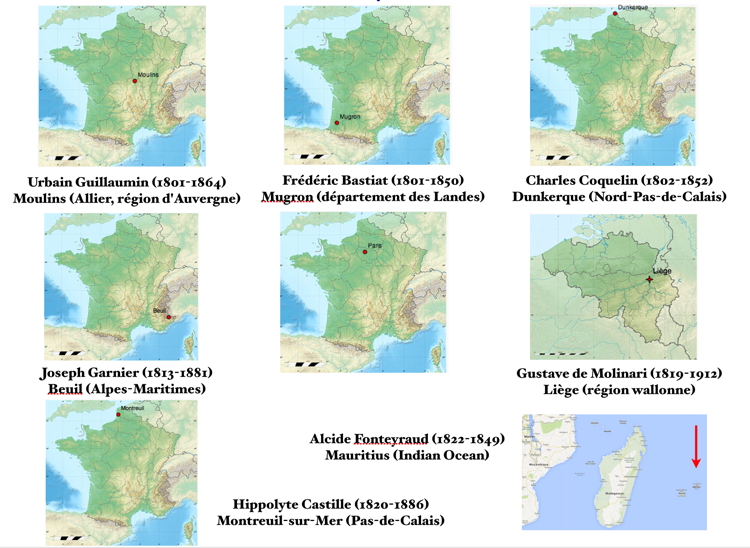
Gustave de Molinari and the Seven Musketeers of French Political Economy

7Musketeers

See the full paper at my main website.

This is part of a book-length “introduction” (300 pp.) I have written to the translation of Molinari’s Les Soirées de la rue Saint-Lazare (1849). It includes a brief biography of Molinari; a discussion of the struggle against protection in France from the 1820s to the late 1840s; the socialist attack on private property and the legitimacy of profit, interest and rent in the 1840s; a brief history of the popularisation of economic theory and the role played by the “conversation” format; Molinari’s and the economists’ activities during the 1848 Revolution; and Molinari’s theory of liberty and the “natural laws” of political economy which he presents in Les Soirées.

Abstract: In Paris in the 1840s there emerged a very special and unique collection of individuals who came together to promote classical liberal and free market thought and to fight socialism and interventionism. I call them “the Seven Musketeers” of French political economy. The term “Musketeer” comes from Gérard Minart’s new biography of Gustave de Molinari (2012) in which he described Frédéric Bastiat, Molinari, and 2 other colleagues (Guillaumin, Coquelin) as “The Four Musketeers”. This is quite appropriate as Dumas’ popular novel came out in 1844 [it was serialised in Le Siècle] and Bastiat, like D’Artagnan, came from the south-west province of Gascony. These economists formed a close band of liberal intellectuals and activists in Paris who were fighting protectionism and socialism not the Protestant enemies of the King of France as the original Musketeers were. My research has revealed that 7 individuals actually fit this description. They are made up of two generations who were key figures in the classical liberal and political economy movement. The 1st were born around 1800 and were in their mid to late 40s in 1848; the 2nd were born around 1820 and were in their late 20s in 1848.

Read more
Twelve Key Concepts of Liberty

I have selected “12 Key Concepts of Liberty” to examine in more detail:

  1. Natural Law and Natural Rights
  2. Private Property
  3. Individual Liberty
  4. Idea of Spontaneous Order
  5. Free Markets
  6. Limited Government
  7. Rule of Law
  8. Freedom of Speech & Religion
  9. Free Trade
  10. Peace
  11. Progress
  12. Right of Exit

Read more

One Volume Surveys of the CL Tradition

When did theorists become self-conscious that they were advocating a unique, consistent and all-encompassing liberal worldview (Weltanschauung) which could be articulated in one volume; that their ideas were interconnected, were based upon a well thought out set of fundamental principles, and resulted in a comprehensive set of proposals for liberal reform?

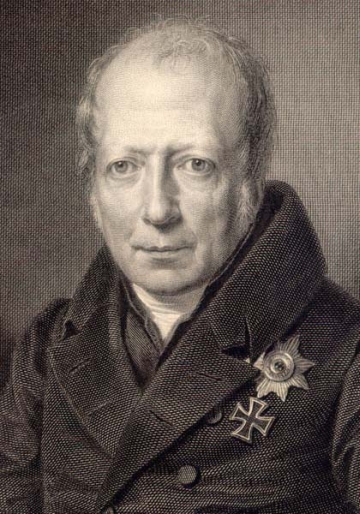
Humboldt360

Wilhelm von Humboldt (1767-1835)

Read more

The Classical Liberal Tradition – A History of Ideas and Movements over 400 Years

IHS Advanced Studies Summer Seminar, “Liberty & Scholarship: Challenges and Critiques” Bryn Mawr College, Philadelphia, PA.

Date: 13-19 June, 2015

Lectures on:

  1. “The Classical Liberal Tradition – A History of Ideas and Movements over 400 Years” – two lectures
  2. “Images of Liberty and Power: State Propaganda and its Subversion”
  3. “Competing Visions of the Future: Socialist and Classical Liberal”

Lecture 1. “The Classical Liberal Tradition: Theory and History (A Two-Part Lecture)”

KeyIdeasClassicalLiberalism4

Read more

On the Spread of Classical Liberal Ideas

Date: 1 March, 2015 David M. Hart, “On the Spread of (Classical) Liberal Ideas” (March 2015) Liberty Matters Online Discussion Forum. I wrote the Lead Essay for this discussion as well as extensive appendices on “Historical Examples of Radical Change in Ideas and Political Structures”, “The Spread of Pro-Liberty Ideas in the Post-WW2 Period”, A … Read more