| The Digital Library of Liberty & Power incorporating the Guillaumin Collection of the Great Books of Liberty |
Home | New | Authors | Works | Papers | Blog | About | Email | Search |
 |
|
CHARLES COMTE,
"[CR] "The Principles of Politics which are applicable to all representative governments, and especially
to the present constitution of France, by Benjamin Constant"
Le Censeur (Sept. 1815)
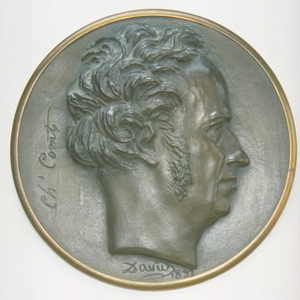 Charles Comte (1782-1837) |
 |
|
[Created: 8 May, 2026]
[Updated: 26 May, 2026] |
Source
, [CR] "The Principles of Politics which are applicable to all representative governments, and especially to the present constitution of France, by Benjamin Constant, Councillor of State," Le Censeur T.7 (Sept. 1815), pp. 78-115.http://davidmhart.com/liberty/FrenchClassicalLiberals/Comte/CenseurAnthology/C1-16-en.html
Charles Comte, [CR] "The Principles of Politics which are applicable to all representative governments, and especially to the present constitution of France, by Benjamin Constant, Councillor of State," Le Censeur T.7 (Sept. 1815), pp. 78-115.
This is a translation of [CC], [CR] “Principes de politique applicables à tous les gouvernements représentatifs, et particulièrement à la constitution actuelle de la France; par M Benjamin Constant, conseiller d'état,” Le Censeur T.7 (6 septembre, 1815), pp. 78-115.
It is also available in French in a facsimile PDF of the original and in HTML.
This essay is part of a collection: Charles Comte and Charles Dunoyer, Censoring the State: An Anthology of Articles by Charles Comte and Charles Dunoyer from Le Censeur (1814-1815) and Le Censeur européen (1817-1819). Edited and translated by David M. Hart (Pittwater Free Press, 2026).
The anthology is available in the following formats:
- all 35 essays in one file in French [HTML] and in English [HTML]
- the 17 essays from Part 1 Le Censeur (1814-1815) in French [HTML] and in English [HTML]
- the 18 essays from Part 1 Le Censeur européen (1817-1819) in French [HTML] and in English [HTML]
- all the essays listed in a sortable table with links to the individual French and English language versions.
Comte, [CR] "The Principles of Politics which are applicable to all representative governments by Benjamin Constant" (Sept. 1815)
A Review of Constant's Principles of Politics
[78]
PRINCIPLES OF POLITICS. Applicable to all representative governments, and particularly to the present constitution of France;
By M. Benjamin Constant, Councillor of State. [1]
In publishing this work, M. Benjamin Constant appears to have especially intended to prove that, in accepting from Napoleon a position as a councillor of state, he has not deserted the cause of liberty. To reach this goal, he endeavors to demonstrate that the Additional Act, which sanctioned several of the opinions he has constantly professed, is less vicious than the charter granted to us by Louis XVIII. He then reproduces [79] a large number of ideas he had already published, but which, in present circumstances, may serve for the improvement of our institutions.
Those who love liberty only in theory will find, in the work of M. Benjamin Constant, enough to convince themselves that the author has not betrayed their cause. As for those who truly wish to be free, and who judge men less by their speeches than by their actions, they will wait, before pronouncing upon the somewhat sudden conversion of the author, until M. the councillor of state has done, in favor of liberty, something more than a pamphlet. They will think that the hatred of arbitrary power ought not to manifest itself in a man who sits on the council of the prince, in the same manner as in a simple private individual; that if the latter can only record his opinions in his speeches or in his writings, the former must express his in acts more immediately useful to the public.
The detractors of M. Benjamin Constant may accuse him of being hasty in his judgment; but a judgment is not false [80] because it is done in haste. Thus, before pronouncing, one must wait until the future has taught us whether the council of state will continue to be the workshop where the weapons of tyranny are forged; or whether, on the contrary, it will prepare the laws that must establish or consolidate our liberty. If this body is incorrigible, and, if the Boulay (de la Meurthe), who will be its organs, once again proclaim to the face of Europe, that Napoleon is the supreme and ever-living law, and that all laws must be silent when he has spoken, there is no doubt that M. Benjamin Constant will hasten to leave it, and that he will not be held there even by the hope of moderating the violence or injustice of the measures that might be taken there. In this regard, we can rely on his principles.
"We were told in a dreadful epoch, he says, that one only made oneself the agent of unjust laws in order to weaken their severity; that the power of which one consented to become the custodian would have done still more harm had it been placed in those with pure hands. [81] This is a deceitful compromise which has opened a boundless career to every crime! Each person bargained with his conscience, and every degree of injustice found its worthy executors. I do not see why, in this system, one should not become the executioner of innocence, under the pretext that one would strangle it more gently." [2]
The work of M. B. Constant does not form a system of politics; it consists of a series of chapters which often have only a very distant relation to one another, and which could, without loss, be published separately.
The author deals first with sovereignty, and he places it, as do all good writers, in the entire body of the nation. He especially endeavors to demonstrate that it is not unlimited; he points out the dangers which result from systems that give it no bounds; he combats Hobbes, [82] who wished to establish such a system, and Rousseau who, according to him, likewise claimed that sovereignty had no limits. He lays down as a principle that it stops at the individual rights that men possess independently of any social or political authority. These rights are individual liberty, religious liberty, freedom of opinion, including its expression, the enjoyment of property, the guarantee against all arbitrary power.
As a system, however ingenious it may be, changes nothing in the nature of things, and as the question is less to seek what ought to be than to see what actually is, the author finds himself obliged to admit that the limits he gives to sovereignty can exist only as a result of public opinion. It is therefore in forming this opinion that one can keep the sovereign within wise limits.
"If it is recognized, he says, that sovereignty is not without bounds, that is to say, that there exists on earth no unlimited power, no one, at anygiven time, will dare to claim such a power; experience itself already proves [83] it. No one attributes any longer, for example, to society as a whole the right of life and death without judgment: thus no modern government pretends to exercise such a right. If the tyrants of the ancient republics appear to us far more unbridled than the governments of modern history, it is in part to this cause that it must be attributed."
The question raised by M. B. Constant about sovereignty seems to me ill-posed; a sovereign, that is to say a nation considered as a whole, can act only upon foreign bodies or upon itself: as soon as it wishes to act against one or several of its members, it divides itself; and one cannot see the sovereign either in the part that oppresses, nor in the part that is oppressed. The sovereign can dispose only of itself and in a general manner; as soon as it acts upon individuals, it is dissolved, it is no more. This is what made Rousseau say that the sovereign can only make laws; and that the laws must be only the expression of the general will. Considering it in this respect, which is the only one under which one can see it, it is clear [84] that sovereignty has limits; but these limits are of the same nature as those which are set for the power which man has over himself.
If the tyrants of the ancient republics went to excesses unknown in our day, it is not, as M. B. Constant believes, because the opinion of unlimited sovereignty was generally accepted; it is because people had not yet formed precise ideas about the distinction between powers. A people often exercised both the legislative power and the judicial power: and if an individual seized public authority, he exercised it as it had been exercised before him. If therefore he put one of his fellow-citizens to death, it was because he united powers which had never been properly separated, and not because it was admitted that sovereignty being unlimited, the sovereign could send men to their death without judging them; but in such cases, the orders of the prince were true judgments. [3] Without doubt, there are rights [85] which the legislator must not violate. And what are these rights? They are those whose destruction would clearly be harmful to the social order, and which can, in no case, produce anything but an questionable benefit. [4] The number of these rights will no doubt increase as men continue to enlighten themselves as to their interests.
After speaking about the limits of sovereignty, M. B. Constant deals successively with the nature of royal power in a constitutional monarchy, the right to dissolve representative assemblies, the hereditary assembly, the election of representative assemblies, the condition of property ownership, discussion of issues, initiating legislation, the responsibility of ministers, no confidence motions against ministers, the responsibility of subordinate agents, the right to declare of peace and war, the organization of the armed force in a constitutional state, the universality of property ownership, the freedom of the press, religious liberty, individual liberty, and judicial guarantees. He ends his work with [86] some thoughts on present circumstances, and on some criticisms that seem to have been addressed to him concerning his acceptance of the position of councillor of state.
M. B. Constant distinguishes royal power from the executive power exercised by the ministers; the former is a neutral power, the latter is an active power. To make clear the difference that exists between the one and the other, he recalls the distinction of political powers which are already known.
"The executive power, the legislative power, and the judicial power, he says, are three springs that must cooperate, each in its part, in the general movement (of the political mechanism): [5] but when these springs, malfunction, act with cross purposes, clash with and obstruct one another, there must be a force which restores them to their proper place. This force cannot be in one of the springs, for it would use it to destroy the others. It must be outside, it must be neutral, in some sense, so that its action necessarily applies wherever it is necessary that it should be applied, and so that it may be preservative, reparative, without being hostile."
Royal power being thus defined, the author follows [87] the consequences of his definition; he emphasizes the necessity of establishing a neutral power, recalling the continual and useless efforts made by the ancient republics to impose limits on the authority of their magistrates. He establishes that royal power must be hereditary, and that the person of the monarch must be inviolable; finally he compares parliamentary government with republican government, and he proves that, under the former, citizens enjoy a greater amount of civil liberty than under the latter. This difference arises mainly from the fact that, in the one, the men invested with executive power can easily be made responsible, while in the other, the exercise of responsibility must shake the State or compromise public liberty. These ideas, which M. B. Constant had already set forth under the reign of Louis XVIII, in his Reflections on Constitutions, and which we discussed in volume 5 of the Censeur (page 24 and following), we will refrain abstain from discussing this matter any further.
[88]
A provision of the Additional Act to the constitutions of the Empire grants the head of state the right to dissolve the chamber of representatives. This right has aroused the ire of some people, who have considered it as an insult to the nation; and M. B. Constant, in the third chapter of his work, seeks to demonstrate its necessity. He observes that every political organization which did not consecrate this right would become an unbridled and turbulent demagogy, unless despotism, which replaces legal prerogativeswith arbitrary blows, reduced the assemblies to the role of passive, mute, and blind instruments. He adds, that the faculty of dissolving the chambers is the only means either to stop the tendency which all assemblies have to make laws, or to destroy the parties which might be formed in their midst, to obstruct the march of government, or to give it a direction contrary to the public interest.
I think, with M. B. Constant, that the right to dissolve the chambers is an essential prerogative for the existence of a parliamentary government; [89] but I also believe that this prerogative may bring about the annihilation of liberty, if the constitution does not place the prince under the requirement of convening a new assembly as soon as he has dissolved the one which he has found contrary to the general good. In the present state of our legislation, for example, it is evident that if the prince wished to govern without the assistance of national representation, the constitution would provide him with every means to do so. He would only have to issue decrees for the collection of taxes or for the levying of men that he might need, and he would find in his administrators the necessary force to put them into execution. The citizens could not oppose the collection of taxes by means of judicial action, because these actions would be judged by his own agents. They could not oppose it by force either, because special tribunals would be judges of the legitimacy of their opposition. In order that the prerogative of dissolving the chamber of representatives should not be destructive of liberty, it is therefore necessary [90] that all disputes relating to the collection of taxes, the levying of men, and resistance to arbitrary rule, be judged by independent tribunals.
Two questions have also been raised concerning the new constitution; one relates to the heredity of the dignity of peer, the other to the limitation on the number of members of which the chamber of peers must be composed. M. B. Constant has succinctly examined these two questions, or rather he has recalled the opinions he had expressed on this subject in one of his earlier works. He thought that the peerage ought to be hereditary; and he justified his opinion on the reasons we set forth in volume 5 of the Censeur, page 11. He believed that the number of peers should be unlimited. In the same volume, page 15, and in volume 6, page 268, we refuted the grounds on which he had based this opinion. There is one, however, to which we have not given a satisfactory reply. M. B. Constant maintains that if the king does not have the faculty of indefinitely increasing the number of peers, the peerage will become a [91] dreadful aristocracy, whose resistance nothing will be able to overcome if it wishes to subject the other two branches of legislative authority to its opinion. Would not this objection against the limitation of the number of peers prove that one should have the right to create an unlimited number of kings, in order to overcome their resistance to the resolutions of the legislative assemblies? It would not be difficult to find examples of weakness in an assembly such as a chamber of peers; but it would be impossible to find a single example of resistance contrary to the national interest; and this single observation destroys a system founded solely on a hypothesis which has never been realized.
M. B. Constant, after making some observations about the chamber of peers, deals successively with the election of representative assemblies, the condition of property ownership, discussion of issues, initiating legislation, the responsibility of ministers, no confidence motions against ministers, and the responsibility of subordinate agents. What he says on these last three objects is [92] only a repetition of what he had already said in a pamphlet that was reviewed in volume 5 of the Censeur. [6] He has merely extended the scope of responsibility to the illegal acts of ministers which harm the general interest.
His reflections on national representation present no new idea. The author criticizes the mode of election established by the constitutions of the Empire; he thinks that the mode proposed by M. Necker would be preferable in all respects. This mode, which we set forth in volume 6, [7] would consist in having the principal landowners of each district present a certain number of candidates from among whom the citizens would choose their representatives. M. B. Constant, however, would give preference to elections made directly by the people. He thinks that if some slight disturbances might result from the mode of elections, far from being harmful to the State, [93] they must on the contrary be useful to it, by forming public opinion.
"If we wish once fully to enjoy in France the benefits of representative government, he says, we must adopt direct election. It is direct election which, since 1788, has brought into the House of Commons all the enlightened men. It would be difficult to cite a single Englishman distinguished by his political talents whom election has not honored, if he has sought it.
"This mode of election alone can invest national representation with a real force, and give it deep roots in public opinion. The representative appointed by any other mode finds nowhere a voice that recognizes his own. No part of the people gives him credit for his courage, because all are discouraged by the long chain of twists and turns into which their suffrage has been distorted or has disappeared.
"If one fears the French character, whiuch is impetuous and impatient with the yoke of the law, I would say that we are this way only because [94] we have not contracted the habit of restraining ourselves. It is the same with elections as with all that pertains to good order. By unnecessary precautions, disorder is caused or else increased. In France, our spectacles, our festivals bristle with guards and bayonets. One would think that three citizens cannot meet without needing two soldiers to separate them. In England, twenty thousand men assemble, and not a single soldier appears in their midst [8]: the safety of each person is entrusted to the reason and the interest of each person, and this multitude, feeling itself the custodian of public and private tranquillity, watches scrupulously over this trust. It is possible moreover, by an organization more complicated than that of British elections, to bring greater calm into the exercise of this right of the people…
"As a witness of the apparent disorders which [95] agitated England in the contested elections, adds the author, I have seen how much the picture of these disorders is exaggerated. I have indeed seen elections accompanied by brawls, by clamors, by violent disputes; but the choice nonetheless fell upon men distinguished either by their talents or by their fortune; and when the election was over, people returned to their accustomed order. The electors of the lower class, recently obstinate and turbulent, became once more industrious, docile, andeven respectful. Satisfied to have exercised their rights, they yielded all the more easily to their superiors and to social conventions, since they knew, in acting thus, that they obeyed only the reasonable calculation of their enlightened self-interest. The day after an election, not the least trace remained of the agitation of the previous day. The people had resumed their labors; but public opinion had received the salutary shock which was necessary to revive it."
Having thus defended the system of direct elections, M. B. Constant refutes the objections of the method enshrined in the constitution [96] of year VIII; he observes that individual interests are the elements of which the general interest is composed; that the assembly which has a sound knowledge of the former must necessarily also know the latter; that if the electoral college is placed at the top of the edifice, those whom it appoints are called upon to make decisions concerning the public interest whose elements they do not understand; that direct election requires the powerful classes to give ongoing consideration to the interests of the inferior classes; that it forces the wealthy to conceal its arrogance and those who wield power to moderate their actions, which is the result of the less wealthy group of property owners having the right to vote which thereby creates a reward for the exercise of justice and the showing of kindness, and a penalty for acts of oppression; and that this incentive to act charitably may at first be only the result of calculation, but may soon become a habitual virtue.
Direct election granted to the people provides M. B. Constant with the occasion to examine whether one ought to impose property qualifications upon those who are eligible for office. These conditions seem to him unnecessary when the right of election [97] is placed exclusively in the hands of the great landowners; but he considers them necessary when all citizens are called upon to cast their votes. In his system, not every kind of property should confer the right of standing for election; having landed property is the only one to which he attributes this advantage. He bases himself principally on the habits of order and economy adopted by landowners, and on the sentiments they get from their upbringing.
"Landed property, he says, influences the character and the destiny of man, by the very nature of the care it requires. The land-owner devotes himself to steady and progressive activities. Thus he develops regularity in his habits. Chance, which in morality is a great source of disorder, has no part in the life of the farmer. Every interruption is harmful to him, every imprudence is guaranteed to cause a loss. His successes are slow; he can obtain them only by labor; he cannot hasten or increase them by acts of lucky recklessness. He is dependent upon nature and [98] independent of other men. All these things give him a calm disposition, a sense of security, a spirit of order, which ties him to the vocation to which he owes his comfort as much as his income.
"Industrial property influences man only through the positive gain it provides or promises to provide him; it brings less regularity into his life; it is more artificial and less unchanging than landed property. The operations of which it is composed often consist of fortuitous transactions; its successes are quicker, but chance plays a large role in them. It does not have as its necessary element that slow and sure progress which creates the habit of and soon the need for uniformity. It does not make man independent of other men, on the contrary it makes him dependent upoin them. Vanity, that fertile seed of political agitation, is frequently wounded in the industrial proprietor; it is almost never wounded in the farmer. The latter calmly calculates the order of the seasons, the nature of the soil, the character of the climate; the other calculates the fancies, the pride, the luxury of the rich. A [99] farm is a homeland in miniature. One is born there, one is raised there, one grows up there with the trees that surround it. In industrial property nothing speaks to the imagination, nothing to one's memories, nothing to the moral part of man. One never talks about "the shop or the workshop of my fathers". Improvements to landed property cannot be separated from the soil that receives them and of which they become a part. Industrial property is not susceptible of improvement, but of increase, and this increase can be transferred to others."
The author, in granting preference to landed property over industrial or manufacturing property, nevertheless admits that the refusal to grant political rights to those merchants whose activity and wealth double the prosperity of the country they inhabit, would be an injustice and moreover imprudent, since it would set wealth in opposition to power; but he observes that the exclusion does not affect those industrial proprietors whom it would be regrettable to exclude, because they are all at the same [100] time landowners. There is a third kind of property the ownership of which M. Benjamin Constant does not think should grant the right to stand for election to national assemblies: it is intellectual property. A doctor, for example, may draw from his profession profits as real and as considerable as those which a rich landowner draws from his lands; but as it is impossible to have an exact measure of these skills, and as men’s ambitions in this respect are very often without limit, the author finds it wiser not to take them into account.
The royal charter, which was granted to us, in the name of the grace of God, by Louis XVIII, destroyed in great part public accessibility to parliamentary discussion; the additional act which Napoleon imposed upon us, in the name of the sovereignty of the people, restored this public openess. M. B. Constant thinks that elected representatives ought not to be authorized, except in some rare and brief exceptions, to prevent their constituents’ right to know how they treat their interests. But [101] isn't open and public discussion destroyed when pre-written speeches in the Chamber are prevented from being given ? Far from it, it is only when orators begin to speak in large numbers, that a true discussion is engaged.
"When orators confine themselves to reading out what they have written in the silence of their study, they do not discuss anything, they exaggerate things; they do not listen to the others, becauase what they hear would change nothing in what they are about to say; they wait until the speaker whom they are going to follow has finished; they do not examine the opinion he has been defending; they count the time he uses, which seems to thembe a delay in the prceedings. Then there is no more discussion, each speaker reproduces the objections which have already been refuted; each speaker leaves aside everything that he has not foreseen, all that would upset his prewritten speech. The orators succeed one another without engaging with one another; if they refute each other, it is only by chance: they resemble two armies which march past each other, in opposite directions, side by side, scarcely perceiving one another, even avoiding looking at one another for fear of straying from the path which has been irrevocably mapped out for them."
The need to have an impact is another [102] reason to banish from discussion all pre-written speeches. The author affirms that he saw, in the awfull periods of our revolution, representatives looking for subjects for their speeches so that their name might not be absent from the great movements then taking place: once the subject was found and the speech written, they took no interest in the outcome.
"By banishing pre-written speeches, he adds, we shall create that silent majority, which, being "disciplined", so to speak, by the superiority of men of talent, is reduced to listening to them since they are not able to speak in their place; (this silent majority) becomes enlightened because it is obliged to be humble, and becomes more reasonable by keeping silent."
M. Benjamin Constant has often quoted verbatim the opinions he had expressed in his earlier writings, when they happened to be in harmony with the provisions of the Additional Act. Why did he not act in the same way when he treated the matter of the initiation of legislation? It is doubtless because the reasons he gave in 1814, in his Reflections on Constitutions, would have been too just and too [103] bitter a censure of the Additional Act, and because he was in some sense interested in justifying this act, in order to prove that he had not abandoned the cause of liberty. The ability to initiate legislation which is placed exclusively in the centre of representative assemblies is, in our eyes, one of the principal foundations of a constitutional monarchy, or of a parliamentary government; yet M. B. Constant passes over this article with a lightness which would seem to prove that he feared to go deeper into the question.
Communal or departmental administrations are very analogous to national representation; they ought to be to the communes or to the departments what a representative assembly ought to be to the nation. M. Benjamin Constant, in the twelfth chapter of his work, points out some of the advantages that may result from them. He observes that the only means of inspiring citizens with a tie to their fatherland is to inspire them with a tie to the place of their birth. The way to achieve this result is to grant them, in their [104] homes, in the bosom of their communes, in their districts, as much political importance as can be given without injuring the general bond.
"The magistrates of the smallest communes, he says, take pleasure in embellishing them. They carefully maintain their ancient monuments. There is almost in every village a scholar who loves to recount its rustic annals, and who is listened to with respect. The inhabitants take pleasure in everything which gives them the appearance, even a deceptive one, of being constituted as a body of a nation and united by special ties. One feels that, if they were not stopped in the development of this innocent and beneficent inclination, there would soon form within them a kind of communal honor, so to speak, an honor of the town, an honor of the province, which would be at once a joy and a virtue. Attachment to local customs is connected with all disinterested, noble and pious sentiments. It is a terrible policy that turns it into rebellion. And what also happens? That in states where all local life is thus destroyed, a small [105] state forms at the center; in the capital all the vested interests gather; there all ambitious people go to stir things up. The rest of the country is immobile. Individuals, lost in their unnatural isolation, strangers to the place of their birth, without contact with the past, living only in a fleeting present, and cast like atoms on an immense and leveled plain, detach themselves from a fatherland they perceive to be nowhere, and the whole of which they grow indifferent to, because their affections are tied to none of its parts."
These observations of M. B. Constant seem to us full of justness. But we are not of his opinion when, treating the right to declare peace and war, immediately after speaking of municipal power, he endeavors to prove that the exercise of this right must be exclusively abandoned to the executive power. The reasons on which he bases this are that one cannot refuse the head of government the right to defend the State when it is attacked, and that it is easy for him, by insults, by threats, [106] by hostile preparations, to reduce the riskj of his neighbor attacking him. The prince can act only through his ministers; now the aggressions against foreign powers which the latter might be able to authorise, given that they are ministerially responsible, [9] make the reasons M. B. Constant give fanciful. They are all the more so because it is impossible for these aggressions to remain hidden. We know by experience that the terrible right to declare war when placed in the hands of an individual can bring about the greatest disasters; but we are not equally convinced that the deprivation of this right, imposed upon the head of the State, can be harmful to a nation.
The examination of this question led M. B. Constant to offer some reflection on the organization of the armed force in a constitutional State. He observes that the armed force has three goals: the first, to repel foreigners; the second, to repress crimes committed by private individuals within; the third, to suppress disturbances and seditious acts. To repel enemies, the standing army must be placed on the frontiers; there is [107] no need of defense against the enemy where the enemy is not. The force destined to repress crimes must be completely different from the standing army. In America every citizen owes assistance to the magistrate in the exercise of his functions. In France this obligation would have the inconvenience of imposing upon citizens duties which would appear unbearable to them; therefore a class of men must be specially dedicated to the repression of crime. A national guard, composed of citizens and landowners, ought to repress acts of sedition. M. B. Constant does no develop these ideas: one feels nevertheless that the organization of these different classes of the armed force cannot be a matter of indifference. [10]
In the chapter On the Inviolability of Property, the author occupies himself especially with the indirect plunder which governments very often undertake against individuals. He divides thisse plunder into two classes. In the first, he places partial or total bankruptcies, and the reduction of the national debt, [108] whether of capital or of interest; the payment of these debts in securities of a value less than their nominal value; the debasement of the currency, withholdings, etc. In the second, he includes acts of authority against men who have contracted with the government, retroactive laws or measures against those who have recently acquired wealth, extraordinary tribunals, the annulment of contracts, etc.
Governments that allow total or partial bankruptcies usually justify themselves by alleging that public revenues are insufficient to pay the debts of the State. This motive is never more than a bad pretext; for if the entire mass of the nation cannot discharge a debt, it is absurd to pretend that a part of this nation will be able to discharge it by sacrificing all or part of what is owed to it. Is it not indeed a strange means of lightening public burdens, to reduce the number of those who must bear them? Public bankruptcies rest on the same principle as confiscations in [109] despotic governments; when governments have squandered the funds of the State, they find there is less danger for them in ruining creditors whose discontent they can impudently defy, than in making the people pay debts which they did not incur. Every bankruptcy of this nature, being irrefutable proof of the vices or incapacity of rulers, ought always to entail their forfeiture.
M. Benjamin Constant develops with much precision and wisdom all the effects resulting from breaches of faith on the part of rulers; he points out that the arbitrary reduction of a debt, far from increasing public credit, serves on the contrary only to destroy it.
"Such is, he says, the blindness that follows the abandonment of justice, that it has sometimes been imagined that by reducing debts by an act of authority, credit which seemed to be failing would be revived. One started from a principle that was misunderstood and misapplied. It was thought that the less one owed the more confidence one would inspire, because one would be more [110] in a position to pay one’s debts: but one confused the effect of a legitimate discharge with that of a bankruptcy. It is not enough that a debtor can satisfy his obligations, he must also be willing to do so, or one must have the means to force him. Now, a government which profits from its authority to cancel a part of its debt, proves that it has no will to pay. Since its creditors do not have the power to force it to, how imporant then are its its resources?"
The chapter in which M. Benjamin Constant discusses religious liberty is one of those that contain the most just ideas, and which he seems to have treated with the most predilection. To explain all the useful things contained in this chapter, one would need to go into more detail than the nature of our review permits. We shall limit ourselves to citing what M. B. Constant says in order to refute the reasoning of those who claim that religion is useful only to the lowest class of the people.
"This axiom, he says, is false in itself, inasmuch as it implies that religion is more necessary to the laboring classes of society than to the idle and opulent classes. If religion is necessary, it is equally necessary to all classes and to all levels of education. The crimes of the poor and the less enlightened classes have a more violent, more terrible character, but at the same time they are more easily discovered and repressed. The law surrounds them, seizes them, represses them easily, because these crimes directly strike against it. The corruption of the upper classes is hidden, is diversified, eludes the positive laws, plays with their intent by evading their explicit form, and opposes them moreover with their access to credit, influence, and power.
"This is strange reasoning! The poor can do nothing; he is surrounded by shackles; he is bound by fetters of every kind; he has neither protectors nor supporters; he can commit an isolated crime, but everyone arms itself against him as soon as he is found guilty; his judges are always drawn from a hostile class and show him no consideration; in his [112] relations with others who are as powerless as he, he finds no chance of impunity; his conduct never influences the general fate of the society of which he is part, and it is against him alone that you want the mysterious guarantee of religion! The rich person on the contrary is judged by his peers, by his allies, by men upon whom always fall, more or less, the penalties they inflict upon him. Society lavishes its aid on him: all material and moral opportunities are open to him, by the sole effect of his wealth; he can exert wide influence; he can overwhelm or corrupt others; and it is this powerful or favored being whom you would exempt from the heavy yoke which you want to impose upon a weak and disarmed being and which you deem to be indispensable."
M. Benjamin Constant wants everyone to be able to reason freely about religion; for, according to him, to prevent one from reflecting upon his religion is to prevent him from being responsible for it, and thus it is reduced to mere symbols and empty habits.
I do not understand, he says, how the Mongol people, following the doctrine of their religion to offer frequent prayers, were able to persuade themselves that these [113] prayers were pleasing to their gods.
"I know not, he says, what Mongol peoples, instructed by their cult in frequent prayers, persuaded themselves that what was pleasing to the gods in these [113] prayers, They believed that the air, struck by the movement of their lips, continually proved to the gods that man was attending to them. As result, these people invented little prayer-mills, which, by pushing the air in a certain way, constantly maintained the desired movement; and as long as these prayer-mills turned, each person, persuaded that the gods were thus satisfied, went about his business or attended to his pleasure.
"These Mongols are, as one sees, men of much sense; if ever reason makes in Europe the same progress as among them, one must hope that people who practise a religion made up entirely of mysteries, in a language they do not understand, will end by adopting little prayer-mills."
The considerations which close the work are a defence of the conduct which the author undertook in the last days of the Bourbon reign, and in those which followed the occupation of the throne by Napoleon. M. Benjamin Constant recalls that after having remained for ten months without any communication with the government of the former, and after having [114] continually opposed its measures concerning the liberty of the press, the responsibility of ministers, and passive obedience to the régime, he returned to the fold [11], because he thought that under the reign of a weak king liberty would be more easily established than under the immense force with which Napoleon surrounded himself. He adds then that he did not wish to join our enemies and beg for the carnage of Frenchmen in order to raise up once again what would fall again.
"To endeavor to defend a government which surrenders, he says, is not to promise to go into exile with it: to give proof of devotion to weakness without hope and without resources, is not to renounce the soil of one’s fathers: to confront danger for a cause which one hopes to make good after having saved it, is not to devote oneself to this cause when, compleltely corrupted and completley different, it uses the foreigner as an auxiliary force, and massacre and arson as the means to achieve its ends. In the end, not to flee is not to be a defector."
We are assuredly very far from [115] blaming M. Benjamin Constant for not having gone to Ghent to solicit from the English, the Russians and the Prussians the invasion of France; but it seems to us that it was possible to abstain from going to Ghent without accepting a position in the Council of State. Besides, if he was wrong to accept a public position from Napoleon, it is a crime which he shares with so many people, that one would have had to refuse them oneself in order to have the right to complain. Doubtless there are men who find themselves in this latter case; but they are a little less severe than the intriguers whose hopes have been disappointed; they will forget the wrong which M. B. Constant may have committed in this circumstance, in order to remember that he has always defended liberty with as much talent as zeal.
Endnotes
[1] One volume in octavo of 320 pages.
[2] It is not clearly seen whether the author is here speaking of the former imperial government or of the reign of terror.
[3] See, on the distinction of powers, volume 5 of the Censeur, p. 61. [EN: [CC], "Des Limites qui séparent la puissance législative du pouvoir exécutif," (Le Censeur vol. 5, Apr. 1815), pp. 61-77.]
[4] [EN: meaning unclear: "ce sont ceux dont la destruction évidemment nuisible à l'ordre social, ne peut, dans aucun cas, produire qu'un bien équivoque."]
[5] [EN: this is a clock analogy.]
[6] Page 182 and following. [ED: Le Censeur vol. 5.]
[7] Page 264. [Ed.: [CC??], "De l'Acte additionnel aux Constitutions de l'Empire," Le Censeur vol. 6 (June 1815), pp. 245-96.]
[8] In France, thirty thousand national guards are assembled and one does not fear that they will slaughter one another: would it be more dangerous to assemble citizens without arms than citizens armed with bayonets?
[9] [EN: confusing passage: "le prince ne peut agir que par ses ministres; or les agressions que ceux-ci pourraient se permettre contre des puissances étrangères, pouvant donner lieu à la responsabilité, les raisons de m. b. constant sont chimériques";]
[10] See volume 5, p. 90. [Ed.: [CC], "De la Nécessité de la force commune pour maintenir l'autorité légitime, et pour défendre l'Etat contre les ennemis extérieurs," Le Censeur vol. 5 (Apr. 1815), pp. 90-108.]
[11] [EN: "il se rapprocha de ses alentours" ??]