| The Digital Library of Liberty & Power incorporating the Guillaumin Collection of the Great Books of Liberty |
Home | New | Authors | Works | Papers | Blog | About | Email | Search |
 |
|
CHARLES COMTE,
"On the Trade and Slavery of Blacks and Whites, by a friend of Men of all Colours (Grégoire)"
Le Censeur (1 Mar. 1815)
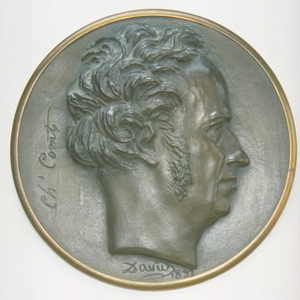 Charles Comte (1782-1837) |
 |
|
[Created: 8 May, 2026]
[Updated: 26 May, 2026] |
Source
, "On the Trade and Slavery of Blacks and Whites, by a friend of Men of all Colours (Grégoire)," Le Censeur T.4 (1 Mar. 1815), pp. 210-30.http://davidmhart.com/liberty/FrenchClassicalLiberals/Comte/CenseurAnthology/C1-12-en.html
Charles Comte, "On the Trade and Slavery of Blacks and Whites, by a friend of Men of all Colours (Grégoire)," Le Censeur T.4 (1 Mar. 1815), pp. 210-30.
This is a translation of Charles Comte, [CR] “De La Traite et de l'esclavage des noirs et des blancs, par un ami des hommes de toutes les couleurs (Grégoire),” Le Censeur T.4 (1 mars, 1815), pp. 210-30.
It is also available in French in a facsimile PDF of the original and in HTML.
This essay is part of a collection: Charles Comte and Charles Dunoyer, Censoring the State: An Anthology of Articles by Charles Comte and Charles Dunoyer from Le Censeur (1814-1815) and Le Censeur européen (1817-1819). Edited and translated by David M. Hart (Pittwater Free Press, 2026).
The anthology is available in the following formats:
- all 35 essays in one file in French [HTML] and in English [HTML]
- the 17 essays from Part 1 Le Censeur (1814-1815) in French [HTML] and in English [HTML]
- the 18 essays from Part 1 Le Censeur européen (1817-1819) in French [HTML] and in English [HTML]
- all the essays listed in a sortable table with links to the individual French and English language versions.
Comte, "On the Trade and Slavery of Blacks and Whites, by a friend of Men of all Colours (Grégoire)" (Mar. 1815)
On the Trade and Slavery of Blacks and Whites, by a friend of Men of all Colours
[210]
The author (M. Grégoire, former bishop of Blois) has divided this small work into two chapters. In the first, he gives an outline of the reasons that at different times have been put forward in opposition to the defenders of the slave trade; he argues against the article of the peace treaty which stipulates the prolongation of this awfull commerce for five years.
"While, he says, beyond the Pas-de-Calais and the Atlantic, virtue and eloquence are used in so many efforts to oppose the commerce in human liberty, what a scandal it is for us that there is silence and indifference [211] even amoing the men who are given the title of respectable people! Can one cite a single petition from a city or a corporation against the article of the treaty relating to the trade which, in England, has stirred all souls? On the contrary, we have to deplore the scandal of a petition arriving from Nantes, which solicits the prolongation of Africa’s misfortunes, in order to enrich a few Europeans."
To the extnet that one feels deeply about the dignity of man, one is revolted to hear such cold justifications for the enslavement of a portion of the human race. A multitude of reasons against this come immediately to mind and one is irritated to see how slow one's speech is compared to the speed of one's thoughts. It is doubtless it is this sentiment that Montesquieu experienced, when, instead of developing at length all the reasons that condemn the slavery of the negroes, he made an ironic apology for it. In reading the wretched reasons that grasping greed does not hesitate to put forward to defend the trade in these unfortunate Africans, one thinks that one is reading [212] an ironic apology put forward by that celebrated writer. To confine ourselves here to setting forth one of their strongest reasons, they allege that the labor of cultivating sugar is too hard and too painful for Europeans. That is indeed a very astonishing assertion. That Africans who have been subjected to and numbed by slavery would have more strength to undertake such work than the free, vigorous, and active European! A colonist, who is a good observer and more credible than his colleagues, explained to me the reason for this claim. The European, who is accustomed to the labor that he imposes upon himself, devotes himself to it with all the enthusiasm that the exercise of his own will provides. Since he then finds himself in a climate which is too hot, the excess of perspiration wears down his strength, and the enthusiasm that drives him to work ends by exhausting him. The negro slave, on the contrary, gives only the strength which he cannot absolutely refuse. The blows of the whip cannot elicit the same effect as that internal stimulant which drives the free man to act by himself and for himself; he is more economical with his labour and his more moderate labour spares [213] his body compared to the reckless enthousiam of the European. But it is easy to direct and to moderate this enthusiasm. According to the report of M. Drouin de Bercy,
"the contract workers, or the so-called thirty-six month-ers, who were whites, did at the beginning of the establishment of Saint-Domingue what the negroes do today; even in our own day, almost all the inhabitants of the dependency of Grande-Anse, who are in general soldiers, workers, or poor Basques, cultivate their lands with their own hands. Yes, I insist on this, and I have experience of it: whites can, without fear, cultivate the land of Saint-Domingue: they can plough in the fields from six in the morning until nine, and from four in the afternoon until sunset. A white man with his plough will do more work in a day than fifty negroes with the hoe, and the land will be better ploughed."
This enthusiasm exists not only among the European, but also to men in all the climates whose labor is free. [1] [214] It is this principle of action which develops all the driving forces of man, and which makes him feel the whole dignity of his being; it is through it that he enjoys the full bounty of his existence, and that he can enjoy happiness. To take away from man this primary quality is to take away from him the principle that constitutes a man, and which is so necessary to his existence that, when he is deprived of it, he declines, he collapses; he is nothing more than a machine moved by an impulse that is not his own. Whatever may be the harshness of slavery, it cannot entirely extinguish that sacred fire which kindles all the active faculties of the soul, nor entirely stifle the sentiment of the dignity of his being; this sentiment turns into a deep hatred against the one who oppresses him; he acquires all the attributes which result both from his hatred and from his powerlessness; he becomes deceitful, treacherous, wicked, vindictive, cowardly, lazy; in short, he contracts all the vices which serve as a pretext for Europeans to enslave the negroes, and which they have only because they are slaves.
Not only does slavery blight the soul; [215] it enervates, it weakens, and depresses physical vigor; the slave withers away and produces children who wither away still more; that is why, despite the personal interest of the colonists in providing their negroes with a sufficiently happy future to make them multiply and produce healthy and vigorous children, these unfortunates have never been able anywhere to maintain their population; everywhere it has had to be replenished by the infamous commerce of the slave trade, while those nations which are surrounded by burning sand are still happy enough to supply the dregs of their population to the greed of the European: the unfortunate African victims who are torn from their homes imagine that the Europeans buy them in order to devour them as soon as they arrive in America. This opinion differs from the truth only as regards the timing.
The Africans transplanted from Africa to St.-Domingue reveal a striking difference between the effects of slavery and those of liberty. For a long time, they have not been replenished in number by the slave trade; for a long time their population [216] suffered great losses through their internal divisions and the bloody wars they had to sustain; nevertheless these former slaves, transformed by liberty into energetic, vigorous and battle-hardened men, now present the appearance of a flourishing people who have known how to defend their liberty against the efforts of Bonaparte; their population has increased instead of diminishing. The island of St.-Domingue is now the kingdom of the Haitians who live free and happy under a wisely organized government, have constitutional laws, and a national representative government to support themselves.
To give an idea of the state of this new people and of the spirit which animates it, we shall report the findings of the mission of General Dauxion-Lavaisse, whom the provisional government of France sent to this colony to induce Henri Christophe, king of the Haitians, to submit to the mother-country: Christophe assembled the general council of the nation to inform it about the letter he had received from the French commissioner, in which he was urged to renounce [217] the title of chief of the rebellious slaves in order to submit to Louis XVIII, and in which the French government’s expressed its intention of re-establishing the slave trade in order make up for the losses that the population of St.-Domingue must have suffered, under the threat of exterminating the rest of the population if this colony dared to resist. The reading of this letter produced in the assembly a feeling of indignation which was difficult to express. It voted unanimously in favour of an address to the king which deserves to be reported; it will teach the detractors of the negroes whether they deserve the contempt with which avarice dares to have forthem.
"Sire, the annals of the world present no example of proposals for peace as odious and as outrageous as those which the French government dares to present to us by its envoy General Dauxion-Lavaisse; sovereigns and nations recognize among themselves sacred rights which even the most barbarous people do not dare to infringe; the most abominable tyrants, when they wish to subject people to their odious yoke, at least seek [218] to conceal their perfidious designs under specious pretexts, not daring openly to violate the law of nations: nevertheless an envoy of the king of France dares impudently to violate all these rights and to offer to a free people the most violent of outrages, by proposing to them the alternative of slavery or death.
"And to whom does this vile agent dare to make this proposal? To your majesty, who has never ceased to fight to defend liberty, independence, and the imprescriptible rights of man; to your majesty who has always taken as the rule of his conduct and his actions, the honor and the glory of the Haitian people; they do not fear proposing that you descend from the throne on which the love and gratitude of all the citizens have placed you! What extravagance! what infamy! This insolent commissioner dares to suspect that your great soul is capable of such base perfidy; to whom does he pretend to speak about master and slaves? To us who form a free and independent people; to warriors covered with noble wounds received on the field [219] of honor, and who have poured out their blood to destroy blind prejudices and odious slavery; to warriors who, in a thousand battles, have made our barbarous colonists bite the dust; and now the remnant of these miserable colonists, who have escaped our just vengeance, dares to propose to us to return to that state of servitude from which our valor has delivered us! No, no, never again shall there be in Haiti either masters or slaves.
"Does not this odious behaviour of France separate us forever from that people? And what other people would have dared to propose to us conditions so outrageous? Goodness! in their blind contempt they believe that we are so stupid that we lack that instinct which nature has given to all animals to watch over their preservation! What excess of audacity, or rather what madness leads them to dare to propose to us that we submit to their odious empire! Is it for the benefits we have received from them that they invite us to take up our chains again? Is it to see us once more delivered up to torments or devoured by dogs, that we [220] would renounce our liberty purchased by twenty-five years of combat? What do we have in common with France? Have we not broken all the ties that bound us to her? Everything has now changed between that people and us; it has never stopped persecuting us, and the idea that we would consent to groan under the tyranny of a nation fills us with horror!
"The barbarians have the audacity to despise us enough to believe we are unworthy of liberty; they believe we are incapable of those noble sentiments, of those impulses of the soul which make heroes, and which render us masters of our destiny; but they are mistaken; let them come, they will come to know the energy and courage of a free people whom they dare to outrage. Our will is to be free, and we shall be so, in spite of these tyrants. Or else, if the severity of fate prevails against the justice of our cause, if our tyrants finally end up conquering us, we wish to leave to posterity a glorious monument of the courage and devotion of the Haitian people. We all swear solemnly to perish under the sword of the [221] victor, rather than to renounce our liberty. Let our cities, our factories, our houses submit to the flames! Let the kingdom of Haiti be turned into a vast desert, before any Frenchman can profane this free land by his presence!
"Let each of us multiply his forces, let him redouble his courage and energy to immolate, by the thousands, by our just fury, those ferocious tigers thirsting for our blood! Let Haiti present only a heap of ruins! Let our terrible countenance present everywhere only the image of death, destruction and vengeance! Let posterity, in contemplating these ruins, exclaim with a sigh: Here existed a free and generous people! Tyrants wished to snatch away their liberty; but they preferred to perish with it rather than lose it, and it will applaud their heroic devotion."
Reply of the King.
"Haitians, your sentiments and your resolution are worthy of you; your indignation is at its height; let Haiti form no more than a vast camp; let us prepare to fight these [222] tyrants who threaten us with slavery and death.
"Haitians, the universe has its eyes fixed upon you: your conduct will confound your slanderers, and will justify the opinion that the friends of humanity have conceived of you. Let us rally together, let us have but one and the same will, that of exterminating our tyrants. Upon our union and the concert of our united efforts will depend the success of our cause.
"Let us leave to posterity a great example of courage: let us fight with glory, and let us perish rather than renounce liberty and independence. I am your king; I know how to live and die as a king; you will always find me at your head, sharing your dangers and your glory. If I perish before consolidating your nascent liberty, let the memory of my actions remain engraved in your hearts; and if your tyrants are fortunate enough to endanger your liberty, tear my bones from the earth, they will still lead you to victory, and will render you capable of triumphing over our enemies."
These are the men whose cause M. Grégoire has undertaken.
[223]
In the second chapter of his work, the author talks about the trade in whites. He dwells only briefly upon the great matter raised by this topic, and enlarges especially upon the oppressive and outrageous yoke which the English government imposes upon the Irish Catholics. One may say that the main idea of the whole work is to show the great inconsistency of the English, who, on the one hand, rise up with energy against the trade in negroes, while remaining deaf to the repeated complaints of Irish Catholics whose consciences they persist in enslaving to the Anglican church.
This oppression of Irish Catholics has great similarity to the Inquisition of Spain. Both seek the same end, that of tyrannizing over the thought of others. This sort of tyranny is at once the most unbearable and the most foolish; among a thinking people, it is a monstrosity. One is less astonished to encounter this political aberration where the people's imaginations are more liable to be excited, and where minds are more shaped by superstition.
[224]
To return to the idea of the trade in whites, which the author has only touched upon: if one compares the conduct of most sovereigns towards their people with that of the colonists towards their negro slaves, one finds a striking resemblance; and if one encounters some differences, they are not in favor of the former. The colonists buy herds of negroes [2] in order to extract from them all the labor they can obtain with the whip. Most sovereigns do not buy their herds of soldiers, it is true, but they steal them; they tear them from the bosom of their families, and employ the slaves they have stolen and trained to slavery to do this capturing. The property of the colonist is made up of both the soil and the negroes who cultivate it: likewise, the property of these sovereigns extends both over the land and over those who inhabit it; they reckon their wealth only by the number of soldiers they can extract from it: Bonaparte valued his income at three hundred thousand men, and this prodigal tyrant was always spending two years in advance of his income. And these numerous herds [225] of men are in their hands only machines without a will, who use them to seize or to fight over similar property held by other sovereigns. It is solely for their interests that they force these herds to cut each other’s throats, and, in their transactions with each other, they make their calculations using individuals like so many coins or heads of cattle, which they use to set the terms of their exchanges and their agreements.
It is true that the peaceful families who inhabit the land and cultivate the soil seem to enjoy at least a certain portion of that faculty which constitutes a man, and which consists in acting for oneself and by one’s own will. Here one might find a difference between the negro whose labor is all for the master, and the peaceful man who freely cultivates his field.
Of all the tyrants who figure in the annals of history, there is perhaps none who has more compelled the wills of men in order to fulfill his devouring ambition than Bonaparte; it was not enough for him to drag away the workers necessary[226]for cultivating the fields and carrying out the professions, he wished to establish institutions suitable for absorbing all the activity of the French people, in order to make them serve his designs. He wished for nothing in France but soldiers, and all the labor of the nation had to have war as its ultimate end. He wished then to take from man his entire faculty of acting by his own will, in order to make it the instrument of his. He wished then to reduce the French and Europe to the lowest depths of servitude. In addition, he profoundly despised the human species; men were in his eyes only common cattle destined to be devoured to aid him in enslaving his new victims. But this extravagant colonist ended by ruining and losing his plantation, a result of wanting to exhaust his negroes with labor.
Moreover, whatever the degree of enslavement to which different people are subjected, it is only themselves that they must blame for the state of oppression in which they find themselves. The head of any government has a natural tendency to increase his authority. His will is a spring that tends to act against wills which are stand in opposition. If they do not resist, the spring unwinds [227] and acts always upon them to the degree that they yield. Thus the despot, who encounters minds which have submitted to the empire he exercises, counts as nothing the authority that offers no opposition. He feels the action of his power only in so far as he encounters an obstacle that he can overcome. It is to no avail thatthe will of his subjects continues to yield to him, as his disposition to command will drive him to seek it even in the lowest depths of its collapse; and, so long as he encounters no resistance, he will have to extend the scope of his authority. Oriental despotism shows us an exact picture of what I am describing: let one read in Tavernier the history of Abbas II, shah or king of Persia, and one will have an idea of the lowest depths of tyrannical folly in the despot, and of the lowest depth of servile abasement in the enslaved subjects. The one is the effect of the other.
It is not the same in the different states of Europe; the most despotic governments of this part of the globe outrage the human species less; but this remnant of consideration which is granted to the dignity of man, is due to the resistance which the spring [228] of despotism has encountered. All people feel the dignity of their being with a strength that is always in proportion to their energy and to the enlightenment which follows from this. Every individual experiences a feeling of opposition against tyranny; from this results a general sentiment which forms what is called public opinion, against which all the efforts of despotism come to be broken. It has been rightly said that public opinion is the queen of the world. At all times and among all people, the degree of arbitrary power is always in inverse ratio to the strength of public opinion. In the Orient, where public opinion is non-existent, arbitrary power flourished to its full extent, and despotism has no limits. The tyrant exercises his absolute will upon the first slaves, who are his subordinate despots; these, in obeying servilely, exercise the same empire over despots of the second order; these act in the same way over their subordinate slaves: thus, by a branching out of abjection and oppression, despotism ends by weighing down upon individuals who remain crushed beneath the enormous burden. In this [229] order of things, nothing resists, everything yields and remains in a state of collapse, immobility, and torpor.
In Europe, the most arbitrary governments are still moderate in comparison with these. It is public opinion which has won the day, in some states, and brought about a constitutional charter and national representation. Thus, in the common order of things, men have more or less the government which they can have: if they groan under the rod of despotism, it is their own fault. The despot, by extending his power as far as he can, simply follows his natural impulse, and one may say that he is just doing his job. It is for ordinary men to do his as well in their turn. If they do not make a joint effort to oppose it with public opinion, if this opinion does not subject the cowardly and flattering courtier to withering criticism, if it does not heap scorn upon the political representative who, through despicable acts or ambition, helps to fasten the chains of those whose rights he ought to defend, then despotism will exercise its right of conquest.
One must not, however, conclude from this that [230] public opinion ought to act and to seize power. Public opinion should no more seize power than power should seize control of public opinion. Good order reigns in a state when these two opposing springs are maintained in equilibrium.
To return to the author about whom we have been speaking, gratitude is due to the generous writers who, like him, have as their goal in their writings to recall the principles of humanity, justice, and liberty from which governments have so great a tendency to stray. The oppressed have neither government posts, nor decorations, nor pensions to give to their defenders; the esteem of good men must be their reward.