| The Digital Library of Liberty & Power incorporating the Guillaumin Collection of the Great Books of Liberty |
Home | New | Authors | Works | Papers | Blog | About | Correspondence | Search |
 |
|
CHARLES COMTE,
"If it is permissible to kill a tyrant"
Le Censeur (15 Nov. 1814)
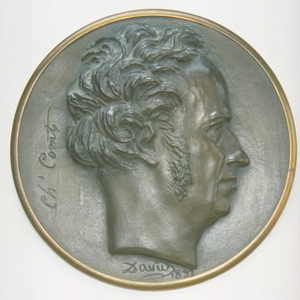 Charles Comte (1782-1837) |
 |
[Created: 8 May, 2026]
[Updated: 26 May, 2026] |
Source
, "If it is permissible to kill a tyrant, or observations on the ordinance of October 12, 1814, which ennobled the father of Georges Cadoudal," Le Censeur T2 (15 Nov. 1814), pp. 267-80.http://davidmhart.com/liberty/FrenchClassicalLiberals/Comte/CenseurAnthology/C1-07-en.html
Charles Comte, "If it is permissible to kill a tyrant, or observations on the ordinance of October 12, 1814, which ennobled the father of Georges Cadoudal," Le Censeur T2 (15 Nov. 1814), pp. 267-80.
This is a translation of [CC??], “S’il est permis de tuer un tyran, ou Observations sur l'ordonnance du la octobre 1814, qui anoblit le père de Georges Cadoudal,” pp. 267-80 Le Censeur T2 (15 novembre, 1814), pp. 267-80.
It is also available in French in a facsimile PDF of the original and in HTML.
This essay is part of a collection: Charles Comte and Charles Dunoyer, Censoring the State: An Anthology of Articles by Charles Comte and Charles Dunoyer from Le Censeur (1814-1815) and Le Censeur européen (1817-1819). Edited and translated by David M. Hart (Pittwater Free Press, 2026).
The anthology is available in the following formats:
- all 35 essays in one file in French [HTML] and in English [HTML]
- the 17 essays from Part 1 Le Censeur (1814-1815) in French [HTML] and in English [HTML]
- the 18 essays from Part 1 Le Censeur européen (1817-1819) in French [HTML] and in English [HTML]
- all the essays listed in a sortable table with links to the individual French and English language versions.
Comte, "If it is permissable to kill a tyrant" (Nov. 1814)
If it is permissable to kill a tyrant, or Observations on the Ordinance of October 12, 1814, which ennobled the father of Georges Cadoudal
[267]
IF IT IS PERMISSIBLE TO KILL A TYRANT, or Observations on the Ordinance of October 12, 1814, which ennobled the father of Georges Cadoudal.
When, in a society, an individual manages to seize, by trickery or by violence, an unlimited power, all the citizens find themselves at once in a condition worse than the state of nature; for they do not only lose the protection they once found in the laws, they are also deprived of the faculty of flight or of self-defense, a faculty which peoples can never lose.
The more the advantages of a good system of law are known, the more hateful therefore must be the men who strive to deprive their fellows of it; and that is why the hatred [268] which people feel toward tyranny always follows the progress they make in the improvement of the art of living in society; that is why the Greeks, who knew so well the advantages of liberty, cried out: O tyranny beloved of barbarians!
We are still very far from possessing the enlightenment necessary for the formation and maintenance of a good social organization; however we have already made some progress, if one judges by the aversion inspired in us by the maxims professed in past centuries. What ministries would dare today to follow in the footsteps of Richelieu or Mazarin? What king would not fear to shake the very foundations of his throne, if he were to declare, like Louis XIV,
"that kings are absolute lords, and naturally possess full and free disposal of all goods that are possessed as well by churchmen as by laymen, in order to use them at all times as wise stewards and according to the general needs of their state?"
[269]
But whatever the hatred tyranny inspires in us, it is still very weak in comparison with that which the ancients had for it. The Greeks had come to hold tyrants in such horror, that they considered them less as men than as wild beasts, and that the most glorious action, in their eyes, was to put them to death.
Laarchus, tyrant of Cyrene, wanted to obtain Erixo in marriage; this woman, whom Plutarch presents to us as a wise, gentle and humane person, lures the tyrant to her house, and has him massacred. She is summoned to Egypt to give an account of this act before the King who protected Laarchus; she put forth the motives for her conduct, and the most powerful men of the state openly approvd what she has done.
The wife of Alexander, tyrant of Pherae, drew up a plan to liberate her country; she plotted a conspiracy against her own husband; had him stabbed in his bed, and abandoned him to the inhabitants of the city, who, after trampling his corpse underfoot and [270] dragging it through all the streets, had it devoured by dogs.
Harmodius and Aristogiton, outraged by one of the two sons of Pisistratus, who had succeeded their father’s tyranny, drew up a plan to liberate their country. In the midst of a public festival, they succeeded in stabbing one of them. They were put to death by the one they could not reach; but three years later, Athens, having become free, erected statues of them in the public square, and decreed that their names should be celebrated in perpetuity.
Timoleon exposed himself to death to save his brother who had fallen into the hands of the enemy. Soon after, that brother seized power; Timoleon went to him with two of his friends, to exhort him not to become the tyrant of his country; unable to dissuade him, he withdrew in tears; his friends struck down the tyrant, and the people applauded the courage and generosity of a man who knew how to sacrifice his private affections in the interest of the State.
This hatred which the people of Greece [271] bore toward tyranny, manifested itself especially in the sayings of their philosophers. The worst of wild beasts, says Bias, is the tyrant, and of private men, the flatterer. Someone asked Thales what he had seen that was most extraordinary in his long travels; he replied that it was an old tyrant. Dionysius asks Antiphon what is the best bronze statue known; it is that, replied the philosopher, which was made by melting the statues of Harmodius and Aristogiton. Finally the Greeks had developed a system of philosophy based upon the nature of man, that whoever admitted the truth of its principles was obliged to conclude that a tyrant was nothing but a stupid or ferocious beast. [1]
To kill a tyrant was therefore not merely a lawful action among them; it was a glorious deed, reserved only for great souls. The Romans shared in this respect all the opinions of the people of Greece; and from J. Brutus, who condemned his sons to death for having wished to restore the Tarquins to the throne, to M. Brutus, [272] who punished Caesar for having enslaved the republic, no citizen, with the exception of Sulla, aspired with impunity to establish tyranny.
This sentiment of hatred for oppressors could only produce good results under republican governments, because the rights and the duration of the functions of the chief magistrates being clearly determined by the law, each citizen could judge without difficulty whether the individuals invested with public authority exceeded their powers, or remained within the limits prescribed for them.
But, in a monarchical government, the maxim that it is noble to kill a tyrant can have fatal consequences, especially when the ministers are not responsible, and when the powers of the prince are not clearly determined by the constitution of the state. Cannot each then say what Seneca said to Nero:
Quid interest inter tyrannum et regem? Species enim ipsa fortuna ac licencia par est, nisi quod tyranni in voluptate sœviunt, reges non nisi ex causa ac necessitate…. [273] Tyrannus autem a rege distat factis, non nomine. [2]
"What difference is there between a tyrant and a king? In outward appearance, in fortune and in license, they are the same, except that tyrants rage in pleasure, while kings only from reason and necessity…. A tyrant, however, differs from a king by his deeds, not by his name."
It must however be admitted; whatever may be our respect for the people and the philosophers of antiquity, we would never have dared to take upon ourselves, especially under a wise and moderate government, to decide that it was permitted for each citizen to kill a tyrant, and to judge for himself that such and such a chief of government was a tyrant. We would have feared, in professing such maxims, that some madman, like Ravaillac, might authorize himself in accordance with them to plunge his dagger into the breast of some excellent prince; and that fear would have sufficed to restrain us.
But the Chancellor of France is less timid than we. Not only does he decide that it is permitted for a private person to rid himself of the head of a government; he even believes that it is a meritorious action. It can in fact only be as a consequence of this opinion that he requested and obtained letters [274] of nobility for the father of Georges Cadoudal.
However rigorous the principles of the Chancellor may be on this matter, we shall admit, if one wishes, that they are just, and that today, as formerly, it is noble to attempt to take the life of a tyrant. But what we shall not admit equally, is the justice of the application he has made of this maxim.
Without doubt, when Bonaparte seized by force the reins of government, he committed an act of tyranny that deserved to be punished with death; and if, in that moment, Georges Cadoudal had struck him a mortal blow, there is no one who would not have applauded his courage. But when, to its misfortune, France had recognized the constitution of the year VIII, the authority of the consul became legitimate, and no one could attempt to destroy it by violence without making himself guilty of a crime.
We shall admit however, if one wishes, that acquiescence to the Consular government was not given in a legal manner and that it did not, consequently, [275] destroy the defect of usurpation with which the authority of the Consuls and of all the other bodies of the State was tainted. On that supposition, it is certain that Bonaparte was nothing but a tyrant, and that thus anyone could destroy him without committing a crime in order to liberate his country.
But does that justify Georges Cadoudal for having attacked his person or his authority? Brutus, Timoleon, Harmodius and several others put tyrants to death, and they covered themselves with glory in the eyes of their fellow citizens, because in their actions they considered only the salvation of their country and of liberty. But if Brutus had stabbed Caesar in order to make Pompey triumph; if Timoleon had authorized the murder of his brother in order to remove this or that magistrate from office; if Harmodius had assassinated Hipparchus in order to appoint an Archon who had been expelled by the republic, their fellow citizens would have considered them to be miserable brigands, worthy of the ultimate punishment.
"Crillon," says Montesquieu, "refused to assassinate the Duke of Guise, but he offered [276] to Henry III that he would fight a duel with him. After the Saint Bartholomew’s Day massacre, Charles IX having written to all the governors to have the Huguenots massacred, the Viscount d’Orte, who commanded at Bayonne, wrote to the king: ‘Sire, I have found among the inhabitants and the soldiers only good citizens, brave soldiers, and not one executioner; thus, they and I beg Your Majesty to employ our arms and our lives in things that are possible."
This great and generous courage considered cowardice to be an impossible thing to engage in.
It will no doubt be said that there is glory in serving one’s king as in serving one’s country; and that thus Georges Cadoudal deserves no less our praise than those great men of antiquity. This requires a distinction: to serve one’s king in the interest of one’s country, is a most glorious action; but to serve him in his purely individual interest, is an action that may be good, indifferent, or criminal. It is good, if, out of affection for his person, one renders him services which, in themselves, are not blameworthy; it is indifferent if, out of interest, one serves him [277] in things which are not reprehensible, as one would serve any other person; it is criminal, if, for whatever motive, one renders him services contrary to the laws, to morality, or to the interest of one’s country. Sully, Dubois, and the assassin of the Duke of Guise, all served their king; but if the first is a great man, the second is infamous, and the third a scoundrel; and we do not see, in history, that the ministers of Henry III ever procured letters of nobility for the latter.
Besides, if Georges Cadoudal considered Louis XVIII as the legitimate king of the French when he attempted to overthrow the consular government, it is certain that Napoleon Bonaparte also considered himself to be the legitimate consul; and this error, if it was one, was shared not only by France, but also by all the powers of Europe. [3]
[278]
Now the question is whether, when a people recognizes the legitimacy of its government, and when all neighboring people recognize it with them, it is up to an individual to conclude that this government illegitimate, and to seek to overthrow it in order to put another in its place.
If one decides that such a right cannot belong to a simple private person, one must admit that Georges Cadoudal was nothing but a brigand, and that he justly perished on the scaffold; if one decides on the contrary that each citizen has the right to pronounce on the legitimacy of a government, and to destroy it when he believes it illegitimate, I ask what one would have to reply to him who, denying the legitimacy of the present government, should seek to overthrow it?
It is therefore evident that the ordinance [279] obtained by the Chancellor consecrates maxims destructive of all society, or that it has for its object the rewarding of the attempt of a crime which, at the time it was undertaken, could not even be useful to the persons in favor of whom it is claimed it ought to have been committed.
But, considering it under this last aspect, is not this ordinance essentially contrary to the laws and to morality? If individuals who have been justly punished as brigands under one reign, are honored under another for the very acts which motivated their condemnation, what rule shall we have to judge the actions of men? Must the same acts be considered as crimes or as virtuous actions, according to whether or not they are favorable or contrary to the passions of the powerful? One has indeed seen men hire traitors or assassins; but has one ever seen men seek to found nobility upon murder or upon treason?
Nobility is a reward intended [280] for men who have rendered great service to their country; but what virtuous man will wish to merit it, if it is employed to reward equally criminal actions or virtuous ones? There are in France a great number of ancient families whose founders distinguished themselves by the services they rendered to the State; yet would they be proud of their origin, if their ancestors had had only the merit of Georges Cadoudal? When the Athenians abused ostracism against a man without merit, they ceased to employ it; if nobility is granted to dishonored men, far from being a reward, it will be only a mark of ignominy, and no one will wish to receive it.
Moreover, when one wishes to consecrate the maxim that it is noble to kill a tyrant, one should, at least out of prudence, give us an exact definition of that word.
Endnotes
[1] This is indeed the conclusion that Plato would draw: De republicâ vel de justo, book 9.
[2] De Clementia, book I, § 11 and 12.
[3] When the allied armies entered Paris, they recognized and proclaimed that the French had the right to give themselves whatever government they judged suitable: and how should we not have had, after the fall of the Directory, the same right that we had after the fall of the imperial government?