| The Digital Library of Liberty & Power incorporating the Guillaumin Collection of the Great Books of Liberty |
Home | New | Authors | Works | Papers | Blog | About | Correspondence | Search |
 |
|
CHARLES DUNOYER,
[CR] “Essay on the Political Disadvantages of the Slave Trade, by Clarkson"
Le Censeur (15 Nov. 1814)
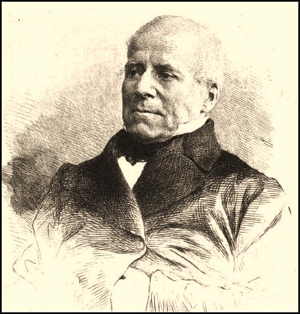 Charles Dunoyer (1786-1862) |
 |
[Created: 8 May, 2026]
[Updated: 26 May, 2026] |
Source
, [CR] "Essay on the Political Disadvantages of the Slave Trade, by Clarkson," Le Censeur T.2 (15 Nov. 1814), pp. 156-75.http://davidmhart.com/liberty/FrenchClassicalLiberals/Comte/CenseurAnthology/C1-06-en.html
Charles Dunoyer, [CR] "Essay on the Political Disadvantages of the Slave Trade, by Clarkson," Le Censeur T.2 (15 Nov. 1814), pp. 156-75.
This is a translation of Charles Dunoyer, [CR] “Essai sur les désavantages politiques de la traite des nègres, par Clarkson,” Le Censeur T.2 (15 novembre,1814), pp. 156-75.
It is also available in French in a facsimile PDF of the original and in HTML.
This essay is part of a collection: Charles Comte and Charles Dunoyer, Censoring the State: An Anthology of Articles by Charles Comte and Charles Dunoyer from Le Censeur (1814-1815) and Le Censeur européen (1817-1819). Edited and translated by David M. Hart (Pittwater Free Press, 2026).
The anthology is available in the following formats:
- all 35 essays in one file in French [HTML] and in English [HTML]
- the 17 essays from Part 1 Le Censeur (1814-1815) in French [HTML] and in English [HTML]
- the 18 essays from Part 1 Le Censeur européen (1817-1819) in French [HTML] and in English [HTML]
- all the essays listed in a sortable table with links to the individual French and English language versions.
Dunoyer, "Essay on the Political Disadvantages of the Slave Trade, by Clarkson" (Nov. 1814)
Dunoyer, [CR] Essay on the Political Disadvantages of the Slave Trade, by Clarkson
[156]
Essay on the Political Disadvantages of the Slave Trade, by Clarkson, Translated From The English On The Last Edition Which Appeared In London In 1789.
"If I had to defend," says Montesquieu, [1] "the right we have to make the negroes slaves, here is what I would say:
"The peoples of Europe having exterminated those of America, they had to enslave those of Africa, to use them in clearing so much land. Sugar would be too dear, if the plant which produces it were not cultivated by slaves. Those [157] in question are black from their feet to their heads, and their noses are so flattened that it is impossible to feel pity for them. One cannot imagine that God, who is a very wise being, has put a soul, and especially a good soul, into an entirely black body. It is so natural to think that color constitutes the essence of humanity, that the peoples of Asia, who make eunuchs, always deprive blacks of the relationship they have with us in a more marked manner. One can judge the color of the skin by that of the hair which, among the Egyptians, the best philosophers in the world, was of such great consequence that they put to death all the red-haired men who fell into their hands. Proof that the negroes have no common sense is that they prize a glass necklace more highly than gold, which among civilized nations is of such great importance. It is impossible for us to suppose that these people are men, because if we were to suppose they were men, one would begin to believe that we ourselves are not Christians. [158] Small minds exaggerate too much the injustice done to the Africans; for if things were as they say, would it not have occurred to the princes of Europe, who make so many useless conventions among themselves, to make one general in favor of mercy and pity?"
Montesquieu, as we see, could not bring himself to combat seriously the slavery of the negroes; and to make one feel how odious and absurd this practice is, he chose to defend it. It was difficult to compose a satire more bitter; it would have been still more difficult to compose a more serious critique. One cannot conceive, in fact, how this monstrous practice, considered in itself, could survive the examination of reason. Must it be proved that it revolts humanity, that it dishonors laws, morality, religion? But what man, informed of the manner in which the trade is carried out, and of the cruelties exercised against the Blacks in the colonies, could in good faith require such proof? Goodness! you see men violently torn from their homeland, from their [159] family, from their habits, from all their affections; piled up like animals, chained to one another in narrow, dreadful prisons; forced in this condition, and almost deprived of air and food, to make a crossing of several months; then sold to colonists sometimes more barbarous than their kidnappers; condemned to perform throughout their lives a labor more arduous than that of our galley slaves, without any other salary than lashes of the whip, without any other consolation than contempt, without any other hope than that of an approaching death, and you ask if humanity suffers from the fate of these unfortunates! Goodness! divine and human laws forbid slavery in the metropolis, but you have no doubt that they should permit it in the colonies! Our laws punish the Frenchman who would voluntarily alienate his liberty, but you do not doubt that they can burden an African with chains, and make him a beast of burden? They forbid you to mistreat your servants, but you ask if a Colonist should not have the right to make his slave expire under the whip?
[160]
It is not depriving, you say, the Africans of liberty. They are almost all slaves and unhappy in their homeland. If they are so much to be pitied there, why do they not leave? Why do they not hasten to board your ships, and seek a happier fate in some other place? Why does one not see them in Europe or in your colonies, having voluntarily abandoned Africa? I would indeed find in the evils by which you say they are overwhelmed a reason for improving their situation; but then don't you have the audacity to take advantage of their misery to excuse your barbarity?
The negroes, you add, are fierce peoples; they constantly make war on one another, and they would devour their prisoners if they did not sell them to you; it is therefore performing an act of humanity to buy them, since it is to preserve them from certain death. A great act of humanity indeed! You save them from death, and you make them beasts of burden; you save them from a swift death, and you are going to make them perish on a foreign soil of a slow and [161] cruel death; you save them from death, and it is almost always you who have put their lives in peril. Is it not, in fact, in order to be sold to you, is it not in order to provide things for your consumption, that they have been made slaves? Surely, would the African princes wage constant war, if they had less interest in having prisoners; and would they be so interested in having prisoners, if they could not sell them to you? Also as surely, would they devour their prisoners or massacre them in vengeance, if they did not sell them to you; and do you truly buy only men sentenced to death or condemned to slavery? How many free men do you get from the hands of violence or greed?
You say that the Africans are fierce men, and, instead of softening their manners, you inflame their ferocity; you call them a stupid people, and, instead of enlightening them, you work to brutalize them. One cannot, you say, civilize negroes: if it were true, would that suffice to make them [162] slaves? How do you know, moreover, that they cannot be civilized, if you begin by enslaving them? What have you done thus far to change their governments and their manners? Far from seeking to civilise them, you have not even attempted to subdue them. You have arrived among them only like ravenous wolves, like wild beasts who flee after having seized their prey. You have taught them only the lessons of pillage, violence and brigandage; and yet, despite these fatal lessons, you have not been able to destroy in them the seed of the virtues which most honor humanity. The most certain reports, the most respectable testimonies, prove that they are, in general, tender, hospitable, generous, grateful, upright, especially in the countries where they have had little communication with whites; they prove equally that they do not lack the aptitude to be instructed and to imitate our arts. How, endowed with such dispositions, should they not be capable of being civilized? When the colony of Cecrops arrived on the coasts of Argolis, [163] it found there men perhaps more barbarous than the negroes of Senegal, and yet it is from these men that were born the people of Greece.
So stop trying to justify an odious practice by pretexts still more odious; and if you must continue to traffic in the blood and liberty of men, do not pretend that justice and humanity approve of what you do; no longer seek to make them accomplices of this infamy; and be content to draw your excuses from the interests of a false political practice and from vain reasons of state.
This is also the course taken by most of the defenders of the slave trade and of the enslavement of the negroes. They admit, with an edifying candor, that this practice outrages humanity, morality and religion. But can France, they ask, do without colonies, and can the colonies prosper without the aid of the slave trade? They do not hesitate to declare in the negative. From then on they find it childish that one wishes to oppose what they call matters of public interest on the grounds of morality and [164] religion, and they cannot conceive that one can be so humane and religious to wish to jeopardise the future of our coffee trees and our sugar canes.
It is thus by putting the interests of politics against those of morality and of religion, that one claims to legitimize the slave trade. This manner of reasoning is common enough among our writers, our jurists and our moralists. These men have a multitude of rules for determining what is good and what is evil; one sees them invoke, according to circumstances, civil reason, political reason, religious reason; and although each of these reasons is necessarily subordinated to a common end, that is to say, to the good of the state, it often happens that they find politically excellent a thing which appears to them morally detestable.
We shall not dwell here on making one appreciate the vice and absurdity of this metaphysical jargon; we will, on the contrary, adopt for a moment this language, and, consulting only political reason, we [165] will examine, with the author of the work whose translation we announce, whether the trade in negroes is truly useful or harmful to the state.
Mr. Clarkson thinks that this commerce is not only iniquitous and cruel, but even that it has great political disadvantages. In his first work on the commerce in the human species, this writer had in particular insisted on the injustice and inhumanity of the trade; in this work he has endeavored to demonstrate that it is also as formally condemned by politics as by morality.
He divides his work into two parts. In the first, he seeks to establish, on the one hand, that the slave trade offers no advantage to Great Britain, that it is not profitable to its inhabitants, that it is the tomb of its sailors; and, on the other hand, that the trade in the natural produce of Africa, if it replaced the trade in its inhabitants, would be of equal advantage for the nation and for individuals, while at the same time offering the best means of training the sailors who were needed by the state. He endeavors to prove, in the [166] second part of his work, that the abolition of the slave trade, far from being for the colonies, and consequently for the metropolis, the cause of any detriment, would on the contrary become for them a more certain means of prosperity, and the mainstay of great advantages for the future.
These are the propositions which are put forward in this work. They are supported by numerous facts, which appear to have been gathered with much care and exactitude. The truths which the author proposed to establish emerge from these facts quite clearly. They prove in a manner which has seemed to us completely definitive, that England would find more profit in trading the products of Africa than in trading its inhabitants; that she would lose far fewer sailors in this trade than in that of the negroes; and finally, that she has no need whatever of the latter to maintain the population of her Antilles. The author has concluded successfully from these proofs that Great Britain, in considering only her political interests , ought to hasten the abolition of the trade in negroes.
[167]
This conclusion, which is very just with respect to England, would it be equally so with respect to France? Several conditions seem to us indispensable for that to happen. It would be necessary first that we could trade in the products of Africa with the same advantage and the same liberty as England. It would be necessary, moreover, that we could as easily as she dispense with the aid of the slave trade for the prosperity of our colonies. Now, under these two points of view, our position differs essentially from hers. She has, on the coast of Africa, a considerable number of trading posts, and France possesses none. She rules there with a policy of despotism, as she does everywhere where she has such trading posts, and it is very doubtful that she would allow us to do the same alongside her. No doubt no one has forgotten the excesses which were committed by the English in 1792, against the trading post which a French captain, named Landolphe, had founded at Ouarè.
"Three slave merchants fromLiverpool," says Mr. Malte-Brun, "inflamed with rage at the idea of seeing French philanthropy and commerce [168] establish themselves on a coast where until then their frightful traffic alone was known, arm, in a time of peace, a small squadron, surprise the French colony, burn the houses, plunder the warehouses, and massacre the negro cultivators. Mr. Landolphe alone escaped the fury of these assassins."
Does one think that the abolition of the slave trade would today be a sufficient motive for the English to conduct themselves with more honor towards the colonies which we might attempt to found on the coast of Africa? Surely, we do not know where such confidence would come from.
On the other hand, while the islands which England possesses in America are all supplied with a sufficient number of cultivators, those of our Antilles which she has restored to us are every day languishing for lack of the labour necessary for their cultivation. It appears, moreover, demonstrated that, if France wished to regain possession of St. Domingue, she could only reestablish this colony by replacing, at least in great part, the immense number of cultivators she has lost [169] over the last twenty-five years, a replacement which could evidently not be effected, for many long years at least, without the aid of the slave trade. It is therefore certain that the political reasons which, according to Mr. Clarkson, could make the abolition of this traffic advantageous to Great Britain, do not exist for France, and that in this regard we find ourselves in a position much less advantageous than the English.
This is not all: even if we could, as freely as England, trade in the products of Africa, and attempt to restore our colonies without transporting new cultivators there, we would still be far from finding ourselves in a position as favorable as England’s for renouncing the trade in Africans, and her example would be, still speaking politically, only a very weak reason to induce us to abandon this commerce. Just as much, in fact, as our Antilles are important to us, just so little are those of England important to her, so that, even if her American colonies [170] were to suffer as much as ours from the abolition of the trade, she would nevertheless find herself losing very little, while we would have lost everything.
Indeed, it is well known that she has immense possessions in India. The resources which they offer to her commerce and her industry are so considerable, that she can easily dispense with those she gets from her Antilles. Her islands in America, excepting Jamaica, are of no importance to her, relatively to her commerce and her industry. Most are necessary to her only as places for restockingsupplies and a stopover, or as positions which make her mistress of the communications between the continental metropolises of Europe and their American colonies. Thus, when, as a consequence of the abolition of the slave trade, the prosperity of her Antilles begins to decline, her interests would not suffer in the least, while the same cause would be fatal to ours.
It is seen then that England [171] imposes upon herself no sacrifice in abolishing the commerce in blacks. She can, on the contrary, anticipate drawing great advantages from it. She gives to the world a great example of disinterestedness and humanity, without it costing her anything; she thus puts the finishing touch on her reputation for philanthropy, and adds much, consequently, to the popularity she aspires to acquire among the people of Europe. But these advantages are nothing in comparison with those she may expect to gain from this great measure, if she succeeds in obtaining from the other metropolises of Europe the imitation of her example, and the renunciation of the commerce in African slaves. She alone then, in fact, will be able to carry on this commerce, without being accused of engaging in the trade, since she alone has possessions on the coast of Africa; and her trading posts in Senegal and in Guinea will prosper all the more. On the other hand she will probably have the satisfaction of seeing the colonies of all the states of Europe decay, or at least those of France, while the prosperity of her [172] possessions in India and of her trading posts in Africa will continue to increase. Thus she will find at once in this measure her advantage and our ruin, and the fundamental object of her policies will be fully accomplished.
It seems to us that these considerations must shed great light on the writings which are being published at this moment in England, relative to the slave trade, and particularly on what the London newspapers contain on this subject. The sentiments displayed there are admirable no doubt; but how can one believe that they are sincere? And how can one fail to see the selfishness and ambition which pierce everywhere through the veil of philanthropy with which England claims to cover herself? The power of this nation extends with immense ramifications into the four parts of the world; she counts nearly a thousand warships; her flag floats on all the seas and in all the ports of the known world; and yet her ambition is not satisfied, and she seems still to envy us, [173] and she is irritated to see that we wish to regain possession of the colonies she has taken from us, and that we hope to see them revived and thus provide some feeble resources to our commerce and our industry. She resembles a miser who, seated on heaps of gold, would covet a crown which he saw in the hands of an unfortunate man. The prosperity of every foreign nation excites her hatred and her jealousy; every happiness which is not her own becomes a calamity for her. She would like to be the sole center of the commerce of the world, the only manufacturing power of the world: she would like to be able to go everywhere, get at a low price the material necessary for her industry; to be able, moreover, to flood the whole earth with her manufactured goods, to attract gradually to herself, in this way, the treasure of all peoples, and thus to have always at her disposal the means of corrupting them, of dividing them, of weakening them against each other, and of keeping them all in a state of dependence and abasement.
Such is the greedy, cruel, immoral spirit [174] which lurks beneath the policies of Great Britain. One would have to be very blind not to see that she did not intend to yield us anything in restoring our colonies; and that she is disposed to use her power to prevent us from restoring them and securing possession of them. If Article 12 of the treaty of May 30 could leave some doubts in this regard, the behaviour shown since then by the British parliament must have completed the work of dissipating our uncertainties.
In this sad state of affairs, the question of the slave trade presents itself to us under a very particular aspect. It is not a matter of knowing whether it is condemned by morality, nor whether it is approved by politics; there arises a preliminary question much more pressing to resolve. Our colonies, placed by the peace treaty in a position of impotence of doing anything for their defense, and with our navy in its state of ruin, are they not entirely at the discretion of Great Britain? Is it not possible that we may again have a war with this power, and, if that happens, [175] have we any means of preventing her from seizing them from us once more? How then could one entertain the thought of extracting, at great expense, cultivators from Africa in order to transport them to our Antilles? In undertaking such expenditure would one have any hope of gathering the fruit of it? One would indeed increase the wealth and prosperity of our colonies; but would one add to their strength and to their means of defense? Let us not be afraid to say it, if there is a means of preserving them, it is not by carrying new slaves there; it is, on the contrary, by destroying slavery there; it is by freeing the cultivators, by giving them a homeland, and by interesting them in its defense. It is thus the only way that Saint-Domingue could be preserved from the domination of the English; it is by freeing it that we could keep it; it was by wanting to reimpose its chains that we lost it; and it is difficult to believe that one will succeed in recovering it, if one does not renounce enslaving it.
D……R
Endnotes
[1] Esprit des lois, t. 2, p. 58.