| The Digital Library of Liberty & Power incorporating the Guillaumin Collection of the Great Books of Liberty |
Home | New | Authors | Works | Papers | Blog | About | Correspondence | Search |
 |
|
CHARLES COMTE,
"Letter to the Minister of the Interior, On the freedom of the press"
Le Censeur (July, 1814)
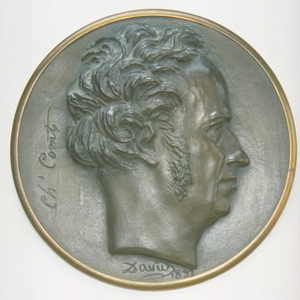 Charles Comte (1782-1837) |
 |
[Created: 8 May, 2026]
[Updated: 26 May, 2026] |
Source
, Charles Comte, "Letter to the Minister of the Interior, on the freedom of the press, considered in its relation with civil and political liberty," Le Censeur No. 3. (5-13 July, 1814).http://davidmhart.com/liberty/FrenchClassicalLiberals/Comte/CenseurAnthology/C1-01-en.html
Charles Comte, "Letter to the Minister of the Interior, on the freedom of the press, considered in its relation with civil and political liberty," Le Censeur No. 3. (5-13 July, 1814).
This is a translation of Charles Comte, "Lettre au ministre de l'intérieur, sur la liberté de la presse, considérée dans ses rapports avec la liberté civile et politique." Le Censeur No. 3. (5-13 juli 1814), pp. 75-110..
It is also available in French in a facsimile PDF of the original and in HTML.
This essay is part of a collection: Charles Comte and Charles Dunoyer, Censoring the State: An Anthology of Articles by Charles Comte and Charles Dunoyer from Le Censeur (1814-1815) and Le Censeur européen (1817-1819). Edited and translated by David M. Hart (Pittwater Free Press, 2026).
The anthology is available in the following formats:
- all 35 essays in one file in French [HTML] and in English [HTML]
- the 17 essays from Part 1 Le Censeur (1814-1815) in French [HTML] and in English [HTML]
- the 18 essays from Part 1 Le Censeur européen (1817-1819) in French [HTML] and in English [HTML]
- all the essays listed in a sortable table with links to the individual French and English language versions.
Charles Comte, "Letter to the Minister of the Interior, On the freedom of the press" (July, 1814)
[75]
Should the freedom of the press be maintained, or must censorship, on the contrary, be re-established?
If this question had been proposed, three days ago, to a wise man and a friend of his country, I dare believe, Monseigneur, that he would have refrained from examining it, or at least that he would have been very careful not to make his examination public. He would have said that it was not fitting to suppose that one of the most sacred rights of the people, without which the exercise of all the others will always be precarious, could be presented as doubtful. The constitution has just been born; we must respect even its imperfections, [76] and forbid ourselves any discussion that could make people think it is possible to destroy it.
But if this man had known the present state of mind, and if he had been called to the honor of enlightening the prince on his interests and those of France, he would have firmly rejected the desire to undermine a work which henceforth must be sacred; he would have made him understand that, having been deceived for twenty years by all Governments, the French had become suspicious and mistrustful; that, whatever the greatness of his soul and the purity of his intentions, France would have suspected him as soon as she believed she saw him following in the footsteps of that man who presented a constitutional charter to the French only in order to seize more easily the reins of Government, and who overthrew it as soon as he believed himself to be firmly established on the throne; finally, he would have made him understand that he would inevitably ruin himself, if, like that madman, he thought to consolidate his power by undermining the laws which were its sole foundation.
To these general considerations, and if the minister’s own interest had not silenced the citizen, he would have added still more powerful ones, to induce him to respect particularly the freedom of the press. He would have reminded him that after the fall of the imperial Government, the senate believed it could calm the uneasiness and agitation which were beginning to appear in men’s minds, only by proclaiming the fundamental prinicples of a new constitutional charter; that [77] the faculty granted to all Frenchmen to make their opinions public, through the press and without any prior censorship, had been given as the first of these principles; and that the draft constitution, presented by the provisional Government and adopted by all the bodies of the State, had guaranteed to all citizens the free exercise of this faculty.
You yourself, he would have said to him, you thought you should not enter the heart of France except after having given us the same guarantee; this guarantee, which you confirmed by a constitutional charter, to which you publicly swore to be faithful: it would therefore not be prudent to deceive the expectations of the French, and to present a draft law to re-establish censorship. This project, proscribed in advance by the most express decision of all the bodies of the State, would be rejected by the entire Nation, and perhaps it would have the effect of leading suspicious minds to consider all your promises as so many acts of duplicity, the object of which was to subject France to a yoke still more humiliating than the one from which she has just been delivered.
You know as well as we do, Sire, that the law can only be the expression of the general will, and that any act tending to constrain this will would be considered an act of violence and despotism. If, at a moment when the fermentation of minds is manifesting itself in a manner so little reassuring for the friends of order, you alienate [78] by such acts the wise and enlightened men who alone, by the force of their example, can impose silence on the discontented and maintain public peace, it will be easier to foresee the disorders into which we shall be dragged, than it will be to stop their consequences.
Beware of those cowardly men who have successively sold themselves to all governments, and who now come to swear fidelity to you under the livery of the last master they betrayed; beware also of those men who seek only to take your good faith by surprise, in order to abuse with impunity the authority you will have entrusted to them: in fear that, from the midst of the crowd, some voice may rise up to accuse them, they will want to force you to condemn the entire nation to silence; fortunate, if, to prove to you the necessity of censorship, they do not fabricate in the shadows libels against you, and then seek to make them fall into your hands! In the fear of losing the favors of the head of our last government, they constantly concealed the truth from him, and they ruined him in order to make their fortune: be very sure that they will conceal it from you with the same care, and that they will ruin you likewise if it serves their purpose.
Such are, Monseigneur, the reasons that a wise and enlightened man like you might have given to the prince, to divert him from the project of asking for the re-establishment of censorship, one who [79] would have better known public opinion, and the danger there is in increasing the alarms of a very numerous class of citizens, whom the suppression of the freedom of the press will make defenseless against the vengeance of their enemies. But you did not know the wishes held by the French, for you would not have scorned them. You therefore call into question those of our rights which seemed to us the most inviolable, and you oblige us to fight again for the defense of our liberty: a painful combat for men who feel the necessity of supporting the Government, at the very moment when it seems concerned only with forging chains for us!
It is therefore necessary to examine this famous question so long agitated for, and so often resolved; it must be known whether the agents of the Government, who alone can have the desire and the power to become oppressors, will also be the only ones who will have the right to raise their voices to complain; it must be known whether men who are always ready to overstep the limits which the laws place on their authority, and who overstep them publicly even when all citizens have the faculty of denouncing them, will be much more restrained when the entire Nation is condemned to silence; it must be known whether the French will be well informed about the choice they must make of their representatives, when they will learn what takes place in assemblies called public [1] only through the voice of those who are [80] always interested in deceiving them; it must be known whether men who seek only to hide in the shadows, and who would perhaps not be sorry to see us stupid, will take much care to spread light, and to make us know our rights; it must be known, finally, whether it is fitting, whether it is even decent, that our scholars, our magistrates, our representatives, in short all those men who, by their talents, are the honor of France, should not be able to print two lines without the authorization of an individual whom they might perhaps disdain to take for their secretary.
But to whom, Monseigneur, will you propose the establishment of an inquisitorial censorship? To men who cannot subscribe to it without placing their honor at the disposal of the ministers whom they will often have to combat; without renouncing, in some sort, the sublime faculties which distinguish the human species from the vilest animals; without degrading themselves finally in their own eyes, and even in the eyes of the whole of Europe; for you cannot be unaware that they pronounced the downfall of the Emperor and of his family, because he had established a censorship far less alarming than the one you propose to them. Ah! Monseigneur, Buonaparte did indeed despise us; but when, after having drenched with every sort of humiliation the foremost bodies of the State, he wished to [81] degrade them entirely, by reducing them with us to the servile condition of not writing anything without the authorization of the low-ranking agents of his police, he did not have the courage to make them subscribe to this ignominious degradation.
Nevertheless, it will be necessary that the chamber of deputies, and perhaps even that of the peers, examine the question, since you have proposed it to them. I shall therefore examine it also, and I hope it will be easy for me to demonstrate that, without the freedom of the press, enlightenment can only go backwards in France; that from the moment censorship is established, neither civil liberty nor political liberty will exist any longer; that the constitution will be overthrown, if the ministers take the trouble to attack it; that morals, far from being purified, will end by becoming completely corrupted, and that, if civil war has not destroyed us in the face of so many misfortunes, we shall fall into a state worse than the one from which we have just emerged.
Subject like all other animals to a multitude of physical needs, man appears to differ from them only by a more advantageous organization; and still this organization is not always so different that one cannot be mistaken, and put into question whether such an animal should be classed among men rather than among beasts. What then distinguishes him from all other species? It is thought; that is to say, the faculty of feeling, of paying attention to things, of comparing, of [82] judging, of reasoning, and of penetrating in some sort, by his perseverancce, the most hidden secrets of nature.
But, without the aid of speech, his most precious faculties would be in vain, or rather they would not exist. Continually struck by the objects which surrounded him, the sensations he experienced would only be repeated in the presence of the very objects which had given rise to them. As he would only know in nature these individual things, and as he would have no symbol to which he could attach his ideas, he could never generalize from them; he might indeed form some judgments, but he would remain incapable of perceiving the relations that existed between them: he could therefore not reason, because he would have no general ideas. It is then to the invention of symbols, it is to speech that man owes the development of all his faculties, of all his knowledge. [2]
However, speech, that fleeting symbol of our thoughts, would always have remained imperfect and coarse if it had not itself had a symbol to which it could be attached; [83] writing was therefore as necessary to its development as speech itself was to the development of our first faculties. With the help of writing men could acquire, and in fact have acquired, a great number of kinds of knowledge. But this art which fixes our thoughts, develops them only slowly: it suffices no doubt for the improvement of some individuals who can easily communicate with one another; but it cannot spread light among a whole people, and still less among several nations at once. Look at Greece: it first resembles a meeting room full of enlightenment; some great men appear there as if to enlighten the world; a multitude of disciples gather around to receive their ideas: but after their death, these ideas begin to be altered; there are soon formed almost as many sects as there are writers; philosophy, leaving Greece, goes to throw some rays of light in Rome; the despotism of the emperors appears, and Europe plunges again into darkness.
That, without the aid of printing, the sciences and the arts were born and perfected in the bosom of Greece, I can believe: free and happy men, enclosed within narrow limits, could give themselves peacefully to research of every kind, and communicate their discoveries with ease. But that in States of vast extent, subject to the government of a single man, enlightenment could have been born and [84] propagated without the aid and without the freedom of the press, that seems to me impossible. Governments of this nature, whatever Montesquieu may say, are always more or less despotic: now, despotism has too much interest in keeping men in ignorance, and in dividing them among themselves, to allow them to undertake the research and the gatherings that the progress of the sciences makes necessary. Besides, the people are so miserable in States of this nature, and the enjoyment of the goods they can procure by laborious toil is so precarious, that they have neither the time, nor the desire, to make discoveries of which they would not be sure to profit.
Here one can raise an objection: it will be said that the freedom of the press has never existed in France, and that nevertheless enlightenment has made rapid progress there. Far from proving the falsity of what I assert, this objection will furnish me the occasion to make its truth felt. When printing was discovered, the first use made of it was to reproduce the works of antiquity; and as these works were not written in the popular language, and as minds were much more inclined to undertake research of pure erudition, or analytical observation, than to seek any practical application of the truths they discovered, the government did not think of preventing their publication; and this was assuredly a great fault committed by the despotism of our kings.
What was at first most generally admired [85] among the ancients was poetry: and as poets willingly become courtiers, authority allowed them fairly free rein. But when minds turned toward religious and political discussions; when the truths that Plato and Aristotle had gathered were presented under a new light, the priests and the governments, who feared the light equally, hastened to establish censorship; and to prove that reason was on their side, they shut the mouths of their adversaries. One may therefore affirm, without fear of being contradicted, that it is to despotism and to religious fanaticism that censorship owes its origin. Everyone knows what happened when it was established; every book that appeared with approval and privilege was considered as a matter of course to be a foolish book, unless the subjects treated there were foreign to religion and politics: everyone also knows that most of the works of our greatest writers were banned and burned by the hand of the executioner.
But what was the result of this banning? To make men seek with avidity the very works that had been banned, and to render odious the authority which banned them. It was evident in fact that, when the government forbade a book which contained a great number of useful truths, in the midst of which were some errors imperceptible to the eyes of the public, one could only suppose it acted with bad intentions; that, when it suppressed [86] a work in which the malfeasances of its agents were denounced, one could only see in this suppression a very marked intention of maintaining the abuses of which men complained, and of making itself, in some sort, an accomplice in the exactions or vexations committed by its agents; that when useful books had been forbidden, those in which irreligion and immorality were professed were eagerly read by all men of worth, because they knew that the usefulness of a work was sometimes a cause for its condemnation. Then bad works were all the more dangerous, because it was not even permitted to refute them publicly. Thus censorship became a very active cause of the corruption of morals, and, if it kept some ministers in place, it undermined the foundations of government.
However dangerous censorship was for the government, it was much less so then than it would be today. The people taking no part in any manner in the making of laws or in the administration of public affairs, the ministers had little interest in leading them astray, and contented themselves with preventing them from becoming enlightened. It was enough therefore that the government fix the most obvious acts of oppression, and kept the others in the shadows, in order not to displease the nation; and it was only repeated acts of tyranny which could exasperate the people, and make them desire the overthrow of the constitution then existing. [87] But the condition of France has so changed, that the freedom of the press is now as essential to the maintenance of the constitution and of government, as it would be contrary to the maintenance of despotism, if it were established.
The Ancients never had the idea of exercising sovereignty through representatives. This idea could not even be born among them; for in giving themselves representatives, they would have given themselves masters who would have sold them, or who, if they had not wished to sell them, would not have been able to exercise any useful influence on the decisions taken by the heads of their governments. Thus we see that they constantly passed from the popular state to the despotic state, without any intermediary. When the Romans, for example, lost the faculty of assembling in the public squares, they were as enslaved as they could be; and neither their senate, nor their patrician families, ever had enough strength to oppose the despotism of the emperors. If the people had had representatives, they would not have been more advanced; and their misfortune was such that their best emperors could never restore to them even the appearance of liberty.
In France, we have equally experienced that a senate, representatives and a nobility were powerless institutions for stopping arbitrary power. Some have believed, and others have pretended to believe, that all our misfortunes should be attributed to the vices or weaknesses of the members of the foremost bodies of the State. I do not wish [88] to say that these causes did not enter very much into it; but even if the senate had been composed only of the most enlightened and virtuous men of France; even if they had all been men such as G... or L..., I believe things would not have gone differently. For what indeed can two or three hundred men do against one who holds in his hand all the treasure and all the armies of the State, and who can have them secretly denounced by his agents in every part of his vast empire, without their having the faculty of replying? If the senate had at first opposed resistance, the government would have stopped; it would then have had the senators denounced in whispers, the journals would soon have proved to us that they were useless; the emperor would have performed some act agreeable to the nation, and the next day he would have dissolved the senate and the legislative body without the least obstacle, declaring to us that his council of state was more than sufficient to make the laws respected. If the senate had resisted its dissolution, the agents of the police would have discovered a conspiracy in which it would have been proved that the senators had taken part; and, by a singular favor, the august monarch would have had them deported; which would have been a new subject of congratulations from all our speechmakers.
But, it will be said, if the senate, the legislative body and the nobility could not defend the liberty of the Nation, what means shall henceforth be employed? There is but one; it is to place the representative bodies [89] under the eyes and under the protection of the people; all citizens must know almost at the same time what is happening in the heart of the public assemblies, and they must hear the orators at the tribune, as the Romans heard them in the Forum; they must know the representatives who betray them, and those who fulfill their duties; they must finally know whether the laws are freely discussed and adopted by the assembly. Now, the journals are the only channel through which the citizens can acquire promptly and simultaneously this knowledge.
It must therefore be that the representative bodies enjoy the freedom of the press, it will be said; but this does not prove that all citizens must enjoy it: I reply that if all citizens do not enjoy it, nothing can guarantee to the nation that it is not deceived; and if it has not this guarantee, it remains indifferent to all that is done in the assemblies. As soon as one individual or one body alone has the right to write, what he writes loses all its force, because, no one being able to say the contrary, there is no means of assuring oneself of the truth. Destroy the journals or place them in the hands of government, and you strip the representative bodies of all their strength; it is in vain that they open to the public the place of their sittings, they will never have more than a hundred-thousandth part of the citizens for witnesses of their debates; and the government will be able easily to deceive all the others.
[90]
Let us suppose that the press had been free when Buonaparte wished to have the consulate conferred on him for life, I am persuaded that writers as commendable for their virtues as for their enlightenment would have risen with such force against that dangerous magistracy, that the French would never have dared confer it on the ambitious man who demanded it. What I say of the consulate, I could say of the empire, of hereditary nobility, and of so many other acts which passed without obstacle, because no one was permitted to make others aware of their flaws or their absurdities. But to bring us a little closer to current events, let us suppose that the freedom of the press had existed at the time when the legislative body held its last session, and that its sittings had been public; it is certain that the nation would have expressed itself with such energy and promptness, that the emperor would have been forced to defer to its wishes. Instead of that, what happened? that the legislative body, which fought in the shadows, was not supported, I do not say by the whole of France, but even by the city of Paris. It was therefore dissolved without opposition; and if, as it is said, some ministers of the emperor had demanded, the members of the commission had been put on trial and shot, they would hardly have been granted any pointless pity.
What happened in Paris would equally have happened in London, in Rome and in every country of the world; because in every country the people act only when they are put into motion. The freedom of the [91] press, and above all the faculty of creating journals, is therefore as necessary to our political existence as air is to life. Suppress this freedom, and we shall be in the same position in which the Romans found themselves after the overthrow of the republic: we shall even be in a worse state; for if the Romans had some public newspapers, they did not have, as we do, gazettes always ready to deceive them; and Tacitus does not tell us, I think, that after the burning of Rome all the magistrates of the empire had placed speeches in the journals to compliment Nero for it, or that the journalists attempted to demonstrate that the dismemberment of the empire by the barbarians was a very glorious thing for the Romans.
The suppression of the freedom of the press will therefore inevitably have the effect of isolating the deputies from the rest of the French; and it would perhaps be better to make them hold their sittings in a desert, under the empire of bayonets, than to leave them in the midst of Paris, while depriving them of the faculty of corresponding with their constituents. The aim then is to paralyze all their energy, and to place them at the discretion of the Government, when it is proposed to them to suppress the freedom of the press; the aim is still to have the faculty of proposing to them iniquitous or vexatious laws, without the citizens being able to demonstrate their iniquity, and enlighten them about the snares that will be laid for them.
“Before the law is made,” says M. Benjamin de Constant, “the publication [92] of writings that would be contrary to it is suspended, because one must not discredit in advance what one wishes to try out. The suspension seems a simple and gentle means, a temporary measure; when the law is made, publication is forbidden, because one must not write against the laws.”
But if there does not exist political liberty without the freedom of the press, it is very evident that there does not exist civil liberty either. Citizens may therefore be thrown into dungeons by ministers who wish to carry off their daughters or their wives, or who wish to exercise some private vengeance, [3] without its being possible for them to make their complaints heard, or for their friends to assist them. To whom indeed could they address their claims? to the deputies. No; for these, whose energy will have been destroyed, will find themselves in the same position as all the other citizens. Shall the ministers be denounced to the public by means of journals or pamphlets? even less; for the gentlemen censors will never allow libels defamatory of their excellencies to be published.
What I say of individual liberty, I could say of taxes, of loans, of requisitions, in short of all the arbitrary acts which weigh so heavily on the citizens, but cost the ministers so little.
[93]
The government of Napoleon, as is known, produced on the French two entirely opposite effects: it made the poorest and least enlightened class get into the habit of accepting arbitrary behaviour and bullying; it broke, so to speak, the resilience of all weak souls; but it inspired in enlightened men and in strong souls such a violent horror for despots and their agents, that the very shadow of arbitrariness terrifies them. If the freedom of the press is suppressed, soon we may see renewed most of the tyrannical acts of the former Government. The ministers, under pretext of urgency, may raise taxes and harass the citizens in a thousand ways. Weak and ignorant men, misled by the writers whom the ministry will have paid, will obey in silence; but the enlightened and courageous men, to whom the faculty of sharing their enlightenment with their fellow citizens will have been taken away, will be indignant at these acts of violence, and will perhaps see in revolt the only means of making them cease. The Government will then always have to fear becoming the victim of the harrassment committed by its agents, without its participation; because it will have sanctioned them all in advance, by depriving the citizens of the faculty of complaining about them. It will no doubt be said that I exaggerate the vices of the principal agents of the Government, and the ignorance of a part of the nation; but the confidence we have in the present ministers is a further reason for taking precautions against the ministers to come; and if the freedom [94] of the press is taken from us by a Sully, must we hope that it will be restored to us by a Richelieu? Besides, can it not be said, with M. the duke de Lévis, that when one speaks of the baseness of courtiers and of the credulity of the people, one nevers says the whole truth?
The destruction of all liberty, or, what is the same thing, to the establishment of despotism, will be followed by demoralization, ignorance and barbarism.
“Extreme obedience,” says Montesquieu, “supposes ignorance in him who obeys; it supposes it even in him who commands: he has no need to deliberate, to doubt, or to reason; he has only to will.
“In despotic States, each house is a separate empire. Education, which consists principally in living with others, is there very limited: it is reduced to putting fear into the heart, and to giving to the mind the knowledge of some very simple principles of religion. [4] Knowledge there will be dangerous, emulation ruinous; and as for virtues, Aristotle cannot believe that there is any one proper to slaves; which would much limit education in that government.
“And why should education seek there to form a good citizen who would take part in the public misfortune?[95] If he loved the State, he would be tempted to relax the springs of Government: if he did not succeed, he would be lost; if he succeeded, he would run the risk of ruining himself, the prince, and the empire. [5]
“In despotic governments,” adds this illustrious writer, “everything must turn upon two or three ideas, therefore no new ones are needed. When you train a beast, you take good care not to change its master, its training, or its gait: you instill in its brain two or three movements, and no more. [6]”
It will no doubt be objected that France has never had a despotic government, and that the worst that can happen to us is to return to the point where we were before 1789. I reply that this return, which would already be a very great evil, is impossible; that it is perhaps not impossible to make an enlightened people fall into brutishness and barbarism, but that it is as difficult to make it return to the point from which it started, as it would be to make a river run back to its source; finally, that after all the violent commotions we have experienced, our leaders must either be only simple magistrates subject to the laws like us, or they must be as absolute as the despots of Asia.
Under our former governments, there existed a great number of institutions which owed their [96] origin only to ignorance, and which were maintained only by habit and by prejudices received at birth. The clergy and the nobility had a force and a brilliance which they can never acquire again; because, if it is possible to establish new prejudices, it is not possible to revive prejudices once they have been destroyed. This force, it is true, weighed heavily on the nation: but since every evil must be considered good as soon as it stops a greater one, and since the worst of all evils is despotism, it is clear that all the bodies which stopped its progress had a very real utility. On the other hand, religion, sometimes pushed as far as fanaticism, gave souls an energy which, although ill-directed, still served as a barrier to arbitrary power; the love, or rather the passion, for philosophical works which succeeded the religious spirit, put new obstacles in its way; finally, the art of deceiving and oppressing peoples had not arrived at the point of perfection to which our modern ministers have brought it; and, after the example of the wise Solomon, our good kings still oppressed us with prudence.
But everything has changed in the last twenty-five years. The nobility, which had already lost its standing, was abolished. They wanted to give it a new existence; but as the laws do not command opinion, the Government, which thought to restore its former grandeur, could give it only ribbons and parchments. The clergy, which had [97] entirely debased itself under the imperial Government, appeared only the more ridiculous when it wished to resume its former importance. Irreligion has made such great progress, that men of the lowest class preach impiety with a disgusting cynicism. The love of letters and of philosophy has been considerably weakened since governments ceased to burn philosophical books; finally, morals have become so corrupt, that there remain only two motives which move men: gold and vanity. If in such a state of things morality and liberty do not give France a new existence; if one wishes to bring us back to the regime of the imperial government, and condemn to silence the men who have preserved themselves from corruption, and who by their energy alone can draw the nation out of this state of abasement into which despotism has plunged it, it seems obvious to me that before long oriental despotism will again be established in France, if the Government is not overthrown.
I like to support myself here with the opinion of Montesquieu, because no one better than he knew how to observe the corruption of the various governments.
“Most of the peoples of Europe,” he says, “are still governed by morals. But if by a long abuse of power, if by a great conquest, despotism were established to a certain point, there would be no morals nor climate that could resist; and in this beautiful part of the world human nature would suffer, [98] at least for a time, the insults which it suffers in the other three.” [7]
One would be wrong to think, moreover, that the corruption of morals, and the habit of arbitrariness that has taken hold in part of the nation, make the freedom of the press dangerous; for men enervated by softness, and always occupied with making their fortune, could not be much to be feared; and he who, with mediocre talents, should come to preach to us irreligion and immorality, no longer having the merit of courage, and being able to say nothing new, would not find the means to make himself listened to. He would be as despised as he who would preach to us undertake crusades or the persecution of heretics. If the freedom of the press were suddenly granted to men long accustomed to despotism, does one believe that the first use they would make of it would be to preach revolt or insurrection? It would be absurd to think so: to incite citizens to insurrection requires a kind of courage which is not that of slaves.
All the French, it is true, have not contracted the habit of slavery; there is even a very great number, especially among the young, who now regard it in horror; but these, far from being someone to be feared by a good government, will on the contrary become its firmest supports; they will [99] always be the first to provide an example of obedience to the magistrates, as long as the magistrates wish to command only in the name of the laws; and as long as the laws, instead of degrading the human species, tend to elevate it and make it feel its dignity. They will not lavish praise on the head of the State, because adulation is the mark of cowards; but they will serve him with zeal as soon as they are convinced that he seeks only the public good; and they will defend him with courage, if ever he needs their assistance.
But if they were deceived in their hopes; if the insult were done to them of regarding them as factious men whom one cannot chain too promptly, they would not incite their fellow citizens to civil war, because civil war is the most cruel of all scourges. They would not also join foreign hordes to wage war on France; because, in their opinion, to take up arms against one’s country is a crime that nothing can justify. But they would flee; they would flee a fatal land which could no longer offer to their eyes anything but the hideous spectacle of crime, oppression and misery; and, shedding tears over the fate of their unhappy fatherland, they would go to expire on a foreign soil, with the regret of not having been able to serve it.
The suppression of the freedom of the press would therefore bring with it the overthrow of the constitution and the establishment of despotism; yet it would only produce this effect slowly, if the State were [100] governed by a gentle prince and by enlightened ministers. But in the situation in which France finds herself, it would have much more immediate effects.
The constitutional charter was published on the fourth of June: if, a month after its publication, one destroys one of its fundamental provisions, nothing guarantees to the French that in a few days others will not be attacked: so that one may reasonably fear seeing the State reverse itself in less than a year. This uncertainty produces in all minds a hesitation which kills at once the arts, the sciences, agriculture and commerce. [8] If the Government wishes to repair the disasters that France has experienced, and not to let her fall into a state of languor that would bring her ruin, it must then take a course so assured and so unchanging, that all the citizens may pursue the execution of their projects with the certainty that they will not be diverted from them by new revolutions: now, it is evident that they will never have this certainty, if the law promulgated yesterday is repealed today.
Let us add that the suppression of the freedom of the press will bring terror into the soul of all those who have taken part in the revolution. It is in vain [101] that the Government will proclaim the forgetting of the past; as it will always remain master to keep or to violate its promises, if the citizens have not the faculty of loudly demanding their execution, there will always be the fear that it will be pushed to vengeance by individuals who believe they can profit from it; moreover it is not in the nature of man to believe in the loyalty of those whom one has offended, and whom one regards as his enemies.
Already our journals, although subjected to prior censorship, have they not sought to present to our admiration men in whom nine-tenths of the French can see nothing but enemies of France? Do they not speak to us constantly of the good cause and of the just right, as if in political debates the good cause were not always the cause of the Fatherland! But if writers who submit their writings to the prior censorship of the agents of Government, do not respect today article 11 of the constitutional charter, which prescribes to all citizens the forgetting of the past; if, by the praises, well or ill deserved, that they give to certain individuals, they seek to brand in public opinion not only the men who took part in political affairs during the course of the revolution, but also the soldiers who believed they were only fulfilling their duty in repelling armies who, vengeance in their hearts, came to overthrow the laws of their country, can one expect that they will be much more restrained when no one will have the [102] faculty of replying to them? [9] And if the men against whom these writings are directed see in them a beginning of persecution, must we not fear, we who are strangers to the revolutionary troubles, to see in them the germ of civil war?
In this respect, the re-establishment of censorship could therefore produce the most disastrous results. It would also produce very bad effects on public morals: first, in that it would give value to immoral works that it proscribed without being able to destroy them; and secondly, in that it would impose silence on writers who joined to some literary talents a great delicacy of feeling. I believe, in fact, that a man who would be irreproachable, but who would not have virtues above humanity, would abstain from a good action, if, before doing it, he were obliged to prove that he is neither an incendiary, nor a murderer, nor a thief. Now, such is the trial to which writers are subjected by being placed under censorship: they must prove, before obtaining permission to say useful things, that they will not be either immoral men, or slanderers, or seditious. And so, [103] what happens then? that the State has nothing but mercenary writers, who do not even feel what humiliation censorship has in it, or who, if they do feel it, resign themselves to everything in the hope of making money; but is it permissible to expect that anything good will come from a venal pen? Besides, when the censors unjustly stop a work, the author finds himself in some sort defamed by their judgment; and can one conceive that the sensible man, who sets more value on probity than on literary talent, would wish to run such a risk? See what happened under the imperial government: they wanted to award a prize to the best work of morals that had appeared in ten years, and they were obliged to give it to a work of grammar, because not a single moralist had had the courage to take up the pen.
That the extinction of enlightenment must be the consequence of the establishment of despotism and of the destruction of morality is something that needs no demonstration. However, I shall offer here some reflections which will render the thing more striking. I have already remarked that the sciences were able to be born and to be perfected in the bosom of Greece without the aid of printing, because the liberty which the Greeks enjoyed, and the habit they had of public assemblies, gave them all possible facilities for communicating their thoughts and their discoveries; that if they penetrated into Europe, it was solely because kings were [104] at first too ignorant to see the results that would be produced by the study of the works of antiquity, and were afterwards too weak to stop the soaring of minds. [10] But today the works of our great writers have lost the charm of novelty; and it is not unknown that for a long time now our journalists, subject to censorship, neglect nothing to disparage them; one must not therefore hope that they will produce upon future generations the effect they produced at their birth. On the other hand, men not being able to gather as the ancients did, or the gatherings which may take place being useless for the mass of the people whom the journalists will continue to mislead, it is clear that France will finish by falling into brutishness, if the freedom of the press is not maintained, and if independent writers cannot enlighten their fellow citizens.
I shall perhaps be accused of having exaggerated the inconveniences of censorship, and of having concealed its advantages. I will agree to that, when one has demonstrated to me that the censors will all be the most honest, the most impartial, the most enlightened, the most courageous, the most independent, the most [105] laborious and the least jealous of all men; for if they lack honesty, they will let themselves be corrupted, and will permit the publication of useful or harmful works, as their interest requires; if they are not the most impartial, they will suppress everything contrary to their party, and let be published everything which can favor it; if they are not the most enlightened, they will destroy everything that offends their prejudices; they will correct works without understanding them, and one knows what will result from that; if they are not the most courageous, powerful men will intimidate them, and oblige them to suppress useful works, or to allow harmful ones to be published, as that may compromise or favor their interests; if they are not independent, the fear of losing their post will make them suppress all that might displease their superiors, their friends, and the friends of their friends; the same reason will oblige them to allow the publication of the works whose publication their superiors and the friends of their superiors will demand; if they are not the most laborious, the works that should appear at a given time will appear only when they are no longer of any use: if they are not the least jealous, they will stop what wounds their jealousies, and allow to be printed whatever may disparage their rivals. But where will these divine men be found...? At court, or in the antechambers of the ministers.
But must not slander be prevented? Ah! without [106] doubt, it must be prevented if that is possible; but does it follow that one must prevent everyone from speaking, because one may slander in speaking? The press is a dangerous instrument, I grant; but is iron and fire without danger, and must their free use be forbidden because assassins and incendiaries may exist? Under the imperial Government, a law was passed forbidding all citizens to carry arms: the brigands applauded this law, because it delivered to them all honest men without defense. Such would be the effect of a law which would establish censorship; it would disarm only those citizens incapable of making a bad use of the freedom of the press.
Slander is feared! and, to prevent it, one wishes to give to powerful men the faculty of slandering the weak, without it being permitted to the latter to defend themselves! Slander is feared! and to prevent it, one wishes to organize a vast system of deception, to demoralize the entire nation, and to plunge it once more into despotism! Ah! it is not when the freedom of the press exists that slander is to be feared, it is when it has ceased to exist. A man whose conduct has always been irreproachable may today brave with impunity the hatred or the vengeance of the powerful man who has him slandered in whispers by his agents; but let the freedom of the press be suppressed, and the journals will defame him without his being able to reply.
Seditious writings are feared: but does one believe that an [107] individual resolved to brave death in order to excite sedition will be restrained by the fear of the fine he will incur by not submitting to the law on censorship? Moreover, one must believe that a Government is founded upon very fragile foundations to fear that a pamphlet may overthrow it. The patience of people should have reassured these men who seem so timid; for they are not ignorant that it requires at least eight centuries of oppression and misery to force them to stir themselves. Besides, whatever may be the supposed vivacity attributed to the French, they are not as inflammable as it is said; and the towns where the fewest pamphlets are published are perhaps not those in the kingdom where minds are the most calm. It seems, on the contrary, that pain is increased by the impossibility of complaining; one thinks oneself avenged for the evil one suffers when one can name its author.
To better feel the strength of the reasons that may be given in favor of the re-establishment of censorship, let us suppose that the ministers of a King gather together all the scholars, all the magistrates, finally all the writers of the nation, and that they speak to them in these terms: You all have the right to publish your thoughts, and to denounce those of our agents who oppress you; this right is very precious, and no one disputes either its justice or its advantages; however, as you are all inclined to slander, and you might defame one another mutually; as you are scatterbrains who might [108] revolt without motive, if one of you made the proposal; as an immoral book might corrupt your morals or trouble your little brains, we propose a measure which will prevent all these inconveniences. You are going to renounce, in our favor, the right which was common to us; but we do not wish that your renunciation be gratuitous; for we promise you to let you publish your works as long as it pleases us, [11] and to tell you the truth every time it may be useful to us. If one of you believes he has cause to complain about us or our agents, he will nevertheless not be able to make his complaints public until we have granted him permission; by this means, you will always be polite with one another, you will all live happy and tranquil, and you will trouble neither our repose, nor that of our agents.
Here, it seems to me, are all the reasons that are given to us when the reestablishment of censorship is demanded.
However, Monseigneur, if you show yourself severe toward all the poor authors, you [109] show yourself quite indulgent toward the men of the Church; you authorize them to publish, without any sort of prior censorship, catechisms and prayer books. But do you believe, Monseigneur, that these works cannot be just as dangerous as philosophical writings? Religion, no doubt, cannot itself be harmful; but its ministers sometimes abuse it in a very cruel manner. When they announce to us, for example, that, when the hour has come, heresies and schisms will flee like the enemies and usurpers of the French throne, [12] are they not declaring to us that the spirit of persecution, by which they were once animated, is quite ready to be rekindled? You authorize the free publication of prayer books; but do you think that a collection of prayers like those that Jacques Clément addressed to heaven before the assassination of Henri III would be a very edifying collection? Besides, what cannot be turned into prayers or pastorals?
Thus, from whatever angle one considers the bill intended to establish censorship, it is clear that it cannot be adopted without the greatest danger: first, because the suppression of freedom of the press would essentially compromise the freedom of the nation, and that of individuals; second, because it would hinder all the truths that the King [110] would have the greatest interest in knowing; finally, because it would increase the value of immoral or seditious books that managed to escape censorship. One must therefore hope that this bill will not be adopted.
I am, etc.
Paris, this 9th of July, 1814.
COMTE
Endnotes
[1] The galleries of the hall in which the Chamber of Deputies holds its sessions can contain only one hundred and twentieth of the French population.
[2] If there is any reader so far removed from the enlightenment of his age as to contest this truth, let him try the experiment on himself: let him attempt, for example, to perform in his mind the simplest calculation or reasoning without the aid of any symbol; and if he cannot succeed, let him explain to us how men could have reasoned without such assistance.
[3] See the Historical Overview of State Prisons in France under the Reign of Buonaparte; by M. Eve, known as Démaillot, state prisoner for ten years.
[4] That is doubtless why the Minister of the Interior exempts only pastoral letters, catechisms, and prayer books from censorship.
[5] Spirit of the Laws, Book IV, Chapter 3.
[6] Ibid., Book V, Chapter 14.
[7] Spirit of the Laws, Book VIII, Chapter 7.
[8] This uncertainty in the conduct of government produces an effect perhaps worse than despotism; for it is not impossible for a despot to have a fixed purpose and to succeed in inspiring confidence in the nation.
[9] I am not speaking here of those shameful prints or libels that are publicly displayed, or allowed to circulate without any attempt to identify their authors: people think they are dishonoring men who cannot defend themselves, and they are mistaken; they dishonor only themselves.
[10] I am not speaking here of frivolous arts, because it is well known that all governments have encouraged them, and for good reasons; I am speaking of the sciences that have aimed at the improvement of the human species in the art of self-government.
[11] “A work is subject to seizure and sequestration if it is referred to the courts because of its content.” (Article 13 of the proposed law.) Now, since the public prosecutor can arbitrarily refer all works to the courts, and since seizure precedes judgment, it is clear that all of them could be seized.
[12] Pastoral Letter of the Very Reverend Vicars General of the Metropolitan Chapter of Paris, June 3, 1814, page 10.